Building & Maintaining Strong Relationships with Kids – New Resources Available!

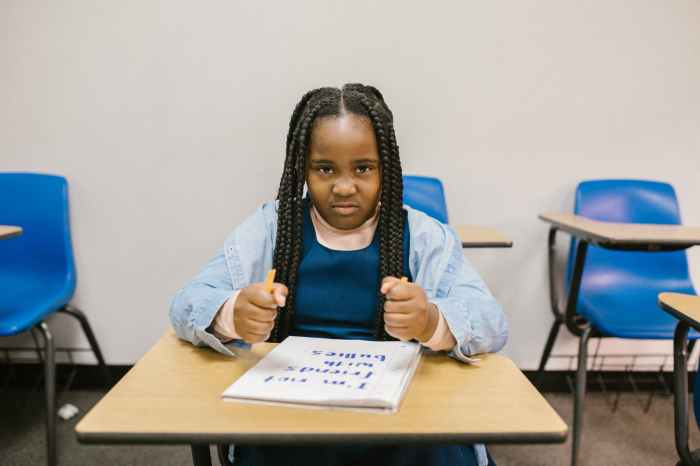
Photo by August de Richelieu on Pexels.com

As educators and parents, we all know how critical it is to build strong relationships with children. In the classroom, this really is the foundation of a successful school year.

I’ve created several new resources that can be used at the beginning of the year, semester or anytime in between to help you get to know your students a bit better.

The resources are:

  1. Interest Inventory – Learn more about your students’ interests with this simple graphic organizer
  2. All About Me with an SEL Twist – A fun writing activity that helps you learn more about your students than just their favorite color or food
  3. I Wish My Teacher Knew – Do yourself a favor and go read the book, “I Wish My Teacher Knew: How One Question Can Change Everything for Our Kids” by Kyle Schwartz and then use this handy dandy printable to do the activity with your own students
  4. Daily Check-In Form – Have a student or 3 that you’d like to communicate with more consistently? Use this awesome check-in form to keep a pulse on how they’re doing each day.

Click on the links above to check out each resource on Teachers Pay Teachers or click here to see all four in one easy bundle.

Coming Soon!

Well, I did something that will either make me really cool or really lame according to my kids…I started a YouTube channel! I’m excited to share more about who I am and what I offer schools and parents, as well as practical tips and strategies for making your classroom and/or home environment more trauma-informed.

The channel will go live tomorrow. Click here to check it out and be sure to follow so you don’t miss out on any content!

Building a Trauma-Informed School Video Series: Course 2

Get Course 2 here!

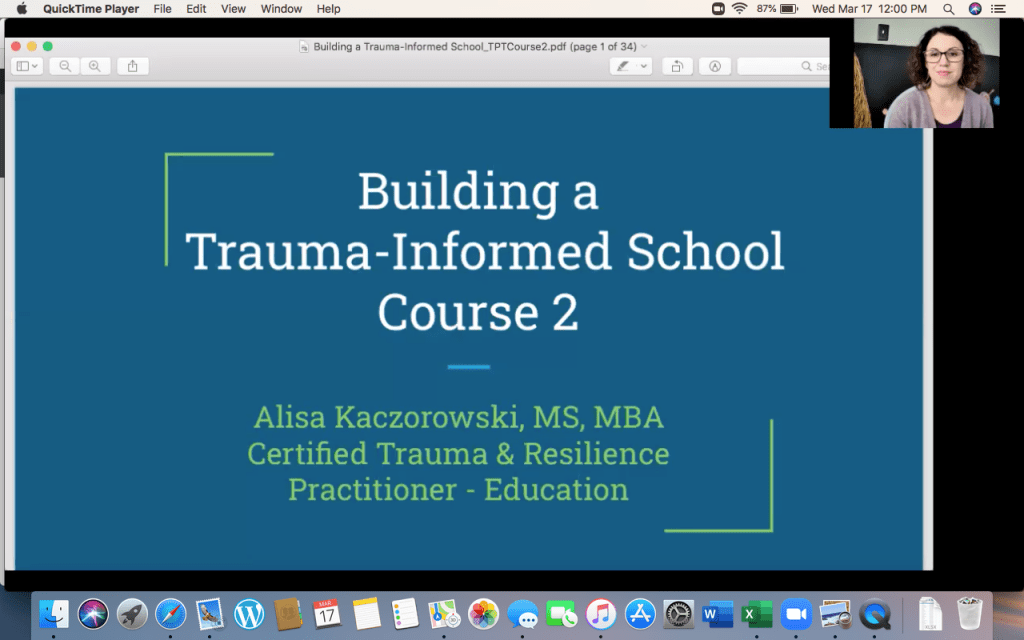
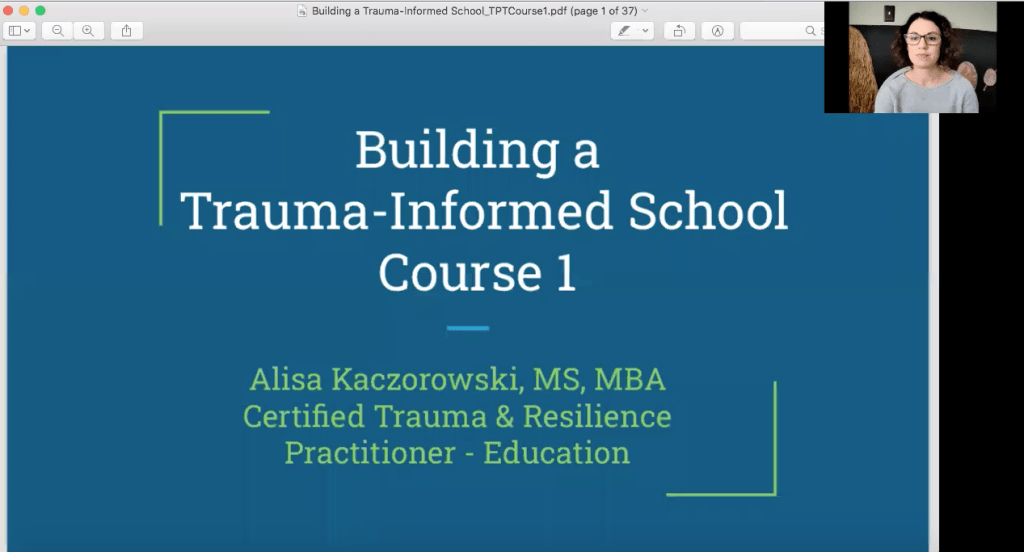
Course 2 of my new video series on Building a Trauma-Informed School launched yesterday on Teachers Pay Teachers! I’m excited to make the content I teach to schools all over the country accessible to educators at the click of a button and at an affordable price.

This series will break down the information I present in a full-day professional development into smaller, easy to watch chunks. Course 1 is already available and focuses on understanding the basics of trauma in our society, why schools should be trauma-informed and recognizing the characteristics of trauma in children of various age levels.

Course 2 dives into understanding the neuroscience of trauma – how traumatic experiences impact, and cause changes to, the brain that affect students in a learning environment. It covers the impact of trauma on learning, as well as a variety of mindfulness techniques that can be implemented in the classroom.

Course 3 will go live in the next two weeks. It will focus on the impact of trauma on behavior, trauma-informed classroom management strategies and assess the pros and cons of a variety of common classroom management systems.

At least one more course will follow and will include 10 strategies for building a more trauma-informed culture in the classroom.

Head on over to Teachers Pay Teachers and grab Course 2 here!

Mindfulness vs. De-Escalation

Have you ever really stopped to think about the difference between mindfulness strategies and de-escalation strategies? No…just me? At first thought, it seems that they are the opposite of one another, right? I mean, when I think of mindfulness, I visualize someone meditating or deep breathing in a peaceful, quiet place. When I think of de-escalation, calm and peaceful are certainly not words that come to mind. I picture a child who is feeling very angry or emotional and adults trying to help. This visual is very noisy and chaotic in my mind.

Take a minute to think about a few de-escalation strategies that the child in the example above might use. What would be on your list? Perhaps deep breathing, some type of movement activity or productive destruction (my term for satisfying the need to destroy something without ACTUALLY destroying something – think tearing paper or putty)?

Now think about common mindfulness strategies. What did you come up with? Deep breathing and exercise again?

See, the funny thing is…the strategies we use for de-escalation and the strategies we use to practice mindfulness are THE SAME! We just call them something different, depending upon WHEN we use them.

We need de-escalation strategies when our amygdala has already been activated, and we’ve moved into flight or fight mode. When we use the strategies at this time, they help bring us back into balance.

On the flip side, we practice mindfulness strategies to train our brain to respond more calmly and reflectively when faced with adversity. By practicing mindfulness regularly, we can actually retrain our amygdala to “false alarm” less frequently so we don’t need to de-escalate as often.

Now that you know that mindfulness and de-escalation strategies are the same thing, how will you incorporate them into your classroom or home environment? It’s critical that we explicitly introduce a variety of these strategies to kids so they can begin to decide what does and does not work for them. Providing time for mindfulness practice is also key to helping kids strengthen the neural pathways in their brains and be proactive about emotional regulation.

Need help getting started? Check out this infographic I have available on Teachers Pay Teachers.

Building a Trauma-Informed School Video Series

Get Course 1 here!

Course 1 of my new video series on Building a Trauma-Informed School launches today on Teachers Pay Teachers! I’m excited to make the content I teach to schools all over the country accessible to educators at the click of a button and at an affordable price.

This series will break down the information I present in a full-day professional development into smaller, easy to watch chunks. Course 1 focuses on understanding the basics of trauma in our society, why schools should be trauma-informed and recognizing the characteristics of trauma in children of various age levels.

Course 2 will go live in the next two weeks. It will dive into understanding the neuroscience of trauma – how traumatic experiences impact, and cause changes to, the brain that affect students in a learning environment. It will cover the impact of trauma on learning, as well as a variety of mindfulness techniques that can be implemented in the classroom.

At least two more courses will follow and will focus on the impact of trauma on behavior, trauma-informed classroom management strategies and strategies for building a more trauma-informed culture in the classroom.

Head on over to Teachers Pay Teachers and grab Course 1 here!

App Review: Headspace

Let’s talk about a new-to-me app called Headspace. I know this one is very popular with many people, but I hadn’t tried it out until a few weeks ago. Thank goodness I did because now I’m obsessed with it!

Not only are there a ton of meditations and breathing exercises of varying lengths (most are 2-10 minutes), there are targeted meditation courses, sleep meditations and music, focus playlists and workouts! Plus, everything is categorized so it’s easy to find exactly what you’re looking for. Want a breathing exercise to jumpstart your day? Check! How about a meditation to help you feel more hopeful and less anxious? Check! There is even a whole category of meditations for kids!

So maybe you’re wondering what all the hype around mindfulness is about. Well, in her book, Mindful Parenting, Dr. Kristen Race discusses how even 5 MINUTES of daily mindfulness practice can work to strengthen the neural pathways in the brain, resulting in more reflective responses vs. impulsive responses. I don’t know about you, but the deeper into this pandemic we’ve gone, the more impulsive my responses to my husband, my children and myself have become. It’s something I’m actively working to improve, and practicing mindfulness each day is one action step I’m taking toward thinking before speaking or acting.

Perhaps you’ve noticed your interactions becoming more reactive as well. Or perhaps you have a kiddo who flies off the handle when told no or when they don’t get their way. Mindfulness practice is a great place to begin course correction. Plus, if we want our kids to grow their emotional intelligence and learn self-regulation techniques, they must be able to filter and vet their words and actions first. This means they need to actively practice slowing down and taking charge of their brain at times.

Mindfulness isn’t easy for most of us, but like many other things in life, the more we practice, the better we become. The good news is that Headspace makes the practice part easy. See my overall review below and check out this awesome app, if you haven’t already!

PROSCONS
Great for all ages and levelsCostly (~$70 per year)
So many options for meditating, breathing, moving and focusingThe many options can feel a bit overwhelming for beginners.
Well-organizedYou still have to make the time…the app won’t do that part for you!
Easily set reminders to make mindfulness a daily practice

Becoming a Trauma-Informed School: Where to Begin

The term “trauma-informed” was already picking up steam in the education world prior to the Covid-19 pandemic, but man is it everywhere now! In light of the events of the past year, every school administrator, counselor and teacher is looking for ways to become more trauma-informed. This is a good thing. As educators, we should be more aware of the types of trauma, what trauma looks like, how it impacts our kids and what we can do to help them. Perhaps this is one of the more positive things to come out of the ugliness of 2020.

But I have said this before, and I will say it a thousand more times – trauma-informed practices aren’t only beneficial to kids who have actually experienced trauma. They are beneficial to ALL kids. Let’s say it louder for the people in the back. Trauma-informed practices are good for all kids. Therefore, all schools should be learning about and implementing them. I’m so tired of this myth that trauma-informed practices are only for certain types of kids or certain types of schools. Not true!

So the question is – where do you begin? The short answer is – anywhere. There are so many facets to being trauma-informed that the possibilities are endless. But I’m guessing you’re looking for a more clear-cut answer than that.

Whether your school (or classroom) is at a beginner, intermediate or advanced level of being trauma-informed, I recommend starting with a self-assessment. This way, you can hone in on specific areas of strength and weakness to help identify next steps. Think of it as the pre-assessment to guide your instruction.

Well, I went in search of the trauma-informed school assessment of my dreams, but after a lot of research, I couldn’t find one that didn’t seem too specific, too broad, too complex or too ridiculously expensive. So I created my own. In it, I have identified 6 key domains of being trauma-informed with 4 assessment questions each. It’s simple to complete, simple to score and simple to identify areas of strength and weakness for your school. Plus it includes space to begin action planning for each domain.

So if you’re looking for a place to begin your journey or want to take a step back and assess the effectiveness of practices already in place in your school, this tool is a great place to begin. Complete it with other key stakeholders to get a variety of opinions then do some brainstorming of actionable steps that can be taken.

Often, the most difficult step is the first one. This one is so worth it, though.

Get the assessment tool by clicking on the icon above or right here.

February Product Sale

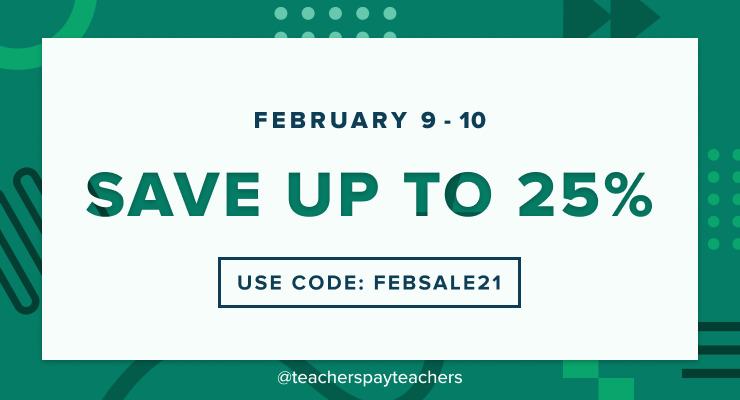
Mark your calendars for February 9-10, and don’t forget to check out the February Sale over on Teachers Pay Teachers. My entire store will be 20% off, and I have a ton of awesome trauma-informed resources available to support your classroom or school, including a new 44 page resource and reflection journal! Just click the banner above to go straight to my store! Happy shopping!

New Resource Alert!

A brand new resource has hit my TPT store, and it’s a great one! This resource is one I developed and use as part of my in-person trainings, but I decided to make it available to all educators. Inside you’ll find 44 pages, packed with 11 simple strategies for building a trauma-informed classroom, easy-to-implement ideas for using each strategy, a page for jotting down notes and/or your thoughts and a simple self-assessment tool to help you gauge your effectiveness and grow as a trauma-informed educator.

Head over to TPT and grab this resource here! It pairs well with this infographic bundle as well!