
The Power of Morning Greetings

As teachers and/or parents, we all know the importance of getting the day started on a positive note. It really can impact the trajectory of our entire day so it’s critical to be mindful of the first words we speak and actions we take each morning.

I once read (I don’t remember where…it’s been a long time) about the importance of giving kids a hug and telling them “I love you” within 5 minutes of them waking up, arriving home from school and getting in bed each day. This simple habit gives kids the human connection, eye contact and feeling of safety and love that they need. This has stuck with me over the years, and it’s something I strive for. It sounds simple, but sometimes, amidst the rush of the morning routine (at least at my house), it can easily get lost.

The same concept is just as simple and powerful in a classroom environment. Greeting each student by name each morning has so many benefits and takes literally less than 10 seconds per child.

How It Works

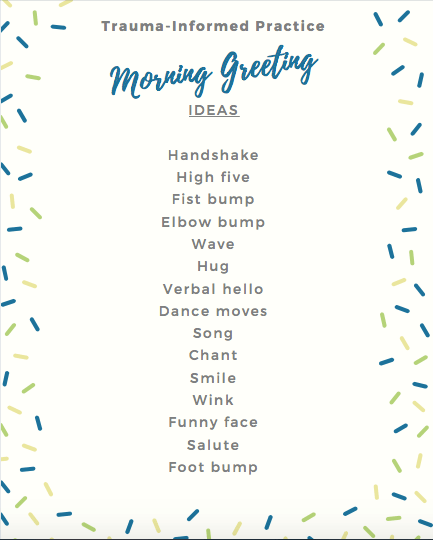
It’s simple. Stand at your classroom door. As each student arrives, say good morning or hello or how are you or, you get it. Give them a hug, a handshake or a high five. Make up a silly dance or song. Ask them about the soccer game they played in last night. Smile at them.

What should you NOT do? Sit behind your desk, text, grade papers or chat in the hallway with your colleague, while the students enter the room. Why? Think about the message this sends to them. I don’t matter. She doesn’t even see me. He doesn’t care. Are these things true? Probably not, but perception is reality.

Need more inspiration for different greetings? Check out this handy list.
Why It’s Important

This simple habit has benefits that can last the entire day. Here are just a few:

  1. Gives each student the opportunity to hear their name spoken in a caring and respectful manner (perhaps the first time of the day for some children)
  2. Allows you to make a personal connection with every student, everyday
  3. Fosters a sense of belonging in each student
  4. Aids in students feeling safe, secure and loved at school
  5. Allows students the opportunity to practice crucial communication skills in a low-risk way
  6. Gives you the opportunity to “scan” each student’s physical and emotional state each morning (this can come in useful later in the day)
  7. Sends a message to each student that you care about them and are interested in them as people outside of school

I know this is such a simple strategy and even seems pretty obvious. I also know the reality of running a classroom on a daily basis and how easily we can get bogged down by the details…endless meetings, paperwork, lesson planning, etc. Sometimes we just need a friendly reminder of what’s really important in our job as educators.

Visit my Pinterest board here for more fun ideas for implementing Morning Greetings. Resources will also be coming to my TPT store soon.

Fostering Communication Between Kids in a Post-Quarantine Classroom

About a month ago, my 6 year old had a porch playdate with her best friend. While it wasn’t the first time they were seeing each other post-quarantine, it was the first time they were spending a decent amount of time with one another and actually playing together. As her best friend’s mom and I sat on the porch chatting, I kept looking down at the girls, thinking they were unusually quiet. These are two outgoing, chatty girls so it seemed odd that they were quietly playing with the flip sequins on my daughter’s backpack and not really interacting with one another. I commented on this to the girls and jokingly told them it was ok to talk. A few minutes later, her friend’s dad came outside and was surprised to see us on the porch still. He said that it was so quiet outside, he thought we had gone for a walk.

This went on for the first hour or so of our visit, but eventually, the girls seemed to warm up and began playing and talking like their normal selves. I didn’t really give it much further thought until a week or so later when I was working with the staff of a small Catholic school in northern Indiana.

During the training, I asked the teachers to name their fears about returning to school in-person with students. One primary teacher in the back of the room raised her hand and said, “I’m worried about how the students will do communicating with one another.” She went on to add that since the kids had been quarantined for so long and not had the opportunity to interact with anyone outside of their immediate family, she was concerned about how they would interact with one another. Would they feel shy or scared? Would it cause anxiety in some? Many other teachers went on to agree with her and share their own stories of the anxiety they felt after their first trip to the grocery store or doctor’s office.

As the teachers continued talking through this with one another, I thought back to the day of the playdate. I suddenly realized that my daughter and her best friend were the perfect example of this teacher’s fear. I shared the story with the staff, and we all took the opportunity to reflect on how this might play out in the classroom environment.

Since that day, I have told this story at every school I’ve worked with, and without exception, at least one teacher raises their hand to say this is one of their fears. So, as educators and parents, what can we do to address this in our homes and classrooms?

  • Talk about it

Be open and honest with kids about the things we may now find difficult. Help them to understand that some things are going to be harder since we are out of practice. Tell the story of how overwhelmed you felt after your first trip to the grocery store. Talk about the things you did to help ease those feelings.

  • Validate their feelings

Be sure to let kids know that the way they are feeling is normal and they are not alone. Once we are able to name our recognize and name our emotions, they lose their power over us.

  • Brainstorm strategies

Understanding the root cause of a child’s fear is key to identifying strategies that will work for them. Are they fearful of being around people outside of their immediate family because of the virus? Do they feel overwhelmed by suddenly being thrown into a classroom with 20 other people? Are they feeling shy because they are away from their parents for the first time in 6 months? Dedicate a time to brainstorming strategies to help all students feel more comfortable communicating with their peers.

  • Practice

Practice, practice, practice. Given time, kids will become more comfortable doing the things that were once second nature. Provide them the time and space to make this happen. Role play a variety of situations, reinforce the strategies you brainstormed and integrate oral communication with peers into instruction as often as possible. Just as kids do at the beginning of every school year, they will soon become comfortable with this new environment they are in.

  • Be patient

It will come. We are all adjusting to a new normal – new feelings, new routines, new rules. It may take a bit more time and practice than normal, but before you know it, the kids will be back to communicating more than you ever wanted them to!