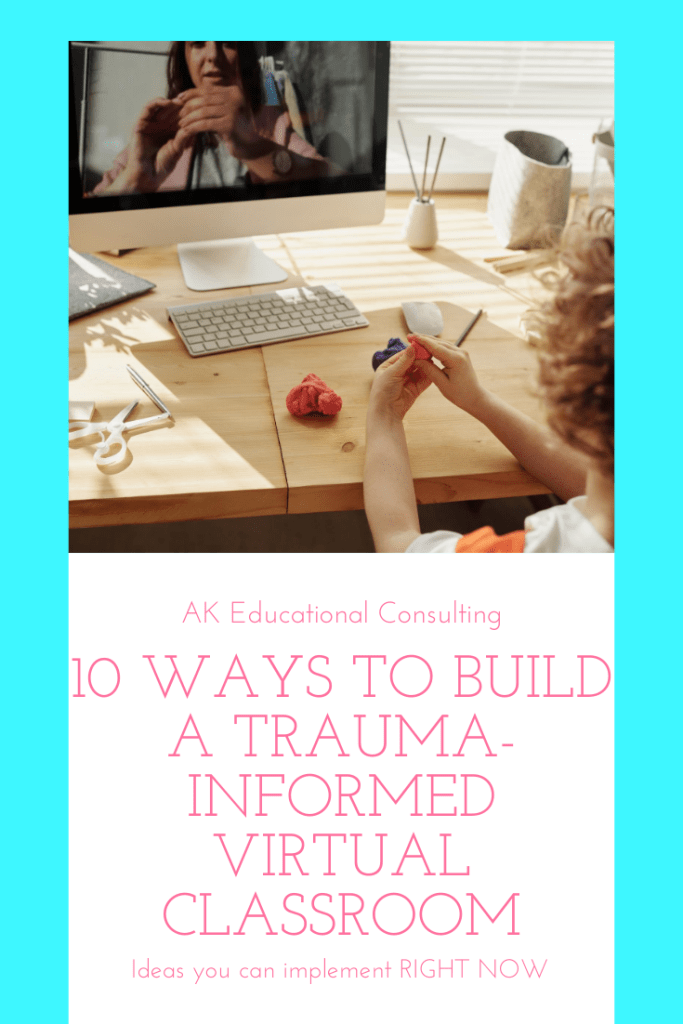
The term “trauma-informed” was already picking up steam in the education world prior to the Covid-19 pandemic, but man is it everywhere now! In light of the events of the past year, every school administrator, counselor and teacher is looking for ways to become more trauma-informed. This is a good thing. As educators, we should be more aware of the types of trauma, what trauma looks like, how it impacts our kids and what we can do to help them. Perhaps this is one of the more positive things to come out of the ugliness of 2020.
But I have said this before, and I will say it a thousand more times – trauma-informed practices aren’t only beneficial to kids who have actually experienced trauma. They are beneficial to ALL kids. Let’s say it louder for the people in the back. Trauma-informed practices are good for all kids. Therefore, all schools should be learning about and implementing them. I’m so tired of this myth that trauma-informed practices are only for certain types of kids or certain types of schools. Not true!
So the question is – where do you begin? The short answer is – anywhere. There are so many facets to being trauma-informed that the possibilities are endless. But I’m guessing you’re looking for a more clear-cut answer than that.
Whether your school (or classroom) is at a beginner, intermediate or advanced level of being trauma-informed, I recommend starting with a self-assessment. This way, you can hone in on specific areas of strength and weakness to help identify next steps. Think of it as the pre-assessment to guide your instruction.
Well, I went in search of the trauma-informed school assessment of my dreams, but after a lot of research, I couldn’t find one that didn’t seem too specific, too broad, too complex or too ridiculously expensive. So I created my own. In it, I have identified 6 key domains of being trauma-informed with 4 assessment questions each. It’s simple to complete, simple to score and simple to identify areas of strength and weakness for your school. Plus it includes space to begin action planning for each domain.
So if you’re looking for a place to begin your journey or want to take a step back and assess the effectiveness of practices already in place in your school, this tool is a great place to begin. Complete it with other key stakeholders to get a variety of opinions then do some brainstorming of actionable steps that can be taken.
Often, the most difficult step is the first one. This one is so worth it, though.
Get the assessment tool by clicking on the icon above or right here.