
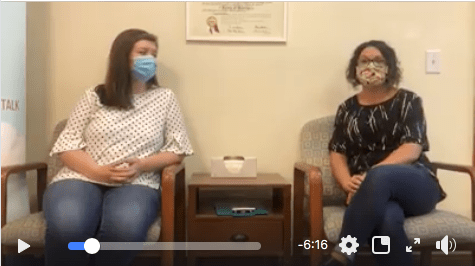
Last week, I had the opportunity to shoot a few videos with my new friends over at Indy Direct Docs on parenting in a pandemic. While I primarily train educators on trauma-informed practices, the strategies are just as useful and effective for parents, especially now when we’re all wearing so many different hats.
I was super excited to partner with Drs. Moore-Ostby and Holliday for a variety of reasons. First of all, their innovative take on healthcare puts the focus on the relationship between a doctor and patient, similar to the idea of relationship-building between a teacher and student. Second, they are invested in providing resources of all sorts to their patients through their blog. From nutrition and cooking tips to parenting strategies, they are in tune with the content their patients want. Lastly, I feel strongly about the trauma-informed strategies I teach, as both an educator and a mom, so why not share them with others? Parenting is hard. Parenting in a pandemic is nearly impossible. We’ve all felt it over the past 8 months. I know I need some help, and I’m guessing others do too.
There’s a really disappointing myth in our society that trauma-informed practices are only beneficial to kids living in poverty or kids who have experienced trauma. NO! Not true. Trauma-informed practices are beneficial to ALL kids. They nurture and repair relationships, encourage social-emotional health and well-being and help kids learn to be more in tune with their emotions. Isn’t that what we all want for our kids? I know I do!
Despite what we sometimes think, all kids have experienced some sort of trauma in their lives. From divorce and death to absentee parents and COVID-19, traumatic experiences are everywhere. It doesn’t have to be abuse or neglect to be considered trauma. Even if a child’s exposure to trauma is minimal at best, the strategies I teach are still useful. Have a child who struggles to control their anger, sadness, worry, etc.? I have strategies for that. What about kids who have difficulty resolving social conflicts? I have strategies for that too. Perhaps you just need some new ideas for surviving this trying time as a parent. I’m right there with you, and I can help.
Let’s give our kids the tools they need to grow into compassionate, empathetic human beings, living in a society where emotions are normalized and stigmas around mental illness and trauma are non-existent. If you’re interested in learning more about how trauma-informed practices can be useful to your kids, drop me an email or Facebook message!
***The first video can be viewed here.

 akeducationalconsulting.com