
If you’ve been following along with the blog and my YouTube channel for the past several weeks, you’ve probably noticed that I’ve been spending a lot of time talking about social-emotional learning and its many components. A few weeks ago on the blog, I wrote an overview of the CASEL framework.
Last week, I began a deeper dive into each competency within the CASEL framework, beginning with self-awareness. Self-management is the second competency within the social-emotional learning framework, and it is also a critical component of building emotional intelligence, as it goes hand in hand with self-awareness. As a reminder, the Institute for Health and Human Potential states, emotional intelligence is “the ability to recognize, understand and manage our own emotions” and “recognize, understand and influence the emotions of others.”
Self-awareness is all about knowing how you feel, understanding how your emotions impact the people around you, knowing your strengths and weaknesses and having humility. You can review even more characteristics of self-awareness by reading here.
Self-management is the ability to manage and express emotions in a constructive manner. Think of it this way – self-awareness is laying the groundwork and giving kids the tools while self-management is actually using and applying those tools in real life. Let’s look at 5 strategies that we can use to help foster self-management skills in kids.
- Teach and practice calm down techniques.
- Use “I feel…” statements.
- Set up a calm down space.
- Follow through on commitments.
- Set a short-term goal and create an action plan.
Teach and practice calm down techniques.
If our ultimate goal is to teach kids to self-regulate (and that IS the ultimate goal), we need to begin by explicitly teaching kids the strategies they can use to calm down. We do this by introducing a wide variety of strategies to kids so that they can begin to decide which ones feel right to them. It’s also important to help kids understand that not all strategies work for all people and that’s ok.
Think about your own go-to calm down strategies. Maybe you do yoga, listen to music or work on a puzzle. As an adult, you’ve probably figured out which activities help you the most. On the flip side, you can probably think of one or two strategies that would be stress-inducing for you rather than relaxing. Maybe dancing, running or being in nature aren’t your jam. That’s totally fine! We are all different, and thus respond in different ways to different strategies.
One thing to keep in mind when introducing calm down strategies to kids is that it takes practice, practice, practice. Kids need consistent reminders of the strategies they’ve learned and to actually use those strategies. Be patient with them; building self-regulation skills is a process.
Use “I feel…” statements.
“I feel…” statements are a great tool to teach kids to use. They are great during a disagreement and as a simple way for kids to verbalize their feelings.
Think about the last time you were in a disagreement with your partner, a friend or co-worker. Oftentimes, the words we use escalate the disagreement and put the other person on the defensive. For example, we may say something like, “You never listen to me!” This immediately makes the other person feel attacked and doesn’t really get to the root of the problem. Alternately, if we say, “I feel frustrated when you don’t look at me when I’m speaking,” the other person isn’t so quick to feel put down by the statement.
That’s the great thing about “I feel…” statements – they don’t place blame on any one person and it’s hard to argue with someone about how they feel. By using this type of statement, you are better able to keep the disagreement on track and get to the problem solving portion more quickly.
Set up a calm down space.
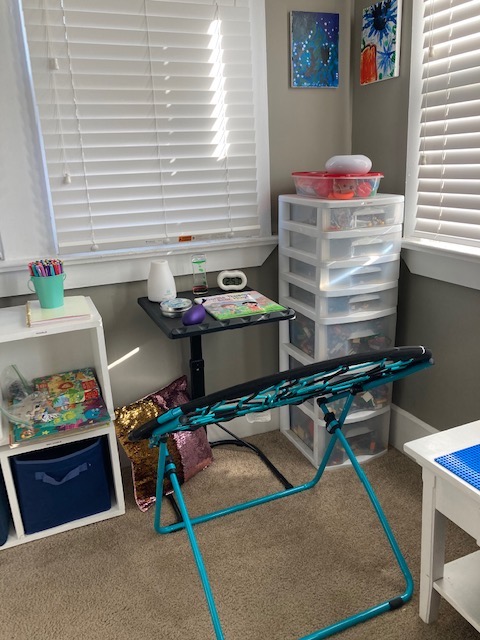
Remember how important it is to teach kids calm down strategies? It’s equally important to provide them with a space to practice those strategies. It might be in the library area of the classroom, an extra desk you have lying around or a corner of the dining room at home. It really doesn’t matter where you set it up, as long as there’s a dedicated space available with a few key tools.
The purpose of a calm down space is to provide kids with a quiet area to go to process through whatever it is they’re feeling. You can include comfortable seating options, low lighting, sensory tools, visual reminders of strategies they’ve been taught, music, drawing materials…the list goes on and on.
The most important thing here is that kids understand that this is not a “time-out” space in a punitive sense but a quiet, calming space with tools to help them self-regulate.
follow through on commitments.
Teaching kids to honor their commitments is a critical component of self-management. The concepts of perseverance and “stick-to-it-iveness” are ones that our kids are really struggling with, in light of the events of the past two years. However, that does not mean sending the message to kids that they should continue to do things that are unsafe or no longer serve them. This is more about teaching our kids to reflect upon whether or not they really want to join that team, club or activity. Will it fit into their schedule? Is it something they feel passionate about doing or trying? Do they understand what the commitment entails? Does it feel true to who they really are? These are the questions we want our kids to be able to reflect on to push them toward the higher-level goal of making responsible choices for themselves.
set a short-term goal and create an action plan.
If you remember, we’ve seen this strategy before! Goal setting is critical to building both self-awareness and self-management because it helps kids identify something they really want to accomplish and make and carry out a plan for doing it. Before diving into a large or long-term goal, encourage kids to start small. Help them to identify a smaller, short-term goal they would like to meet and teach them to create an action plan for how they will accomplish that goal. Don’t forget to celebrate the small wins along the way to reinforce the progress that is being made, build self-confidence and remind them that they are one step closer to their end goal.
Feel free to share other thoughts, ideas and strategies for building self-management in the comments!

 akeducationalconsulting.com