Blog

Experiencing Emotional Freedom Technique (EFT)

Last week, I had a unique opportunity arise to experience and learn more about something that I have been interested in for a year or two. Emotional Freedom Technique (or EFT), more commonly known as tapping is a method of tapping specific points on the face and upper body to reduce stress, anxiety and depression, among other things.

I first heard about tapping about two years ago when a special education teacher at my school sent out information to the staff about the technique. At that time, we were working hard to incorporate trauma-informed practices and become the first trauma certified school in our state. Tapping fit right in with many of the strategies we were learning about and introducing to students. I had never heard of tapping, but the more I read about it, the more interested I became. 

Coincidentally, at that same time, one of my own children was struggling with anxiety, depression and outbursts of anger. I was excited to learn that there was a technique that could be used to help not only my child, but also many of the students at school. I dove into several books and articles to learn more and eventually introduced tapping to my son. We began to use tapping to help him regulate his emotions and de-escalate when he felt angry, and it seemed to work. We continued to practice tapping at home, as needed, for the next several months. Eventually, like many routines in life, we fell out of the habit. 

Fast forward a year or two…Here I am, busy starting my consulting business and tapping is the last thing on my mind. Then, one day a few weeks ago, a fellow “Mompreneur” posted in a Facebook group that I am part of, that she was looking for a few people to experience a free session of EFT with her and write a blog post about it. On a whim, I commented that I would be interested, and we began messaging with one another. As it turns out, she has built a business around tapping, practicing the technique with clients out of her office in suburban Indianapolis while also trying to build more of a following with schools. 

The more we “talked,” the more excited I became to meet her. Initially, I was interested in the session because of my interest in tapping and how it relates to the content I am currently developing for schools around trauma-informed practices. After our conversation, though, I was looking forward to learning more about the work she has already done in schools, as well as how she would like to take it to the next level and reach more students. Of course, my “school leader brain” was already flipping through the many benefits of bringing tapping directly to students in schools. Unfortunately, I also know that my former school and colleagues were much more unconventional, outside-the-box thinkers than the typical educator is allowed to be.

The day arrived, and I met Casey VanPutten in a beautiful, industrial chic office building in downtown Fishers. Entering her office, I really had no expectations. She invited me to sit in a comfortable chair where a bottle of water and pen and paper were waiting for me on a side table. Essential oils were diffusing, the lighting was low…it was definitely my kind of place! 

We began by talking about our backgrounds (she was a school counselor, I was a school administrator), the current educational landscape, the politics of schools, our businesses and the goals we have for growing them. We probably could have just sat and talked for hours! Sadly, though, that is not why I was there. 

She began giving me some background on EFT and the differences between people who are trained in the technique (like her) and the information that is readily available on the internet (in other words, the stuff I had researched). It was fascinating and made so much sense to me!

We started with a quick demonstration. She asked me to stand up, bend over and touch my toes. After I did that, she took me through a series of tapping and repeating phrases after her. After a couple of minutes, she asked me to touch my toes again, and wouldn’t you know it, I was able to stretch much further the second time around.

After the initial demonstration, we sat back down, and Casey began asking me questions to pinpoint our focus for the session. Eventually we settled on the anxiety I have around starting a business. It’s been a giant leap of faith for my family, but one we feel very strongly about. That being said…mom guilt. It will get you every time.

To better understand my anxiety levels, Casey asked questions regarding the intensity level of my anxiety, where I feel the anxiety in my body, what it feels like, the specific thoughts I have about it, etc. Then, she began taking me through a series of tapping and repeating phrases once again. 

The tapping itself focuses on 8 points on your body. These points are believed to be areas of the body through which energy flows. The idea is that blocks or imbalances in your energy flow can result in issues such as anxiety, depression, PTSD, chronic pain, stress, weight loss issues, etc., but that balance can be regained by tapping on the 8 meridian points (think acupuncture or acupressure). The phrases that you repeat while tapping are meant to help you accept and acknowledge the problem so that you can gain power over it. 

After each series of tapping, we would return to the feelings, emotions and thoughts around my anxiety to gauge whether they had increased, stayed the same or decreased. With each series, my anxiety level decreased, the somatic symptoms slowly began to disappear, and my thoughts became much more positive and realistic. For instance, rather than feeling mom guilt over limiting my children’s activities and “extras” during this season of life, I finally realized (and said aloud) that they are just fine. They are not missing out on anything. They are cared for, happy, well-adjusted kids. By the end of the session, my anxiety had all but disappeared and I felt a mental clarity that I haven’t felt in a long time. 

While I know that techniques such as EFT can often be met with skepticism (I get it, really, I do), I also have experienced and can attest to the difference it has made for my kiddo and for me (in only one session). There is still room for a lot more research on the technique, but the research that is out there is pretty incredible. From veterans suffering from PTSD to students struggling with depression, in each study significant reductions in symptoms were observed. 

I think this technique holds a lot of promise and hope to see more research done to study its effects. I also hope that, as the educational landscape continues to evolve, educational leaders see the value in incorporating practices such as EFT, yoga, mindfulness or other trauma-informed strategies into the school day. 

Our society is broken. Many of our children are broken. Although I wish all of these problems didn’t fall solely on the shoulders of educators, I am confident that educators are the ones who can make the real difference in addressing these issues. 

If you are a forward-thinking educator (or just an awesome person) who wants to learn more about tapping, I would encourage you to reach out to Casey. Visit her website for more information. 

Common Myths About Trauma-Informed Practices

As the words “trauma-informed” have become more of an educational buzzword, several myths have come to the surface regarding the types of schools and students that need these strategies. Unfortunately, by buying into these beliefs, many schools are missing out on a golden opportunity to reach more of their students, cut down on discipline referrals, improve student academic achievement levels and change the culture of the building.

That’s right…when implemented consistently and correctly, trauma-informed practices can impact all of those things in a school. I promise, it’s not magic…it’s just common sense. Let’s take a look at a few of the biggest myths out there:

Myth #1: Trauma-informed practices are only useful in schools with low-income, high-poverty populations.

That’s like saying no one in the middle or upper class faces mental health issues. Let’s face it…everybody has baggage. You do, I do. It’s no different for kids. Whether they are living in poverty and exposed to domestic violence, drugs and gangs or living a suburban life in a home with two parents, every child faces their own issues and struggles. Just look at all of the middle- to upper-class communities facing epidemics of student drug use or suicide recently. The trauma that children experience does not necessarily have to be of a violent and epic nature for trauma-informed strategies to be useful. They are just as helpful for kids struggling with anxiety, depression, bullying and ADD/ADHD, among many others.

Myth #2: Trauma-informed practices are only for counselors to use.

Unfortunately, in schools today, it’s more common for the School Counselor to be found completing administrative/clerical tasks, proctoring tests or doing lunch or recess duty than it is for them to be meeting with small groups of students to target specific skills. In a perfect world, yes, counselors would be a critical component in the implementation of trauma-informed practices in a school. However, they can’t be the only one teaching and demonstrating these skills. If that were the case, how would kids practice applying the skills during the other 95% of their school day? Besides, as mentioned above, trauma-informed practices need to be implemented on a school-wide, consistent basis to really make an impact. So who should be trained and using these strategies? Everyone on staff, from the front office to the cafeteria workers to the bus drivers, teachers and administrators. As with most things in life, consistency is key.

Myth #3: Trauma-informed practices will not impact student learning.

There’s a common saying in schools, “You can’t teach if you can’t manage.” In other words, if the kids are running around the room, throwing chairs or just constantly talking, very little learning is taking place.

These are the types of behaviors that result in phone calls to the office, discipline referrals and students sitting in the hallway. So often, it’s easier for educators to remove the few for the benefit of the many, and sometimes, that is absolutely necessary. But how often do we stop and ask ourselves, “Why is this student acting in this way?” Well, there’s a really good chance that there is a reason behind the behavior. Perhaps it’s attention-seeking or maybe it’s their go-to defense mechanism. Whatever it is, we need to ask ourselves “Why?” more often to get to the root of the issue because that is where real change occurs.

Trauma-informed practices CAN and WILL impact student learning because when kids feel heard and understood, safe and loved and trust the adults around them, they are less likely to act out and are able to regulate and return to class more quickly. Fewer behavioral distractions translates into more time for teaching and learning and that WILL impact student achievement levels.

Myth #4: Incorporating trauma-informed practices is expensive and time-consuming.

Can it be expensive and time-consuming for teachers? Of course. Does it have to be? Absolutely not. Although the goal may be to transform the culture of an entire school, it’s wise to start small and build toward that goal incrementally.

Perhaps begin by asking yourself a few questions: How do we better understand the connection between trauma/stress and learning? Why do our students behave the way they do? What are the critical needs of the teachers and students? What strategies can be implemented in classrooms easily and immediately? What small changes can be made to what we’re already doing? That’s where you begin.

Trauma-informed practices are here to stay…and for good reason. They just make sense. Our society is facing epidemics of drugs, gun violence, gangs and teen suicide. All of these affect the mental health of our children AND our teachers. Something has to be done, and in this case, it’s a deeper understanding of how these stressors affect the brain, learning and development of our students and how we, as educators, can help them to overcome these obstacles and give them the tools they need to break the cycle.

Trauma Freebie!

As you probably know, one of the more popular buzzwords in education right now is “trauma-informed.” Whether it’s used when speaking about classrooms, in particular, or schools as a whole, becoming more trauma-informed means understanding the baggage your students bring with them to school and the role it plays in their learning (or lack thereof).

There is tons of fascinating research happening right now proving what many of us already know. Trauma impacts the brain and therefore, trauma impacts a child’s ability to learn. It’s virtually impossible for children to achieve academically if they don’t feel safe, secure and loved.

Teachers and administrators are looking for ways to better understand the impact of trauma and reduce its effect on students in the classroom. The good news is there are so many things teachers can do RIGHT NOW to become more trauma-informed. Some are no-brainers, others may take a bit more effort.

As educators look forward to winter break and relaxing and recharging, I assure you they are also thinking about their students and looking ahead to the second half of the year. This is the perfect time to begin planning for a “reset” in the New Year.

I’ve spent some time recently designing a beautiful, two page printable entitled, “10 Ways to Build a Trauma-Informed Classroom.” I’m excited to share it with you all. Whether you’re a teacher looking to reset your classroom for 2nd semester, an administrator looking for a way to support teachers in their practice or a parent who cares about what is happening in your child’s classroom, this infographic is for you!

To get this free printable, just click on the Subscribe Now button on the righthand side of the screen and enter your email so you never miss a blog post. As a bonus for subscribers, I will occasionally send out updates, news and other freebies. I promise I won’t spam you!

Happy holidays to all! I hope this is a time of rest and peacefulness for each of you!

Trauma in Schools

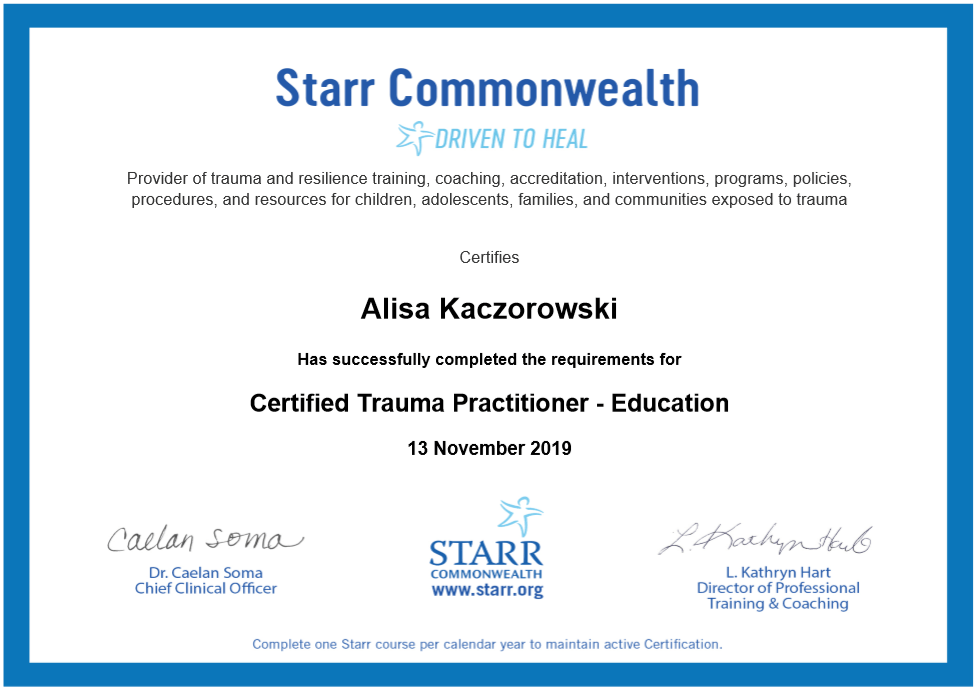
I’m excited to announce that this past week I completed my certification as a Certified Trauma Practitioner – Education (CPT-E) through Starr Commonwealth. This means I have completed 30+ hours of coursework on research-based, trauma-informed and resilience-focused strategies for educators and schools.

So what does this really mean? It means that in the coming weeks I will be using my knowledge and experience to create content for schools to help them put trauma-informed practices in place. These practices are not only useful to schools with large populations of students experiencing the trauma of poverty, domestic violence, neglect, etc. but can be used to help ANY student be more successful in school.

Practices such as relationship and community building, de-escalation strategies, anger management tips and self-care strategies for teachers can all help educators be more successful in managing their classroom and addressing the needs of struggling students.

These practices can be implemented school-wide in any school to improve upon the culture in the building, as well as raise academic achievement levels. Students whose brains are stressed simply cannot learn. It’s not until educators and schools begin to meet the basic needs of these students that discipline referrals will decrease and student engagement and achievement will increase.

There is so much research and science behind trauma-informed care and resilience strategies, and I look forward to sharing practical, easy-to-implement tips to help educators and schools get on track to better meeting the needs of at-risk students.

Understanding School Enrollment in Indianapolis: A Guide for Parents

In November 2017, Indianapolis joined a handful of cities across the U.S. to roll out a unified school enrollment system for students called Enroll Indy. Its goal was to streamline the school application process and increase equity and access to high-quality schools for all students across the city.

Two years later, the result is an often-discussed and highly controversial system among parents and educators. While its overall impact has yet to be determined, what has been determined is that, despite the differing opinions, this unified enrollment system is complicated and difficult for parents to understand. To make matters worse, the laws surrounding education in Indiana, as well as the policies adopted by the Indianapolis Public Schools, are ever-changing. All of these factors combine to create a confusing and overwhelming process for parents trying to navigate school enrollment in Indianapolis.

After reading dozens of posts on social media sites, and being asked by numerous friends and neighbors for help, I decided to use my knowledge and experience, as a mom and educator with firsthand experience with Enroll Indy, to develop this comprehensive, step by step guide for parents. I’ve done the research and compiled all the information that can be found in a variety of places around the internet into one single document.

My hope is to provide straight-forward, user-friendly information that doesn’t require a Master’s degree in education to understand. I’ve read a host of social media threads to try to answer the questions that most frequently get asked by parents in my social network and tapped into many of my own friends who are navigating this process.

Despite my extensive research, I am sure there are mistakes in this document, and those are mine alone. Hopefully, these do not detract from my overall goal for writing this guide…to help families navigate the process of finding, and applying to, the great school options we have in the city of Indianapolis.

Upcoming Projects

I’ve got quite a few projects in the works right now and thought I’d give you all a sneak peek of some of them!

Project #1

Indy folks…be on the lookout for a guide tailored to parents trying to navigate the complicated school enrollment process. I’ve done the research and condensed the overwhelming amount of information available into an easy-to-understand guide that walks parents through the steps to researching, applying to and enrolling in schools in Indianapolis.

Project #2

The next topic I’ll be tackling for professional development opportunities is trauma-informed practices in schools. Think this is only useful in inner-city, high-poverty schools? Think again! I will be introducing several trauma-informed practices that can be easily implemented into ANY classroom or school to help ANY student be more successful.

Project #3

The professional development on PLCs is still going strong! Know of a school looking to improve upon teacher collaboration and data analysis? This PD is the answer! Between the book, audio course and in-person professional development, there’s a little something to fit every school’s needs and budget!

I’d love to hear from you! What topics are you interested in?

Implementing Effective PLCs Course Preview

See a preview of my Implementing Effective Professional Learning Communities professional development course here. Just click the link, then click Slide Show and play the preview. Be sure to turn your sound on!

Like what you see? Contact me today for a free phone consultation to learn more about how I can help your school.

The Book Has Arrived!

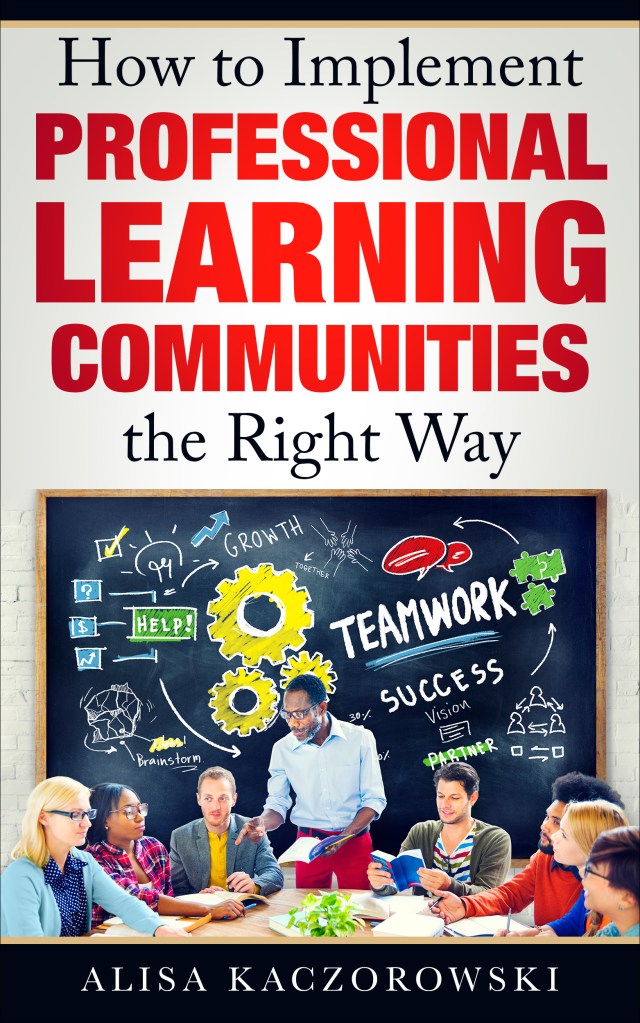
So, I published a book yesterday. No big deal. Just kidding…it’s a very big deal (at least to me). For weeks, I’ve been working hard on turning my professional development presentation on Professional Learning Communities into an ebook, and yesterday, I uploaded it to Smashwords (an online ebook publisher and retailer), and it was accepted! Very soon (like later today), it will be available on Apple Books, Barnes and Noble and several other online bookstores. Eventually, it will be available on the holy grail of online shopping…Amazon.

I’m super excited to share it with you all. Head over to the Smashwords site to check it out. As a bonus, if you use the coupon code KZ56Z, you can get it for 50% off through October 19, 2019. That makes it only two bucks, and you can download it to just about any device you own and in a variety of formats.

Stay tuned because I already have my next book idea, and I’m excited to get started writing!