Coming in 2024!

Photo by cottonbro studio on Pexels.com

As 2023 is winding down and I take time to reflect on all that this past year brought, I am so grateful to every single person that supported me. Whether you brought me into your school to facilitate a training, invited me to speak at your conference, purchased a resource from my TPT store, read my social media updates or simply cheered me on, I am thankful for you and so glad you are part of this community.

As 2024 approaches, I am busy planning new content, new ways of connecting with you and so much more. I love the feel of a new year and fresh start. I love taking the time to reflect and plan and the opportunity to change course, if necessary.

Although I will roll out many new things in 2024, one of the changes I am most excited about is the implementation of monthly themes. Beginning in January, each month will focus on a different social-emotional learning theme. Throughout the month, I will share articles, resources, books, videos, lessons and more that relate to that theme. This is just one way I hope to better organize the information and resources I share with you.

More details on this and other improvements I plan to make will be coming soon! For now, thank you again for supporting me and happy holidays to each and every one of you. I wish you nothing but the best in 2024!

Mind-Body Skills Part 6: Writing & journaling

**This is Part 6 of a 7 part series on Mind-Body Skills. Check out the introductory post here or follow along on my YouTube channel.

Photo by olia danilevich on Pexels.com

Whenever I ask a group of educators what they do to calm down or ease stress and anxiety, very few of them say they write or journal. These seem to be activities that people either love or hate.

For the people out there who love them, here are some great ways to incorporate writing into your de-escalation/stress relief/calm down routine. All of these activities can easily be used with kids at home or in the classroom as well.

  1. Ten Favorite… – Pick a category, any category, and write your 10 favorites. For instance, jot down your 10 favorite meals, your 10 favorite things about fall or your 10 favorite ways to spend a lazy day. This writing strategy serves as a great activity for distracting our brain from the stress/anxiety/anger/etc. we are feeling.
  2. Today, I Feel… – At the beginning or end of each day, write 1-2 sentences describing how you feel. How do you feel about the day ahead? How do you feel now that the day is behind you?
  3. Brain Dump – Are there any others out there who struggle to fall asleep at night because of all the thoughts jumbled up in your brain…the things you need to remember or do the next day? Put a little notebook next to your bed, and the next time those thoughts are keeping you awake, get them all out on paper. It doesn’t have to look pretty (sometimes I even do this in the dark!)…you just need to get all those thoughts out of your head. Once you’ve done so, give your brain permission to rest and go to sleep!
  4. Gratitude Journaling – Did you know that speaking your gratitude aloud actually makes you happier? Yep, it’s true! So write it down! Make a list, write it in paragraph form, whatever…just take a few minutes each day to focus on what you’re grateful for.

Are you a journal-er? What writing activities do you enjoy doing to de-stress?

The benefits of flexible seating in the classroom

I shared this on my various social media channels this week but figured I’d jot a few thoughts here as well.

I really started thinking about this last week. After a long car ride at the end of Labor Day weekend, I was struggling to sit at my desk the following day and get work done. I couldn’t sit still. I couldn’t focus. I couldn’t get comfortable. It really hit me that some of our students struggle with these feelings on a daily basis.

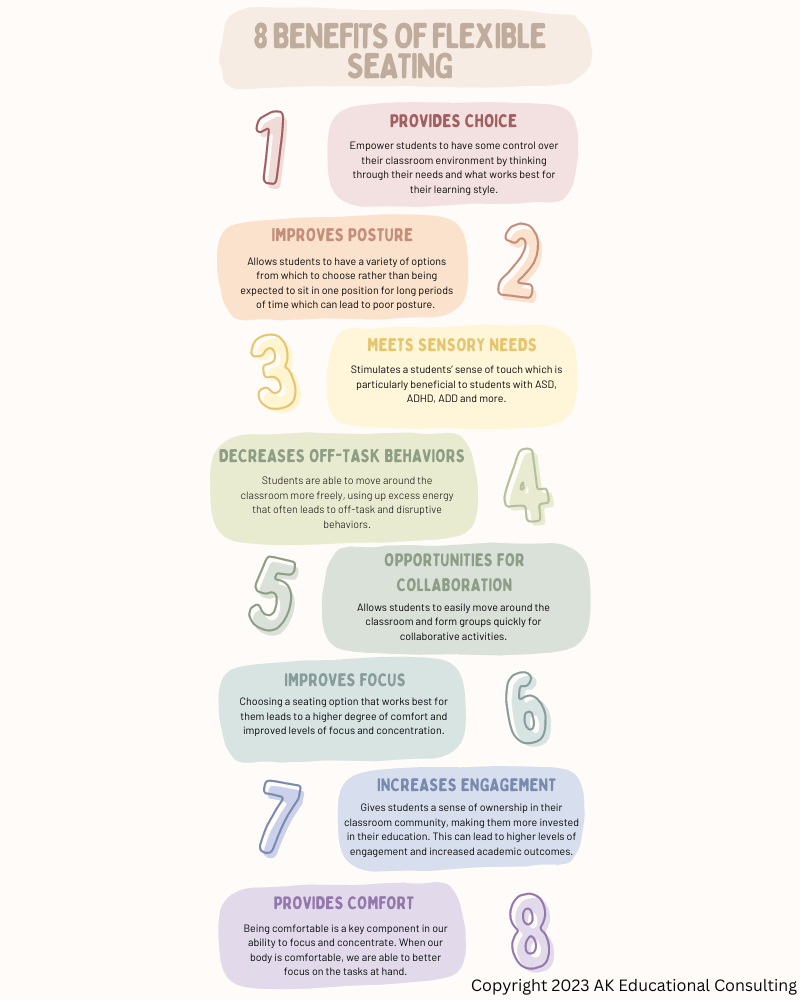
Even thought I’m well aware of the inherent benefits of flexible seating, I had never truly thought about how this can be a total game changer for some kids. I know some of this information is common sense, but we can’t ignore the fact that providing flexible seating options is a shift in mindset for many educators.

If you are one of those educators, it’s OK! Take a minute to read over the infographic above. How could you implement small changes to your classroom seating to benefit your students? What baby steps can you take?

If you’re an educator who has fully bought in, what changes have you noticed in your students? What flexible seating options do you provide in your classroom? I’d love to hear!

Mind-body skills Part 5: music

**This is Part 5 of a 7 part series on Mind-Body Skills. Check out the introductory post here or follow along on my YouTube channel.

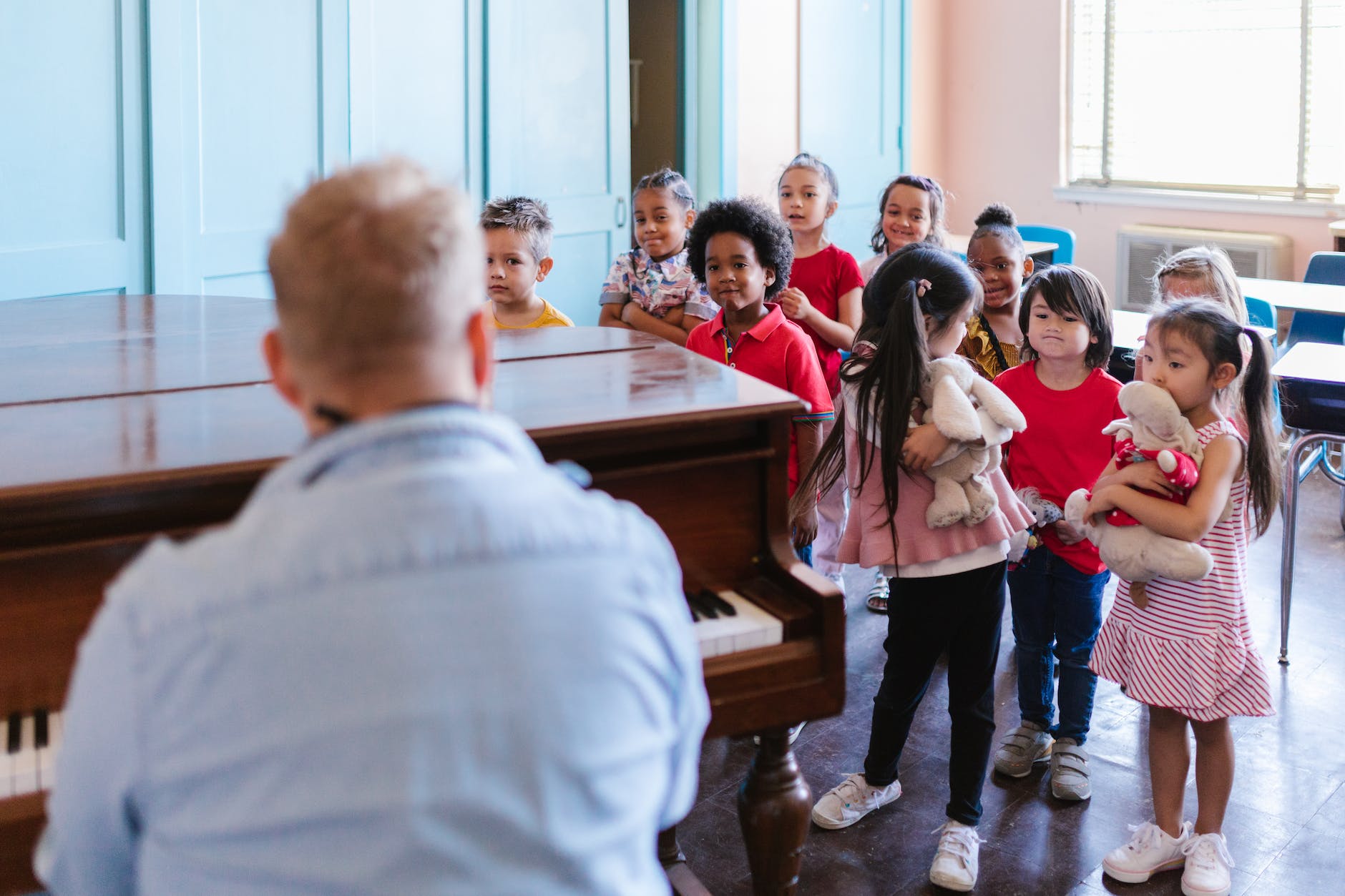
Photo by RDNE Stock project on Pexels.com

I am not at all musically inclined. I actually prefer to never have music playing in the background – at home, in the car, anywhere. I know, I know…it’s weird.

As you can imagine, this category of mind-body skills is not one that I lean into very often, and that’s ok. Music is life for many people so, once in awhile, it’s good to push ourselves outside of our comfort zone and try something new. For me, when creating my mind-body skills training, that meant finding musical activities that would speak to a wide variety of people.

We all know there are a million different YouTube and Spotify channels where we can stream music and calming sounds into our classrooms. Those are great to use during transitions, independent work time, etc. Many of us use music in a cross-disciplinary manner through phonics chants, math songs, etc. These are all fantastic ways to incorporate music into the classroom, but what other ways can we tap into the power of music?

Hands down, my favorite activity that I came across while researching for the mind-body skills training was an activity where we connect music to specific memories. Remember, anything sensory (sounds, smells, sights, textures, tastes, etc.) can evoke both positive and negative memories from even the deepest recesses of our brain. Often, recalling those positive memories can bring us peace, joy, laughter or contentment.

The example I used recently at a school I was working with can be found below.

I only intended to play a portion of this song and then connect it to a specific memory, as an example for the group of teachers. However, about 10 seconds into the song, I realized we would be listening to the entire thing because the song immediately began to evoke memories for all of THEM!

Even if they did not tie this song to a specific memory, as I do, it brought back memories for many of them of the movie, being in a certain place in life, where they first saw this movie, etc. We ended up having the best time just singing along to this song!

Give it a try! What song evokes strong, positive memories for you? Go give it a listen and just sit with it for a few minutes.

Ask your music-loving students to try out this exercise. Not only can we recall these memories when we are in a place of balance, but we can also use them when we are feeling sad, angry or overwhelmed. That’s what mind-body skills are all about!

Mind-Body Skills Part 4: Art

**This is Part 4 of a 7 part series on Mind-Body Skills. Check out the introductory post here or follow along on my YouTube channel.

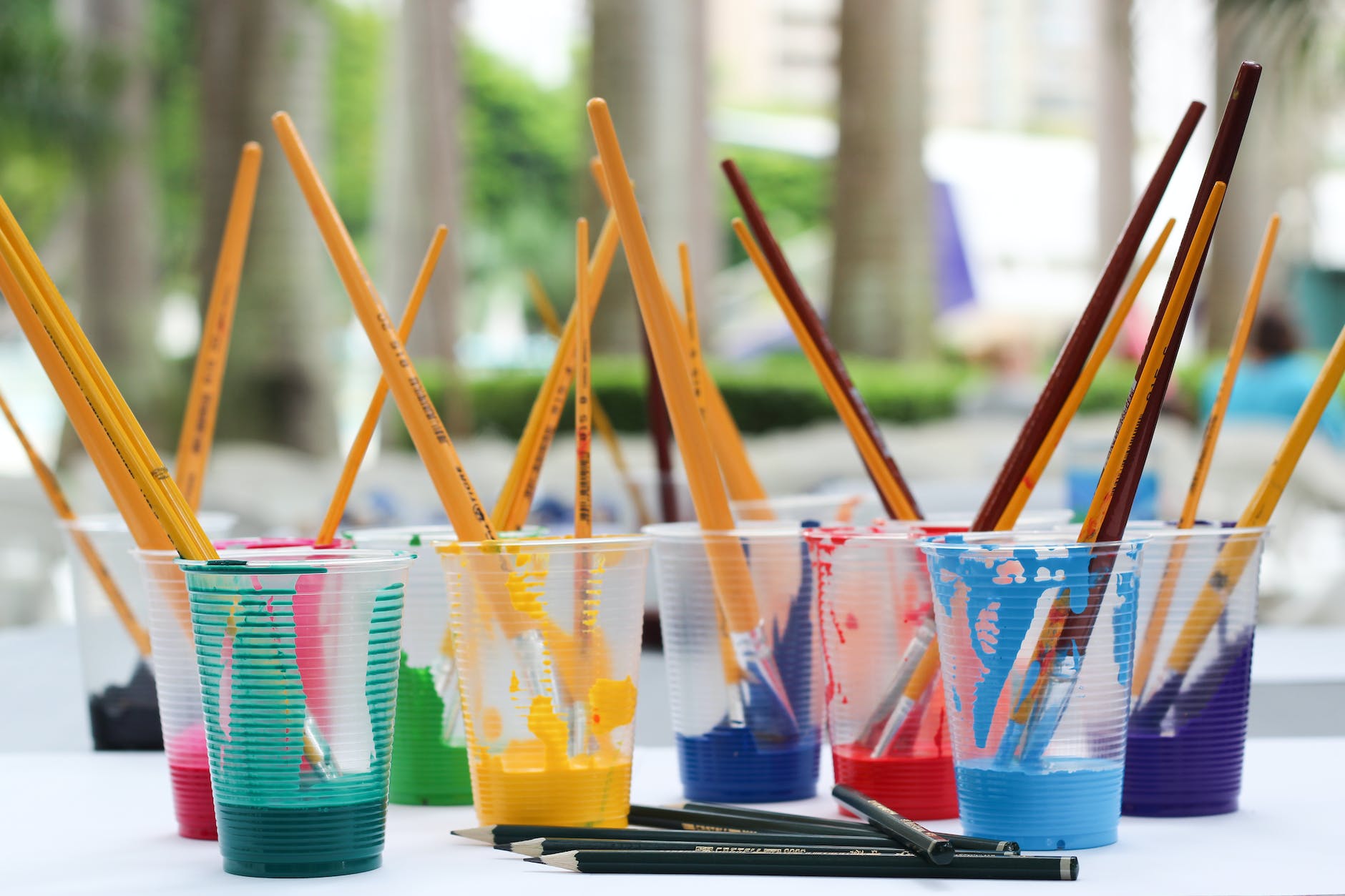
Photo by Jadson Thomas on Pexels.com

Typically, in schools, art projects are left to the art teacher except in preschool and kindergarten. However, art is one of the best ways for kids to express themselves and their emotions. Fortunately, there are some very simple ways for classroom teachers to incorporate expressive art into their classrooms as a mind-body skill.

Remember several years back when adult coloring books became all the rage? Why do you think that is? As adults, we are so stressed out and overwhelmed by life – jobs, kids, keeping the house clean – that we are constantly seeking out ways to de-stress. Unfortunately, we typically convince ourselves that we don’t have time to do the things that bring us peace and joy – reading, exercising, taking a walk – and we turn to unhealthy behaviors that make us feel good quickly – eating, drinking, shopping. Adult coloring books changed that for many people. We found a sort of calm in breaking out our good markers or colored pencils and mindlessly coloring designs on a page.

While coloring books are still a great option for kids and adults alike, there are so many other simple ways to use art as a calming tool. Here are a few of my favorites:

  1. Try a New Medium – Fingerpaint, charcoals, chalk, modeling clay…the list goes on and on. The next time you ask your students to pull out their crayons or markers, consider a different medium. Switching to one of the mediums listed above (or one of the dozens of others) is a great way to provide kids a different kind of sensory experience that they may not be accustomed to.
  2. Sand – Instead of having students practice their spelling words or complete their phonics work with paper and a pencil, give them a sand tray! This multi-sensory experience has many developmental benefits and has been proven to activate the brain!
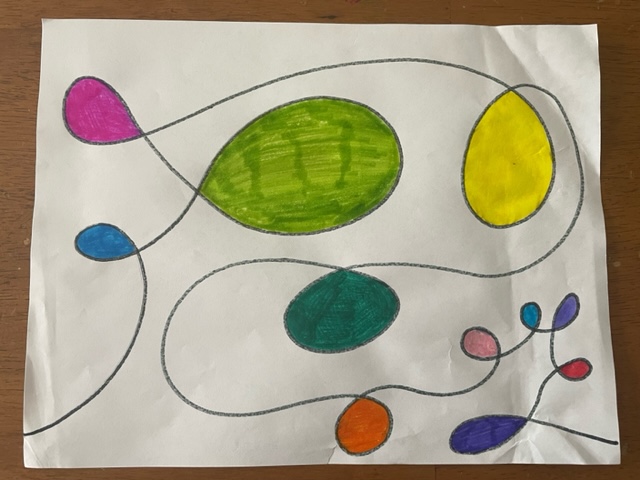
  3. Create Your Own Coloring Page – Have students create their own coloring page for mindful coloring. These can be used during transitions, at the end of the day or class or when work is completed. Bonus – they are so simple to create!

First, create a simple design of loops or other shapes, using a black marker. It can be as simple or intricate as you’d like.

Then, color it in, as you have time!

What other ways do you incorporate art into the classroom? How do your students respond to these activities?

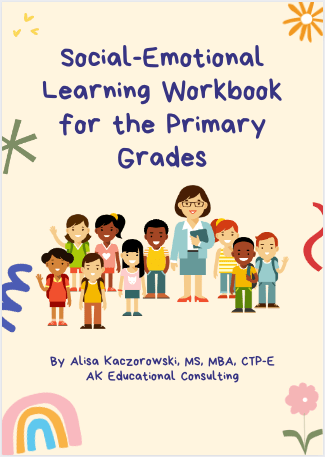
Social-Emotional Learning Workbook for the primary grades

I’m so excited to debut a project that I have been working on for almost two years – a 150+ page social-emotional learning workbook!

We all know that two things are true of teaching – one is that teachers wear many hats and the other is that there is never enough time during the school day to get everything done.

While I feel VERY strongly about explicit instruction of social-emotional learning skills in the classroom, I also know how hard this is. Most schools are not fortunate enough to have an SEL coach or a dedicated SEL block during the day so teachers have to get creative.

When I am working with schools, I always recommend that SEL instruction be embedded into the instruction that is already happening in the classroom. Reading a specific book during ELA? Think about the SEL themes that can be pulled out and discussed. Students need to write a narrative piece? Brainstorm ways that SEL can be tied in or assigned as the prompt. Having a specific problem in the classroom that needs to be addressed (i.e. friendship skills, conflict resolution, etc.)? Let’s address it through meaningful SEL instruction rather than another lecture that no one is paying attention to.

Of course, all of this is much easier said than done, right? That’s why I decided to create this workbook. I wanted to give teachers a set of pre-made lessons that take the research and guesswork out of explicit SEL instruction.

I spent countless hours researching the CASEL Framework for Social-Emotional Learning, as well as the Michigan Social-Emotional Learning Competencies and Indicators, the most comprehensive set of state standards I found, in order to identify the most critical skills students need to be exposed to.

I used those skills to create 34 week-long lessons that include all the things a teacher would need to carry out instruction – a lesson plan, graphic organizers, printables, picture book lists, cross-curricular activities and more. Plus, each lesson uses a fantastic picture book as the foundation for instruction.

I am so excited that this workbook is done and available for teachers at the beginning of a new school year, and I sincerely hope it is a valuable and time-saving resource for teachers. Find it, along with many other trauma-informed and SEL resources, right here in my TPT store!

Mind-Body Skills Part 1: Breathing

**This is Part 1 of a 7 part series on Mind-Body Skills. Check out the introductory post here or follow along on my YouTube channel.

Mindful breathing strategies are a great place to begin when teaching kids mind-body skills. Why? Because when we mindfully breathe, our brain sends a message to our heart, telling it to slow down. As a result, our heart rate slows and we can begin to calm down and better regulate. Additionally, breathing strategies are some of the easiest to learn, especially for young children.

Below you will find some of my favorite breathing techniques and other resources…

Five Finger Breathing (sometimes called Mountain Breathing): this is my all-time favorite breathing technique for kids because it’s simple, easily understandable and lends itself well to a simple visual reminder on the wall.

Box Breathing: another favorite for all the same reasons as above. Definitely, my own go-to breathing technique!

Other Deep Breathing Exercises: this post has SO MANY great breathing exercises that kids will find fun to do!

Sesame Street Belly Breathe Video: best for 1st grade and younger!

Alphabreaths and Alphabreaths Too: these are great picture books with lots of breathing techniques.

Breathing Makes It Better: another great book for connecting deep breathing and the emotions we feel. Best for younger kids.

Breathe Like a Bear: another picture book best suited to younger kids.

Breathing is My Superpower: great book of breathing techniques for elementary-aged kids.

Let me know what other breathing exercises you enjoy using with kids! I’d love to hear from you!

The 6 types of Self-Care…A new youTube Series

If you follow me over on YouTube, you probably know that I’ve started a new series all about the 6 different types of self-care.

The idea for this series came about after I took a self-care assessment, and much to my dismay, found that I had failed 5 of the 6 types of self-care. I was honestly shocked. As someone who does what I do, I suppose I thought I had it figured out better than the average person. Clearly, I was wrong.

So what can you expect from the videos in this series?

Each video will take you through one of the types – what it is and what it looks like if you’re doing it well.

I promise that this will not be a series of videos of me telling you to light a candle, take a bath and eat some chocolate. It will be me giving you the tools to build self-awareness and understanding of how you’re caring for yourself well and how you aren’t.

If you’re someone who cares for everyone around you and winds up with an empty fuel tank for yourself, this series is for you. Come on over here and join me!

my 5 favorite picture books for teaching kids about friendship

Friendship is a theme that you can find in a whole host of children’s books which is fortunate since it is a topic that often needs revisited with kids. Whether you have students finding it difficult to be a kind friend or your own children are experiencing friendship struggles at school, I’m sure you’ll find a book on the list below that could be helpful in talking to younger kids about the concept of friendship.

When Glitter Met Glue by Karen Kilpatrick

This wonderful picture book is all about what to do when one person in a friendship feels invisible. Find out how Glitter and Glue team up to help Glue shine like some of their other friends.

Peanut Butter and Cupcake by Terry Border

This witty picture book with awesome photo illustrations is a great one to turn to when kids are feeling lonely and struggling to find friends. Read to find out how Bread searches and searches for his perfect pairing.

The Circles All Around Us by Brad Montague

This is one of my absolute favorite picture books for so many reasons. There are so many wonderful themes that can be extracted from this book. If you’re looking for a book about friendship, kindness or inclusivity, this is the one!

This book is all about how the circles of people around us (our relationships) grow as we get older to include, not only family, but also friends, neighbors and other people from our community with whom we connect and feel safe. This book serves as a great springboard for a conversation on how we grow those circles through kindness and by being a good friend.

Dude! by Aaron Reynolds

If you have a child who feels excluded or students making snap judgments about another student, this book is for you!

This book is about platypus and beaver, friends who just want to go surfing. Unfortunately, they are afraid to surf because they share an ocean with shark. As he approaches and they get to know him, though, they find out that maybe there’s more to shark than what they originally thought.

You Will Be My Friend! by Peter Brown

This is the perfect book for those kiddos who just aren’t sure how to go about making friends.

In this story, we learn from Bear just how hard it is to make friends, how persistence is the key and how sometimes, we find the best friends in the most unlikely places.

I hope you have a chance to check out these wonderful books! In the comments, let me know what other books you like for the theme of friendship.