Social-Emotional Learning

If you’ve been following along with the news recently, you’ve probably run across articles similar to this one, in which the benefits and necessity of addressing social-emotional learning (SEL) skills in schools are called into question. In my home state of Indiana, the debate has now reached the state legislature, where the Indiana General Assembly is currently hearing testimony on House Bill 1134 that states, in part, that schools must obtain written parental consent PRIOR to providing certain mental, social-emotional or psychological services to students. Who knows exactly what is meant by the vague language included in the bill, but one thing is certain – educators and other proponents of SEL are NOT happy.

Why? Because they know firsthand what the research has been saying for a long time – explicit instruction in SEL leads to improved academic performance, improved classroom behavior, increased ability to cope with stress and a more positive outlook on life. Additionally, the benefits are LONG-TERM, meaning the research shows a strong correlation between social-emotional learning and higher emotional intelligence later in life.

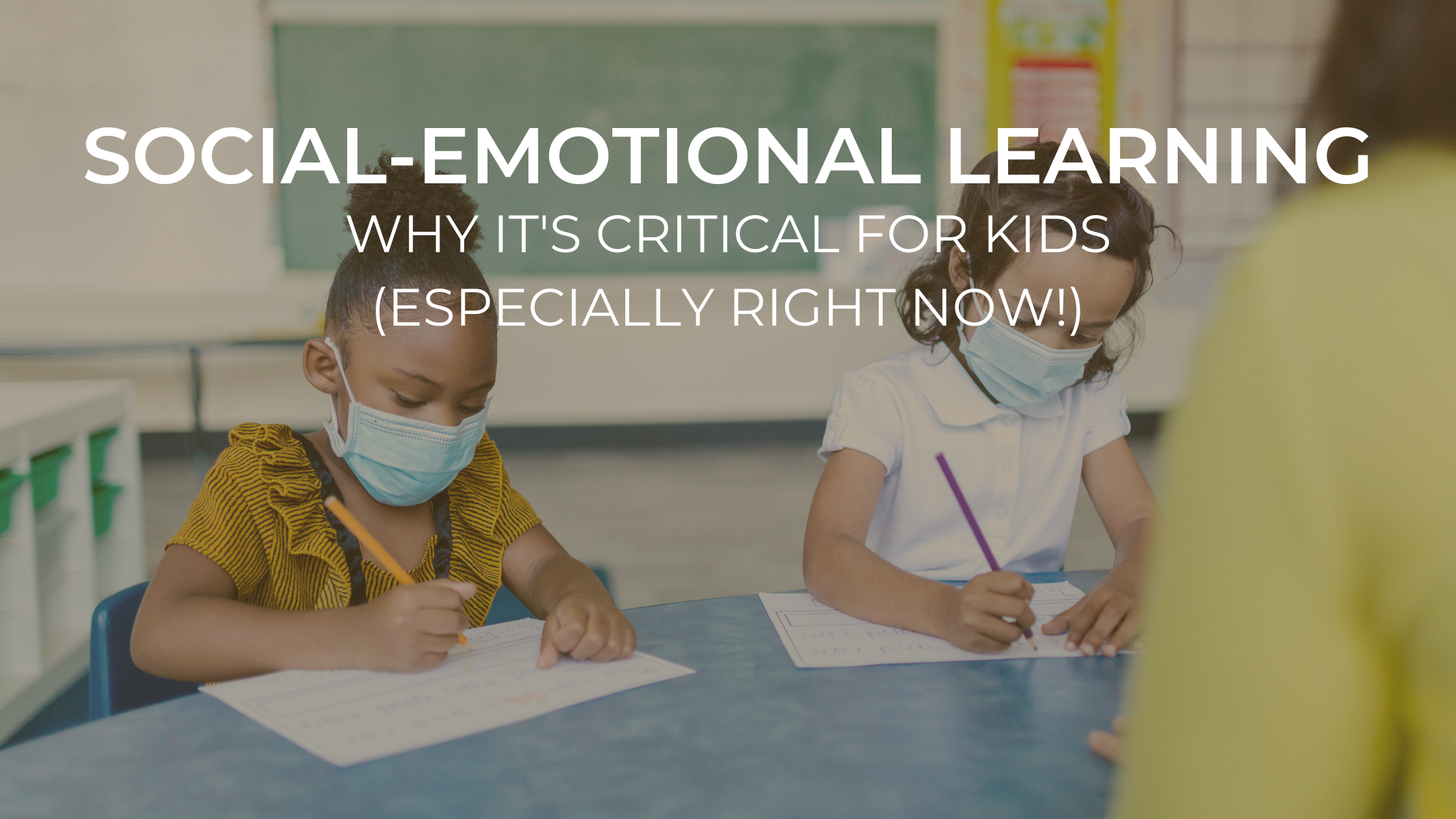
With most kids returning to in-person learning this school year, one thing is certain. All of our kids are struggling. I hear the same thing over and over again, from principals from California to Florida and everywhere in between. Students are struggling to focus, they are apathetic and giving up easily when the work gets tough, they are having a hard time appropriately communicating with their peers. The list goes on and on.

The good news (if we can call it that) is that the behaviors that kids are exhibiting are consistent. It doesn’t seem to matter where you live, what socio-economic group you belong to, etc. The social-emotional impacts of the COVID pandemic seem to be equal opportunity. Heck, even my own kids are seriously struggling in many ways…and they are living a much more ideal reality than many kids!

The question becomes…what do we do to help our kids? Well, the answer is simple and utterly complicated at the same time. The short answer is we start focusing on critical social-emotional learning skills and providing kids tools for their toolboxes. What do I mean by that? I mean that we dedicate time and planning to ensure that social-emotional learning skills are explicitly taught to kids. Of course, we all know that time is not something that teachers have an abundance of, and we certainly know that our teachers are already doing the job of 184 different people on any given day (this is the complicated part).

Here’s the good news, though…there are many SIMPLE things that we can begin doing in our classrooms and homes to better support the social-emotional health of our kids. Many of these things don’t take a lot of time or cost any money either. These are simple ideas, books and activities to springboard a conversation with kids about social-emotional learning skills such as friendship, social problem solving or self-esteem.

I’m currently sharing a series of videos on this very topic over on my YouTube channel, if you’re looking for some quick and easy ideas on how to get started at home or school.

Going forward, it is going to be critical for school administrators and parents to recognize the importance of supporting social-emotional learning at school. We are living in a world much different than any of us has ever experienced, and unfortunately, it has taken a serious toll on one of our most vulnerable populations – school-aged children. The sooner we accept this as our current reality, the sooner we can take steps toward changing this reality for the future.

**If you’re looking for resources on social-emotional learning, please check out my TPT store here or contact me at akedconsult@gmail.com to find out more about the professional development and consultation services I offer to schools.
Social-Emotional learning & picture books (plus a big freebie!!)

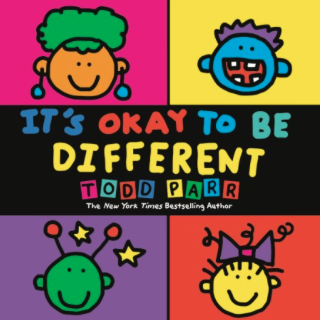
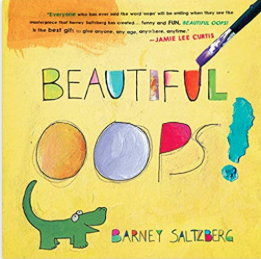
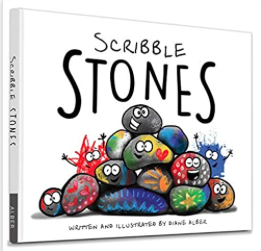
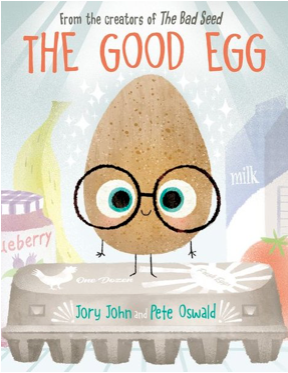
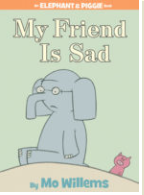
If you follow me on YouTube, you know that I’ve been sharing some of my favorite pictures books to support various areas of social-emotional learning. My belief in the power of picture books in the classroom, ANY classroom, rivals my belief in trauma-informed practices in schools. We don’t spend enough time reading aloud to students anymore or encouraging them to read for pleasure because time is not something we have in excess in classrooms these days. Unfortunately, most of us also don’t have the time to teach explicit social-emotional learning lessons to our students which is a shame because these skills are JUST AS CRITICAL as the reading and math skills we teach.

As educators, we have to get creative in sharing real literature with our students (especially if you have a reading curriculum that doesn’t value really excellent children’s literature). How do we do that? We embed as many awesome picture books, graphic novels and young adult literature into the instruction we already provide. Morning meeting, quiet time after recess, restroom breaks and before dismissal are all times that we can sneak in a great book and conversation. Read a book and use it as a springboard for a conversation on a specific SEL topic such as kindness, friendship or acceptance. Or use the books you already have to use for your reading and writing blocks. Just be sure to sprinkle in a question or thought, here and there, that align to an area of social-emotional learning.

Don’t think your middle or high schoolers will dig reading a picture book? Give it a try. I dare you. The older kids are often the ones that enjoy reading a picture book EVEN MORE than the younger ones. I speak from experience, I promise! If that feels out of your comfort zone, though, try a graphic novel or other young adult book. There is so much hidden wisdom in all types of children’s and young adult books.

Wondering where to start? Already on board but need more book ideas? Well, have I got a big surprise for you!It just so happens that I started a Google Doc of social-emotional learning picture books many moons ago that has morphed into a very large, curated list of books that is organized into 11 key areas of social-emotional learning. Those areas are:

  • Growth Mindset
  • Acceptance & Diversity
  • Self-Esteem
  • Friendship
  • Conflict Resolution
  • Social Problem Solving
  • Feelings & Emotions
  • Coping Skills
  • Self-Control
  • Bullying Prevention
  • Kindness

There’s even a couple of bonus sections!

Here’s the best part…I add to this list ALL THE TIME! So head on over to this link and bookmark the page. Since it’s a Google Doc, it will always be there. Once you have it bookmarked, you can refer back to it at any time and check out any new books I’ve added.

Have a book idea that’s not on the list? Email me at akedconsult@gmail.com. I’d love to hear from you!

Adverse childhood experiences: what are they and what can be done about them

Every time I present at a school or conference, I ask the question, “Who here knows what ACEs are?” and every time, I am astounded that rooms full of extremely knowledgable educators, school counselors and administrators have never even heard the term before. Every. Single. Time.

Now, to be clear, I’m not astounded because I expect them to know. Quite the opposite, in fact. I’ve trained enough educators and school staff to expect that only a handful of them will raise their hand when I ask the question. My astonishment stems from the fact that I want them to know. I want every educator in our country to have a clear understanding of what Adverse Childhood Experiences (ACEs) are, how they impact our students and what actionable steps can be taken to help prevent them. I want our education system to do a better job of preparing our teachers for the behaviors they will encounter due to trauma and chronic stress. I want these things because I believe the lack of understanding, and the many things that result from this lack of understanding, is one of the reasons the teaching profession boasts such high levels of burnout. Add to all this the fact that we now have MORE struggling kids than ever before.

So what are ACEs? And how will better understanding them help teachers and kids? Let’s start at the beginning. According to the CDC, ACEs are “potentially traumatic events that occur in childhood.” Think abuse, neglect, divorce of parents, incarceration of someone close to them, etc. Here’s the really bad news about ACEs, though – we are learning that they increase a person’s risk of developing a multitude of physical and mental illnesses later in life. Things like lung cancer, heart disease and diabetes, just to name a few. We also know that, in the short-term, ACEs (and trauma, in general) impact the brain and as a result, learning and behavior.

It follows then that trauma and chronic stress are major contributing factors in many of the academic and behavioral issues we see in students. Have you noticed an increase in negative or aggressive behaviors at your school or your child’s school this year? Schools all over the country are reporting this very thing. Why? Because we have a whole lot of kids living with the stress and anxiety of the COVID-19 pandemic, among other things.

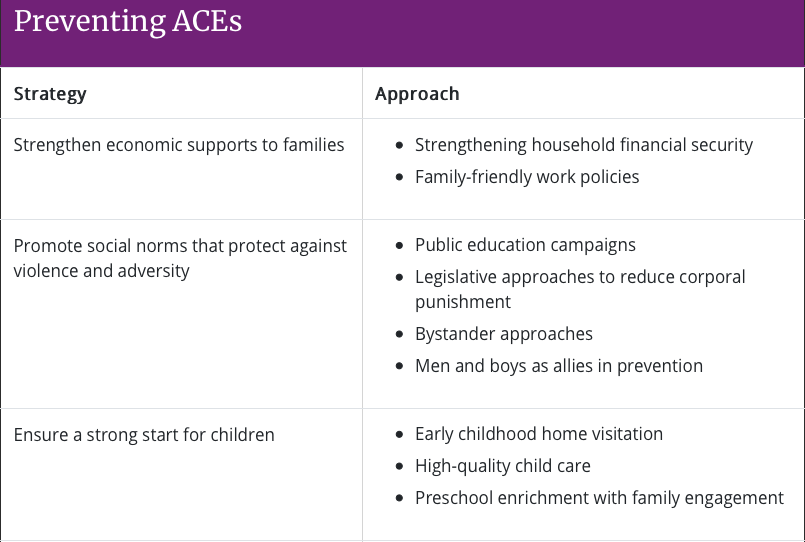
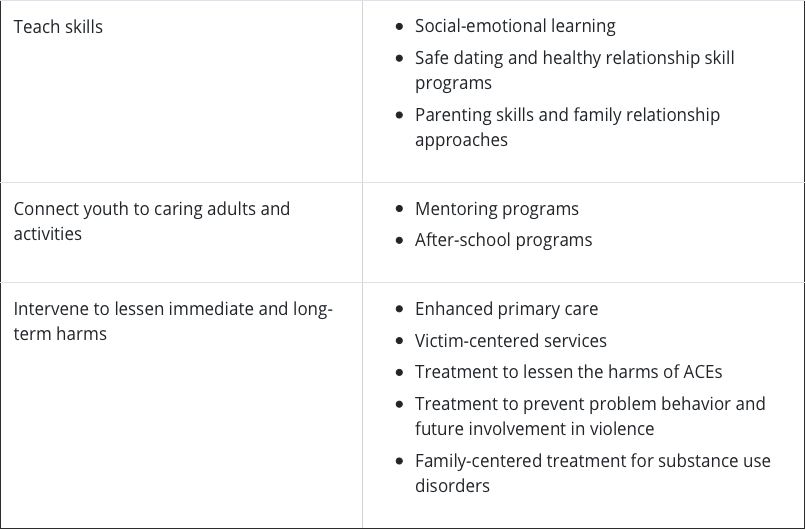
So the real question becomes – what can we, as educators and parents, do about this sticky situation we are in? Well, for starters, let’s check out this list of prevention strategies from the CDC’s ACE page which you can find here.

Now obviously, the reach of teachers only goes so far, but “Teach skills” and “Connect youth to caring adults and activities” lands directly in the laps of educators and school counselors. Our schools need to quickly realize that going about with a “business as usual” mindset is doing our students NO FAVORS. The world we are currently living in is far from “usual.” We need to prioritize the social-emotional health of every single child, if we ever hope to get them back on track. Now is not the time to try to “catch them up.” It is not the time to say, “We need to try to move on.” It is the time to realize that what our kids are experiencing is unprecedented and needs to be addressed. We need to help them process through the changes they’ve experienced, the emotions they’re feeling to help them understand they are not alone and provide them the tools to build resiliency.

Heck, think about how YOU have felt over the past 18 months. Do we expect that children should be able to ride that rollercoaster of emotions for so long, hop on off and just go about their business in ways that many adults have not been able to do? Of course not!

Wondering where to begin? I encourage you to check out all the information and resources on the CDC’s ACE page. There is so much to delve into there. If you’re wanting to learn more about incorporating trauma-informed practices or social-emotional learning into your classroom or school, email me at akedconsult@gmail.com. There is so much that we can do to help ALL students be successful at school right now.

Building & Maintaining Strong Relationships with Kids – New Resources Available!

Photo by August de Richelieu on Pexels.com

As educators and parents, we all know how critical it is to build strong relationships with children. In the classroom, this really is the foundation of a successful school year.

I’ve created several new resources that can be used at the beginning of the year, semester or anytime in between to help you get to know your students a bit better.

The resources are:

  1. Interest Inventory – Learn more about your students’ interests with this simple graphic organizer
  2. All About Me with an SEL Twist – A fun writing activity that helps you learn more about your students than just their favorite color or food
  3. I Wish My Teacher Knew – Do yourself a favor and go read the book, “I Wish My Teacher Knew: How One Question Can Change Everything for Our Kids” by Kyle Schwartz and then use this handy dandy printable to do the activity with your own students
  4. Daily Check-In Form – Have a student or 3 that you’d like to communicate with more consistently? Use this awesome check-in form to keep a pulse on how they’re doing each day.

Click on the links above to check out each resource on Teachers Pay Teachers or click here to see all four in one easy bundle.

Coming Soon!

Well, I did something that will either make me really cool or really lame according to my kids…I started a YouTube channel! I’m excited to share more about who I am and what I offer schools and parents, as well as practical tips and strategies for making your classroom and/or home environment more trauma-informed.

The channel will go live tomorrow. Click here to check it out and be sure to follow so you don’t miss out on any content!

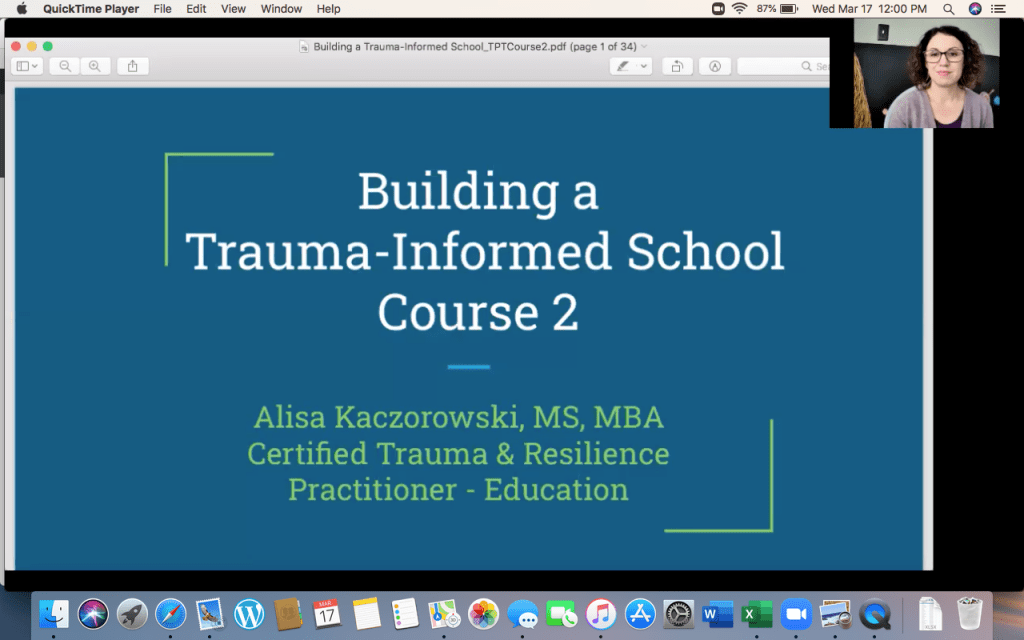
Building a Trauma-Informed School Video Series: Course 2

Get Course 2 here!

Course 2 of my new video series on Building a Trauma-Informed School launched yesterday on Teachers Pay Teachers! I’m excited to make the content I teach to schools all over the country accessible to educators at the click of a button and at an affordable price.

This series will break down the information I present in a full-day professional development into smaller, easy to watch chunks. Course 1 is already available and focuses on understanding the basics of trauma in our society, why schools should be trauma-informed and recognizing the characteristics of trauma in children of various age levels.

Course 2 dives into understanding the neuroscience of trauma – how traumatic experiences impact, and cause changes to, the brain that affect students in a learning environment. It covers the impact of trauma on learning, as well as a variety of mindfulness techniques that can be implemented in the classroom.

Course 3 will go live in the next two weeks. It will focus on the impact of trauma on behavior, trauma-informed classroom management strategies and assess the pros and cons of a variety of common classroom management systems.

At least one more course will follow and will include 10 strategies for building a more trauma-informed culture in the classroom.

Head on over to Teachers Pay Teachers and grab Course 2 here!

Mindfulness vs. De-Escalation

Have you ever really stopped to think about the difference between mindfulness strategies and de-escalation strategies? No…just me? At first thought, it seems that they are the opposite of one another, right? I mean, when I think of mindfulness, I visualize someone meditating or deep breathing in a peaceful, quiet place. When I think of de-escalation, calm and peaceful are certainly not words that come to mind. I picture a child who is feeling very angry or emotional and adults trying to help. This visual is very noisy and chaotic in my mind.

Take a minute to think about a few de-escalation strategies that the child in the example above might use. What would be on your list? Perhaps deep breathing, some type of movement activity or productive destruction (my term for satisfying the need to destroy something without ACTUALLY destroying something – think tearing paper or putty)?

Now think about common mindfulness strategies. What did you come up with? Deep breathing and exercise again?

See, the funny thing is…the strategies we use for de-escalation and the strategies we use to practice mindfulness are THE SAME! We just call them something different, depending upon WHEN we use them.

We need de-escalation strategies when our amygdala has already been activated, and we’ve moved into flight or fight mode. When we use the strategies at this time, they help bring us back into balance.

On the flip side, we practice mindfulness strategies to train our brain to respond more calmly and reflectively when faced with adversity. By practicing mindfulness regularly, we can actually retrain our amygdala to “false alarm” less frequently so we don’t need to de-escalate as often.

Now that you know that mindfulness and de-escalation strategies are the same thing, how will you incorporate them into your classroom or home environment? It’s critical that we explicitly introduce a variety of these strategies to kids so they can begin to decide what does and does not work for them. Providing time for mindfulness practice is also key to helping kids strengthen the neural pathways in their brains and be proactive about emotional regulation.

Need help getting started? Check out this infographic I have available on Teachers Pay Teachers.

App Review: Headspace

Let’s talk about a new-to-me app called Headspace. I know this one is very popular with many people, but I hadn’t tried it out until a few weeks ago. Thank goodness I did because now I’m obsessed with it!

Not only are there a ton of meditations and breathing exercises of varying lengths (most are 2-10 minutes), there are targeted meditation courses, sleep meditations and music, focus playlists and workouts! Plus, everything is categorized so it’s easy to find exactly what you’re looking for. Want a breathing exercise to jumpstart your day? Check! How about a meditation to help you feel more hopeful and less anxious? Check! There is even a whole category of meditations for kids!

So maybe you’re wondering what all the hype around mindfulness is about. Well, in her book, Mindful Parenting, Dr. Kristen Race discusses how even 5 MINUTES of daily mindfulness practice can work to strengthen the neural pathways in the brain, resulting in more reflective responses vs. impulsive responses. I don’t know about you, but the deeper into this pandemic we’ve gone, the more impulsive my responses to my husband, my children and myself have become. It’s something I’m actively working to improve, and practicing mindfulness each day is one action step I’m taking toward thinking before speaking or acting.

Perhaps you’ve noticed your interactions becoming more reactive as well. Or perhaps you have a kiddo who flies off the handle when told no or when they don’t get their way. Mindfulness practice is a great place to begin course correction. Plus, if we want our kids to grow their emotional intelligence and learn self-regulation techniques, they must be able to filter and vet their words and actions first. This means they need to actively practice slowing down and taking charge of their brain at times.

Mindfulness isn’t easy for most of us, but like many other things in life, the more we practice, the better we become. The good news is that Headspace makes the practice part easy. See my overall review below and check out this awesome app, if you haven’t already!

PROSCONS
Great for all ages and levelsCostly (~$70 per year)
So many options for meditating, breathing, moving and focusingThe many options can feel a bit overwhelming for beginners.
Well-organizedYou still have to make the time…the app won’t do that part for you!
Easily set reminders to make mindfulness a daily practice