March 2024 SEL THEME – Conflict Resolution & Problem solving – AN INTRODUCTION

Welcome to March and our 3rd social-emotional learning theme of the month! This is a tricky one for many of us so buckle up for some great information and strategies!

In this first week of the month, we will define our theme, discuss why it’s an important SEL skill and talk real-world application. This will serve as a springboard for the resources and other ideas I will be sharing throughout the remainder of the month.

So, let’s dive in!

What are conflict resolution and problem solving exactly? Here’s a good starting point to use with kids of all ages. You can adjust this definition to best fit the needs of the age group you work with. I know many of these themes are pretty self-explanatory, but sometimes we just need someone else to sum it up for us!

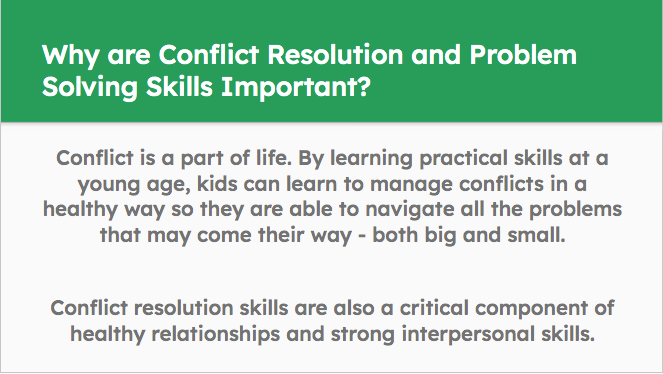
Now that kids know what conflict resolution means and what problem solving skills are, we need to help them understand why these skills are important and how they will be beneficial to them.
Next, we can begin connecting conflict resolution and problem solving with kids’ real lives by helping them recognize the many skills that are part of conflict resolution…and it’s a long list!

I know this is a tricky skill to learn, especially since many of our students are learning to resolve conflict in ways that seemingly go against everything we are trying to instill in them. How can you combat that and make these skills a priority this month (and beyond) for your kids or students?

Be sure to follow along all month right here on the blog, YouTubeFacebookInstagram and LinkedIn. I will be sharing all sorts of tips, strategies and resources throughout March.

February 2024 SEL THEME – Kindness – PICTURE BOOKS

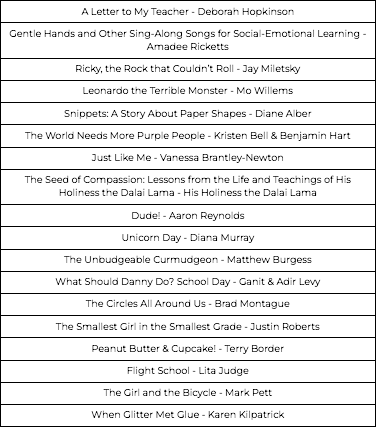
Looking for a curated list of mentor texts to use during a kindness unit or lesson? Look no further!

I also shared about a few of my absolute favorite books on kindness on YouTube earlier this week. You can watch the video here.

What other books would you add to this list? I’m sure there are so many good ones out there that I don’t even know about!

FEBRUARY 2024 SEL THEME – KINDNESS – TIPS & STRATEGIES FOR Teachers

Over on YouTube, I’ve shared two really great strategies for educators to instill kindness in students.

The first is a “take what you need” board. The idea is that you fill a bulletin board with quotes or affirmations that students can take when they are feeling overwhelmed, lacking self-confidence, etc.

To create a “take what you need” board, you first want to brainstorm the emotional supports your students may need. For instance, do you notice many students struggling with low self-esteem? Do they seem to need a reminder that they can and will rock exam week?

Once you identify several categories of supports, go in search of inspirational quotes and affirmations that may be helpful to them. Print or write them out to attach to the board. You can even color code the categories to make it easier to replenish as they are taken.

This is a fantastic idea for middle and high school educators and you can definitely get your student council or other similar club involved in helping.

Be sure all the students know about the board, where to find it, how it works, etc. Make sure it is accessible to all. You may even consider adding in some resources for students who are struggling with mental health issues or crises.

The second idea I discussed over on YouTube was a student and/or staff shout-out board. For this, you need to create a form that students or staff members can use to recognize one another. You make these forms available in a central location and have a system for them to be turned in. The forms can be attached to a bulletin board for everyone to read or can be read during morning/afternoon announcements.

This is a great way to encourage your school community to recognize the kind acts/great things happening in the building. Plus, it just makes people feel good to know they have been seen!

If you want to learn more about these strategies, head over to the following links to listen…

Take What You Need Board

Student/Staff Shout Out Board

What are some other ways you can instill kindness in your students?

February 2024 SEL THEME – Kindness – TIPS & STRATEGIES FOR PARENTS

As parents, we all know the types of things we need to do to raise kind kids. We set expectations for manners, we model through our words and actions, we correct when we see fit.

One thing that can be tricky about teaching kindness to kids, though, is something that even adults often struggle with – how to be kind and take the high road when being kind is hard.

We’ve all encountered situations where someone has been extremely unkind to us, bullied us or lashed out at us for no reason. In those instances, being the bigger person can be especially difficult.

Now imagine being a kid and trying to make the right choice in one of those situations.

What can we do to help our kids not react in these situations but instead, take the high road and continue to be kind? Here are a few tips…

  1. Put yourself in their shoes – This can be hard, but sometimes putting ourselves in another person’s shoes brings out empathy rather than anger. This is certainly not an easy skill to build, especially for kids, but it is one that is so important so start building those muscles now!
  2. Practice – Set kids up for success by practicing what to say to someone who is grieving, going through something difficult, is differently abled, etc. Oftentimes, kids are unsure of what to say or how to react in situations like these, and that uncertainty can come off as fear or unkindness. Prep them ahead of time by practicing what is appropriate and what’s not.
  3. Walk away – Sometimes it’s better to just disengage and walk away.
  4. Apologize – Teach your kids to apologize! There are going to be times when they mess up, don’t take the high road, etc., and that’s ok. In those situations, they need to know how to genuinely apologize. Model this for them by apologizing when YOU are unkind.

Being kind to someone who is being unkind to us is a hard skill for anyone to learn. Start building their emotional regulation muscles early with these tips.

What else would you add to this list?

February 2024 SEL Theme – Kindness – An Introduction

Our second monthly SEL theme is perfect for the month of February – kindness!

In this first week of the month, we will define our theme, discuss why it’s an important SEL skill and talk real-world application. This will serve as a springboard for the resources and other ideas I will be sharing throughout the remainder of the month.

So, let’s dive in!

What is kindness exactly? Here’s a good starting point to use with kids of all ages. You can adjust this definition to best fit the needs of the age group you work with. I know this one is pretty self-explanatory, but sometimes we just need someone else to sum it up for us!

Now that kids know what kindness is, we need to help them understand why it’s important and how it will be beneficial to both others and themselves.

It’s critical to help kids understand that modeling kindness is one of the best ways to build a happier world because kindness is CONTAGIOUS!

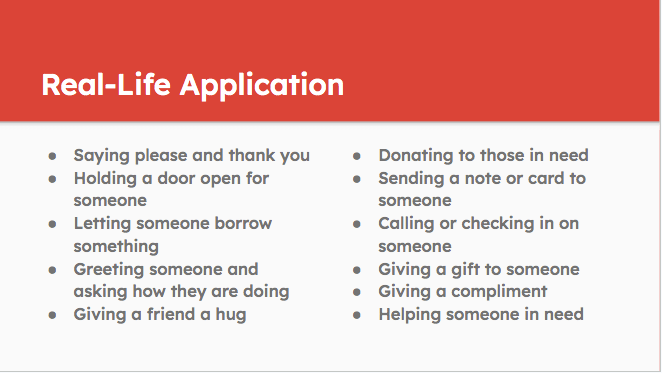
Next, we can begin connecting kindness with kids’ real lives using the list below.

What other ways do you show kindness in your own life? This is something I’ve been thinking a lot about over the past few days and something I want to really highlight for my kids this month. I’ve already done a few small acts of kindness, and I have several more (both big and small) planned.

How can you make kindness a priority this month (and beyond) for your kids or students?

Be sure to follow along all month right here on the blog, YouTubeFacebookInstagram and LinkedIn. I will be sharing all sorts of tips, strategies and resources throughout February.

JANUARY 2024 SEL THEME – GOAL SETTING – Wrapping up

Well, it’s time to wrap up our very first SEL theme of the month – goal setting. If you’ve been following along and setting goals for yourself or with your kids or students, you might be wondering how to keep the momentum going throughout the year.

Here are a few things you can do to ensure achievement of your goals:

  1. Break them down into smaller pieces – It’s a dream for a reason! It’s going to take time and effort to achieve. Do yourself a favor and break it down into more manageable chunks.
  2. Celebrate the small wins – Don’t wait until you achieve the goal to celebrate! Celebrate all the small successes you have along the way. You deserve it!
  3. Be consistent – It takes time and consistency to achieve a big goal. Keep at it and try not to get discouraged when it takes longer than you think it should.
  4. Stay organized – Have a system in place to map out the small steps you will take to reach your goal. Write it in your planner, add it to your calendar – whatever it takes to keep you on track!
  5. Visualize your success – What will it look like, feel like, sound like, etc. when you achieve your goal? Visualize every little detail of that success!
  6. Set up an accountability system – Find yourself an accountability partner to keep you focused and on track.

Now that you are well on your way to achieving your goal for the year, you may be wondering where we are heading for February and our next SEL theme. Well, I’ll tell you…tomorrow!

JANUARY 2024 SEL THEME – GOAL SETTING – Resources and Picture books

As we begin to wrap up this first social-emotional learning theme of the year, I want to share a few resources that I have come across over this past month. These can be used by parents or teachers, at home or in the classroom.

  1. This is a great list of goal-setting activities from Big Life Journal. Some are individual, some can be done as a family and many can be adapted to work in a classroom.
  2. Also from Big Life Journal, check out this handy dandy set of tips for goal-setting with kids.
  3. This is a great set of activities from Edutopia to foster a goal-setting mindset in the classroom.
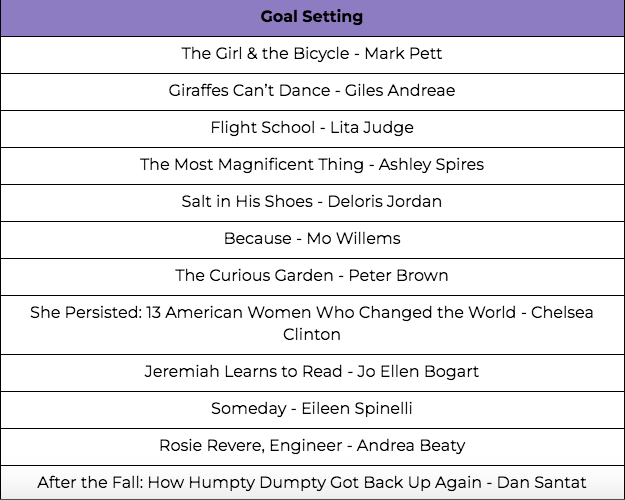
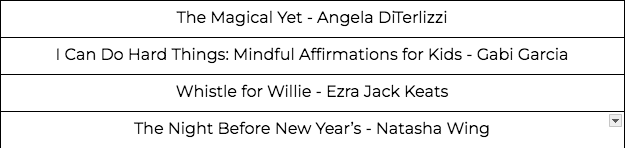
  4. Below is the list of picture books I have curated over the past month while researching goal-setting.

Be sure to check out my YouTube channel for so many other goal-setting activities and resources! I hope you’ve enjoyed this first SEL theme of 2024! I will be announcing February’s theme very soon!

JANUARY 2024 SEL THEME – GOAL SETTING – TIPS & STRATEGIES FOR Teachers

In last week’s blog, I talked about setting goals with kids and what that looks like at my house. This week, we are going to dig deeper into the idea of goal setting and take a look at two strategies that are beneficial in helping us achieve our goals.

First, let’s talk about visualizing our goals. This is a strategy that many athletes, performers and businesspeople use regularly. The idea is that we visualize every small detail of our race, performance, goal, etc., from the very beginning to the very end. We focus on our five senses to help us really feel as though we are experiencing the achievement. We acknowledge any obstacles that we may face and work through how we might overcome them. We see ourselves celebrating the accomplishment of achieving our goal.

The second strategy is the use of affirmations to help us overcome challenges while working toward our goal and remind us that we can accomplish what we set out to do. An affirmation can be a statement or mantra that you write down, read and repeat regularly. It’s basically putting the power of positive thinking to work for you.

Examples include:

  1. I can do hard things.
  2. I will overcome every challenge that is put in front of me while working toward my goal.
  3. I will achieve my goal.

Of course, you can add more detail to make the affirmation more specific to your goal.

Affirmations are great to write down and post in an area where you can read them regularly. They can stay the same for as long as you want/need or you can change them up daily/weekly/monthly to fit your needs at the time.

Here’s your homework for today…think about a big goal you have for this year. How can you incorporate visualization and affirmations into your routine to help you achieve your goal?

Once you’ve had practice with each of these strategies, think about how you can introduce them to students. Help them make connections between visualization that we use while reading, visualization we use to calm down and this type of visualization. Similarly, make connections between using affirmations for a self-esteem or self-confidence boost and for goal setting.

There are so many great ways to use these strategies with kids, especially since they are both fairly multi-purpose strategies! How do you foresee these strategies working in your classroom or home environment?

January 2024 SEL Theme – Goal Setting – An introduction

I’m so excited to introduce our very first monthly social-emotional learning theme for this year! Naturally, it’s goal setting!

In this first week of the month, we will define our theme, discuss why it’s an important SEL skill and talk real-world application. This will serve as a springboard for the resources and other ideas I will be sharing throughout the remainder of the month.

So, let’s dive in!

What is goal setting exactly? Here’s a good starting point to use with kids of all ages. You can adjust this definition to best fit the needs of the age group you work with.

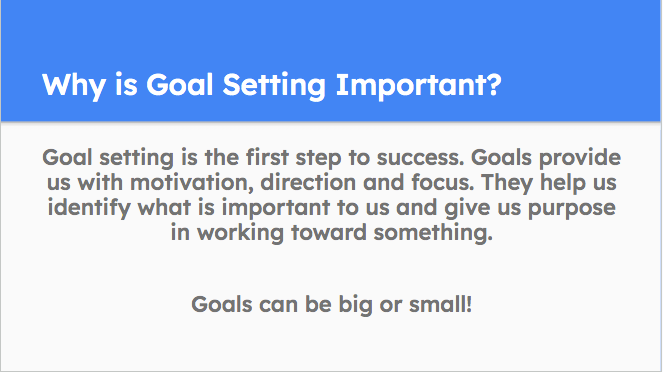
Now that kids know what goal setting is, we need to help them understand why it’s important and how it will be useful in their actual lives.

It’s critical to give examples of both big and small goals so that they understand that a goal can take many shapes.

Begin connecting goal setting with kids’ real lives using the list below.

What other ways do you apply goal setting to your own life? Be sure to share those with kids so they can start to see how this concept applies to their own life and the lives of those around them.

The more tangible we can make it, the more invested they will be when we ask them to begin actually setting goals for themselves (and yes, that’s coming soon!).

Be sure to follow along all month right here on the blog, YouTube, Facebook, Instagram and LinkedIn. I will be sharing all sorts of tips, strategies and resources.