Trauma-Informed and Social-Emotional Learning Solutions for Schools & Homes
Author: alisakaczorowski
I am a long-time teacher, school administrator and Certified Trauma & Resilience Practitioner. A few of my areas of interest include multi-sensory literacy instruction, trauma-informed practices in schools, cultivating strong educational leaders and instructional coaching. I have a passion for helping teachers and school leaders establish and maintain a positive culture and strong instructional practices in their schools. I live in the Indianapolis area with my husband and three children.
A brand new resource has hit my TPT store, and it’s a great one! This resource is one I developed and use as part of my in-person trainings, but I decided to make it available to all educators. Inside you’ll find 44 pages, packed with 11 simple strategies for building a trauma-informed classroom, easy-to-implement ideas for using each strategy, a page for jotting down notes and/or your thoughts and a simple self-assessment tool to help you gauge your effectiveness and grow as a trauma-informed educator.
PLAN YOUR WINTER & SPRING PROFESSIONAL DEVELOPMENT DAYS NOW!
If you’re looking for a comprehensive, relevant and highly engaging training to fill your winter and spring professional development days, check out the list of my most popular trainings below. All trainings are customizable to fit the needs and budgets of individual schools. Both in-person and virtual trainings are available.
How to Build a Trauma-Informed School
10 Strategies for Building a More Trauma-Informed Classroom Right Now
Understanding and Addressing Trauma in Students in the Wake of the Covid-19 Pandemic
De-Escalation Strategies for Kids
Mindfulness Strategies for Children
Secondary Trauma is Real: Self-Care Strategies for Educators
Now is the time to prepare your teachers with the strategies necessary to have a successful remainder of the school year. Read more here or contact me today to schedule your next professional development!
As teachers and/or parents, we all know the importance of getting the day started on a positive note. It really can impact the trajectory of our entire day so it’s critical to be mindful of the first words we speak and actions we take each morning.
I once read (I don’t remember where…it’s been a long time) about the importance of giving kids a hug and telling them “I love you” within 5 minutes of them waking up, arriving home from school and getting in bed each day. This simple habit gives kids the human connection, eye contact and feeling of safety and love that they need. This has stuck with me over the years, and it’s something I strive for. It sounds simple, but sometimes, amidst the rush of the morning routine (at least at my house), it can easily get lost.
The same concept is just as simple and powerful in a classroom environment. Greeting each student by name each morning has so many benefits and takes literally less than 10 seconds per child.
How It Works
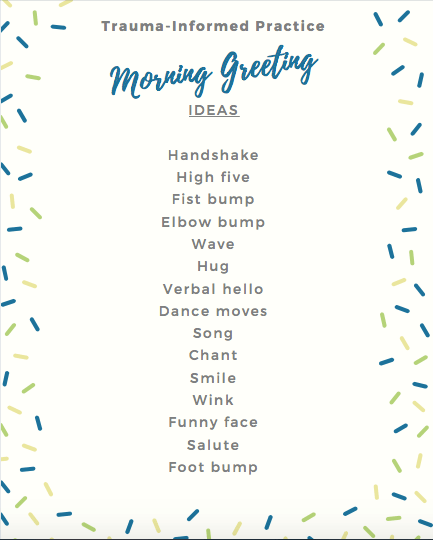
It’s simple. Stand at your classroom door. As each student arrives, say good morning or hello or how are you or, you get it. Give them a hug, a handshake or a high five. Make up a silly dance or song. Ask them about the soccer game they played in last night. Smile at them.
What should you NOT do? Sit behind your desk, text, grade papers or chat in the hallway with your colleague, while the students enter the room. Why? Think about the message this sends to them. I don’t matter. She doesn’t even see me. He doesn’t care. Are these things true? Probably not, but perception is reality.
Need more inspiration for different greetings? Check out this handy list.
Why It’s Important
This simple habit has benefits that can last the entire day. Here are just a few:
Gives each student the opportunity to hear their name spoken in a caring and respectful manner (perhaps the first time of the day for some children)
Allows you to make a personal connection with every student, everyday
Fosters a sense of belonging in each student
Aids in students feeling safe, secure and loved at school
Allows students the opportunity to practice crucial communication skills in a low-risk way
Gives you the opportunity to “scan” each student’s physical and emotional state each morning (this can come in useful later in the day)
Sends a message to each student that you care about them and are interested in them as people outside of school
I know this is such a simple strategy and even seems pretty obvious. I also know the reality of running a classroom on a daily basis and how easily we can get bogged down by the details…endless meetings, paperwork, lesson planning, etc. Sometimes we just need a friendly reminder of what’s really important in our job as educators.
Visit my Pinterest board here for more fun ideas for implementing Morning Greetings. Resources will also be coming to my TPT store soon.
Happy 2021! While I’m sure we are all glad to say goodbye to 2020, I think it’s fair to say most of us are entering the New Year with at least a small amount of trepidation. There are still so many unknowns and uncertainty as we forge ahead. However, I am looking forward to the promise of this new year and the opportunities it holds for all of us.
While I am unbelievably proud of everything I accomplished with this business in its first year (during a PANDEMIC, no less), I have lofty goals for its sophomore year! My biggest goal is, of course, to grow the business and teach even more educators across the US about trauma-informed practices. I don’t want to leave parents out, though, since these strategies are just as critical at home as they are at school. Be on the lookout for even more opportunities targeting parents and caregivers.
Here are a few more things to be on the lookout for in 2021:
A wider variety of trainings and workshops for both educators and parents/caregivers
More resources available to support the trainings and workshops
In-person speaking engagements (once it’s safe for conferences to be held again!)
A book on trauma!
I have so many things in the works and can’t wait to start rolling them out! Thank you for your support this year! Whether that was through likes and follows on Facebook, hiring me to train your staff or simply being my cheerleader, I appreciate it more than you know. Here’s to a calmer, more joyful 2021 for each and every one of you!
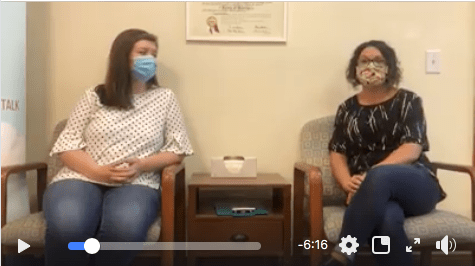
Yesterday, I had the opportunity to sit down (virtually, of course) and talk with my friend, Casey VanPutten, a Certified EFT Practitioner and leader extraordinaire of the Mothering Freely Facebook group. We chatted about the importance of calm down corners and how to create one in your home or classroom. Plus, as a bonus at the end, we talk about tapping with kids, a topic that is close to both of our hearts! Enjoy!
**I will be adding this topic as a Parent Workshop in January! Shoot me an email for more details!
The third video in my collaborative series with Indy Direct Docs is now up on their website! You can view it here. I sat down with Dr. Holliday to discuss how to share difficult news and current events with children. This is such a timely topic right now, as parents and educators navigate the tricky waters of appropriately informing kids of current events while being mindful of their age and emotional well-being.
Interested in learning more about topics like this? Check out the other videos in the series here and here or shoot me an email at akedconsult@gmail.com. You can also find out more about Indy Direct Docs at their website.
The second video that I recorded in collaboration with Indy Direct Docs has dropped over on their website! You can view the entire video here.
Just a reminder that these strategies, as well as TONS of others, will be included in the new virtual parent workshop that is coming very soon! If you’re interested in more information about that, reach out to me at akedconsult@gmail.com.
Last week, I had the opportunity to shoot a few videos with my new friends over at Indy Direct Docs on parenting in a pandemic. While I primarily train educators on trauma-informed practices, the strategies are just as useful and effective for parents, especially now when we’re all wearing so many different hats.
I was super excited to partner with Drs. Moore-Ostby and Holliday for a variety of reasons. First of all, their innovative take on healthcare puts the focus on the relationship between a doctor and patient, similar to the idea of relationship-building between a teacher and student. Second, they are invested in providing resources of all sorts to their patients through their blog. From nutrition and cooking tips to parenting strategies, they are in tune with the content their patients want. Lastly, I feel strongly about the trauma-informed strategies I teach, as both an educator and a mom, so why not share them with others? Parenting is hard. Parenting in a pandemic is nearly impossible. We’ve all felt it over the past 8 months. I know I need some help, and I’m guessing others do too.
There’s a really disappointing myth in our society that trauma-informed practices are only beneficial to kids living in poverty or kids who have experienced trauma. NO! Not true. Trauma-informed practices are beneficial to ALL kids. They nurture and repair relationships, encourage social-emotional health and well-being and help kids learn to be more in tune with their emotions. Isn’t that what we all want for our kids? I know I do!
Despite what we sometimes think, all kids have experienced some sort of trauma in their lives. From divorce and death to absentee parents and COVID-19, traumatic experiences are everywhere. It doesn’t have to be abuse or neglect to be considered trauma. Even if a child’s exposure to trauma is minimal at best, the strategies I teach are still useful. Have a child who struggles to control their anger, sadness, worry, etc.? I have strategies for that. What about kids who have difficulty resolving social conflicts? I have strategies for that too. Perhaps you just need some new ideas for surviving this trying time as a parent. I’m right there with you, and I can help.
Let’s give our kids the tools they need to grow into compassionate, empathetic human beings, living in a society where emotions are normalized and stigmas around mental illness and trauma are non-existent. If you’re interested in learning more about how trauma-informed practices can be useful to your kids, drop me an email or Facebook message!
At one of my recent trainings, I was enjoying lunch with the school principal and some teachers. We were, of course, talking about childhood trauma, and the principal asked me if I had read “The Deepest Well” by Dr. Nadine Burke Harris. I am embarrassed to admit now that I had never even heard of her so I, of course, had to remedy that ASAP. In case you’re wondering, I blame my children and 6+ months of quarantine for my lack of time to read anything of interest to me, either personally or professionally!
Once I returned home, I started researching Dr. Burke Harris and appropriately, began to wonder if I had been living under a rock for the past few years. How had I not dove headfirst into ALL the work of this intelligent woman? It was so applicable to everything I train teachers on, as well as just plain interesting to me, as an inner-city educator for 15+ years.
As luck would have it, Dr. Burke Harris had been featured on my all-time favorite podcast, Armchair Expert with Dax Shepard. I appreciate this podcast so much because not only do you get a front row seat to hearing the stories of some incredible celebrities, entrepreneurs, scientists, etc. but also there is an underlying theme of talking about past trauma and how that has shaped the lives of the guests. Of course, I find this type of thing fascinating!
So I listened to the podcast and was so intrigued by the work Dr. Burke Harris is doing. Of course, I hopped online and requested her book from the local library too. While I am still reading it (again…kids!), I would already highly recommend it to anyone who works with children in any capacity or who may want to learn more about childhood trauma, the ACEs research study or the possible long-term physical and mental effects of trauma on a person.
Do yourself a favor and give the podcast a listen here or check out her book here.
*Warning: This podcast regularly includes foul language. While I think it was minimal in this episode, I also think it’s worth mentioning for those who may find it offensive.






 akeducationalconsulting.com