MAY 2024 SEL THEME – RESILIENCE & PERSEVERANCE – How connection and community build resilience

***Trigger Warning: This blog post contains references to gun violence.***

Today, I’m going to digress from my typical content and tell a more personal story that highlights the importance of connection and community in building resilience in kids.

Allow me to begin by laying the foundation. My family lives in the city, in a fairly gentrified neighborhood that is surrounded by both up-and-coming areas and not-so-great areas. The police station, fire station, library and my kid’s school are all within a half mile of our house. It’s a front porch community, a walking neighborhood and, despite the violence that Indianapolis regularly experiences (and that we can often hear from our house in the form of gunshots), we feel very safe.

Our block, in particular, is a cozy, insulated city block with 20+ houses and 20+ kids. While the kids range in age from toddler to high school age, they all get along well and are outside constantly. They play soccer, race RC cars, ride bikes, draw with chalk, make up games, play with dolls, hang out on porches and just generally act like kids. I like to say that the kids on our block are living their best 1980’s childhoods.

Most of the older kids have free range of the block. Our families are all close, and we all watch out for one another. I know that if I don’t have eyes on my kids, another adult does. We all feel comfortable redirecting and correcting each others’ kids, and the kids feel comfortable talking to, and engaging with, all the grown-ups.

I realize how fortunate we are to live this life. I am grateful everyday for our neighbors, my kids’ friends and the community we’ve built on this block. I know that even just a street or two over from where we live, this is not the reality. I know that many people who live in the city don’t feel comfortable allowing their kids to run freely because they don’t know their neighbors or it just doesn’t feel safe.

That said, two weeks ago, we had a random incident of gun violence on our block, less than an hour before the kids would begin arriving home from school. Thanks to several quick calls to 911, police arrived quickly and fatally shot the gunman. However, because it was an officer-involved shooting, our block was shut down and crawling with police officers, detectives, forensics and others well into the evening hours.

In our family, my husband and I are very transparent with our kids and aren’t afraid to have tough conversations and answer hard questions, in an age-appropriate manner. Our kids feel very comfortable talking to us about just about anything (and they do, much to our chagrin sometimes!).

That day, we picked them up from school so that we could discuss what happened with them and allow them to ask questions, prior to them seeing all the action on the block where they live. As we walked and talked, we reinforced that the neighbors on our block are part of our community and that it’s our job to always look out for one another and do all that we can to keep everyone safe.

Later that evening, several parents from our block had a conversation via our block’s text thread about how to truthfully and appropriately communicate what happened to our kids to avoid them becoming fearful. In discussing how different families had approached, or were planning to approach, the subject with their children, something became so clear to me. Our kids were going to be ok.

Why was I so certain about this? Because the kids on our block are resilient, and that is because the adults around them have thoughtfully built a community of individuals who intentionally connect with one another, cultivate a sense of belonging and believe in empowering kids by allowing them to problem-solve, resolve conflict, build upon friendship and social skills and so much more, all in a safe environment.

It was entirely coincidental that all of this happened just as I had introduced the May social-emotional learning theme of resilience and perseverance. I knew right away, though, that I wanted to share this story during the month to highlight just how important connection and community are to building resilience.

When I speak in schools or at conferences about resilience (or SEL or trauma-informed care, for that matter), the one point that I always stress is this – connection matters. More than anything, in fact.

According to a study done at Harvard University’s Center on the Developing Child, “the single most common factor for children who develop resilience is at least one stable and committed relationship with a supportive parent, caregiver, or other adult.”

Many of us are fortunate enough that our kids have this many times over, in the form of parents, family members, neighbors, teachers, coaches, youth group leaders, etc.

What about the kids who don’t, though?

As a mom who also does double (quintuple???) duty as a teacher, coach, mentor, volunteer, etc., I always walk around with this question in the back of my mind.

When I’m serving as the dugout coach for my 7 year old’s baseball team or when I’m going on a field trip with my 10 year old’s class, I think about ways that I can intentionally connect with the kids around me so that maybe, just maybe, one day they will view me as one of their “people.”

It’s such a simple thing, but it’s so important. Although I truly hope not, perhaps one day, your student or child will be in a situation where resilience is the difference between them living in fear vs. processing through an event, choosing a healthy coping mechanism vs. an unhealthy one or talking to a trusted adult vs. keeping a dangerous or harmful secret.

Let’s work now to set them up for success later. It truly begins with a simple connection to build a beautiful community like the one in which I am so fortunate to live.

Do me a favor – I want you to think about how you can intentionally and meaningfully connect with another person whose path you cross today. And then, do it again tomorrow and the next day and the day after that.

MAY 2024 SEL THEME – RESILIENCE & PERSEVERANCE – The 7 Cs

Whenever I hear the word “resilience,” my mind immediately starts to think of certain sets of student siblings or family members that I’ve had over the years. I’ve always been intrigued by the question, “What causes one sibling to be on an uphill trajectory in life while another sibling makes worrisome choices?”

While we know that the answer is resilience, what does that mean really? How does one build resilience? What traits must they possess to become resilient?

These are just a few of the questions I will address over the course of this month, as we dive into our monthly SEL theme of resilience and perseverance.

First, we know that there are a plethora of traits associated with resilience building, including the following:

  1. Optimism
  2. Gratitude
  3. Strong moral compass
  4. Desire to help others
  5. Sense of purpose
  6. Humor
  7. Positive role models
  8. Social connection
  9. Supportive family relationships
  10. Willingness to confront and grow from fears

We also know that we can help people build resilience in a variety of ways.

The 7 Cs model of resilience building was first published by the American Academy of Pediatrics in 2006. This model provides us with a roadmap for building resilience. By identifying aligned activities and implementing them in our classrooms or homes, we can set our children up to have the ability to bounce back from challenges and roadblocks.

Over the next few weeks, I am going to spend time here and over on my YouTube channel, breaking down each of the 7 Cs. Additionally, I am going to give you actionable activities to help grow resilient learners. I hope you’ll join me!

May 2024 SEL THEME – Resilience & Perseverance – AN INTRODUCTION

Welcome to May and our 5th social-emotional learning theme of the month! This is, arguably, one of the most important skills we can help our kids develop so get ready for some great information and strategies!

In this first week of the month, we will define our theme, discuss why it’s an important SEL skill and talk real-world application. This will serve as a springboard for the resources and other ideas I will be sharing throughout the remainder of the month.

So, let’s dive in!

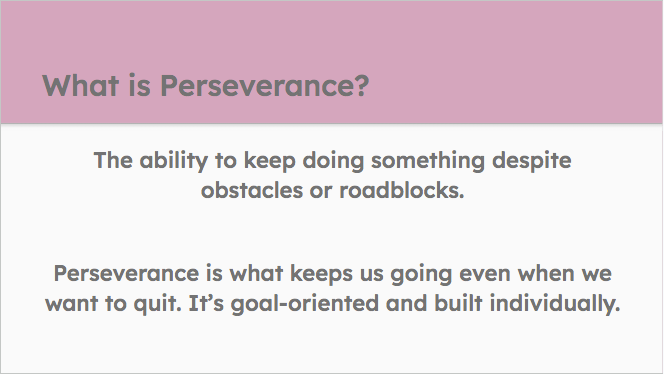
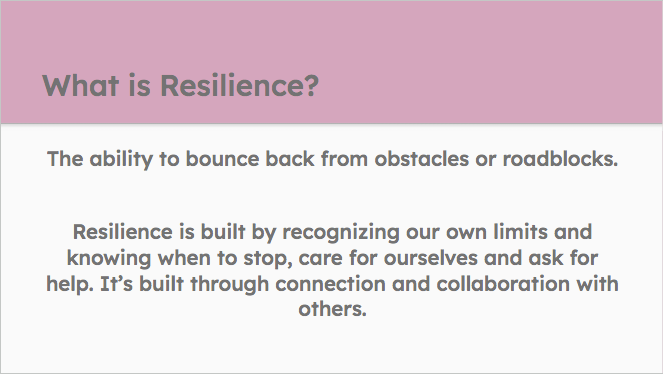
What are resilience and perseverance exactly? You may not know there is a difference between them, but there is! Here’s a good starting point to use with kids of all ages. You can adjust this definition to best fit the needs of the age group you work with. I know many of these themes are pretty self-explanatory, but sometimes we just need someone else to sum it up for us!

Now that kids know what resilience and perseverance are, we need to help them understand why these skills are important and how they will be beneficial to them.

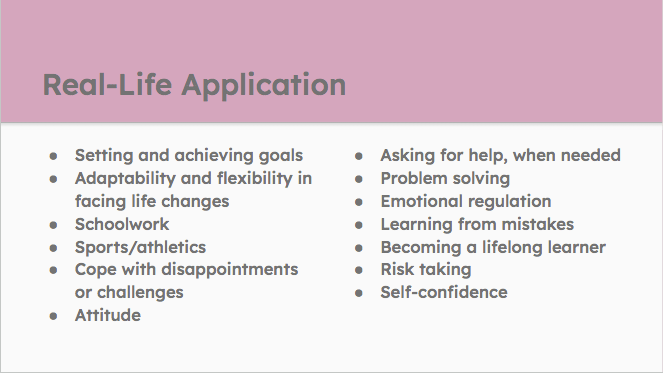
Next, we can begin connecting resilience and perseverance with kids’ real lives by helping them recognize what these skills actually look like and when they may come in handy!

Resilience is a skill that takes some time and support to fully develop. How can you aid your kids or students in resilience building this month and beyond?

Be sure to follow along all month right here on the blog, YouTubeFacebookInstagram and LinkedIn. I will be sharing all sorts of tips, strategies and resources throughout May.

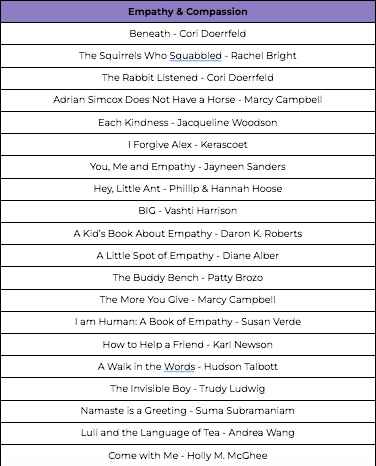
April 2024 SEL THEME – Empathy & Compassion – PICTURE BOOKS

Looking for a curated list of mentor texts to use during an empathy and compassion unit or lesson? Look no further!

I also shared about one of my favorite (and new to me!) books on empathy and compassion on YouTube earlier this week. You can watch the video here.

What other books would you add to this list? I’m sure there are so many good ones out there that I don’t even know about!

APRIIL 2024 SEL THEME – EMPATHY & COMPASSION – Strategies for parents and educators

Empathy can be a very tricky skill to build in kids. Heck, lots of adults struggle to be empathetic!

Photo by Hiep Nguyen on Pexels.com

Starting early with very young kids is key. Here are three activities/strategies that can be used with kids of all ages but are particularly beneficial to younger kiddos.

  1. Caring for Plants, Animals and Babies – Involving young children in caring for plants, animals and babies is a very effective and “entry-level” way to begin building empathy. Model and assign specific tasks to them and discuss how they are helping that living thing to survive and thrive. Have conversations around how we are all responsible for caring for other living things in the world and encourage them to think of ways they can do so. Eventually, you can take a more global perspective with this strategy by moving from them caring for siblings, houseplants and family pets to caring for these things in their classroom or school community, neighborhood or city and beyond.
  2. Story Talk – This strategy is exactly what it sounds like – talking about the characters in a story. By discussing their lives, their problems and hardships, and how they might be similar or different from us, we can begin to open our children’s eyes to all the different types of people who share our world. Beginning to understand the concept of diversity is a critical first step toward building empathy. If the book calls for it, ask your kids or students to brainstorm ways they could help the character through compassionate acts. This is a great way to, not only build empathy, but encourage kids to take their empathy one step further by acting on it.
  3. Walk the Line – While this activity from Big Life Journal is geared toward older children, you can certainly adjust to make it work for younger kids. The idea is to help a group of kids begin to see how others have similar experiences as them and begin to build empathy for people who seemingly “don’t have problems” or “have it easier than they do.” With younger children, simply focus on identifying the things that kids in the group have in common. This is a great first step. You can also extend this activity through a variety of writing activities that are mentioned at the article link.

What other activities do you use to build empathy in your kids or students? I’d love to hear about them so please share!

Apriil 2024 SEL THEME – Empathy & Compassion – AN INTRODUCTION

Welcome to April and our 4th social-emotional learning theme of the month! This is a tricky one for many of our kiddos so get ready for some great information and strategies!

In this first week of the month, we will define our theme, discuss why it’s an important SEL skill and talk real-world application. This will serve as a springboard for the resources and other ideas I will be sharing throughout the remainder of the month.

So, let’s dive in!

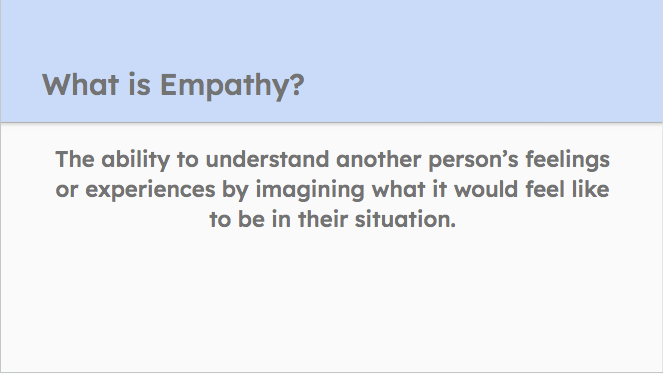
What are empathy and compassion exactly? You may not know there is a difference between them, but there is! Here’s a good starting point to use with kids of all ages. You can adjust this definition to best fit the needs of the age group you work with. I know many of these themes are pretty self-explanatory, but sometimes we just need someone else to sum it up for us!

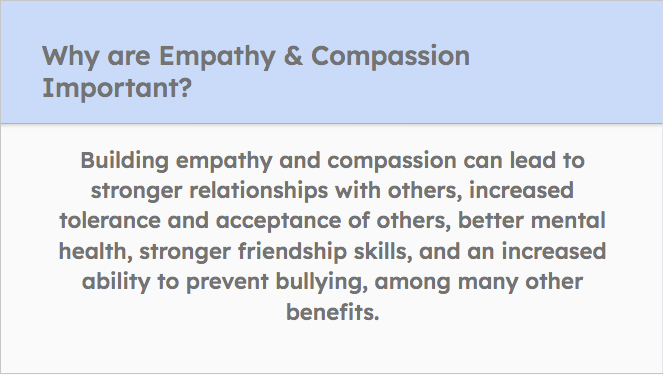
Now that kids know what empathy and compassion are, we need to help them understand why these skills are important and how they will be beneficial to them.

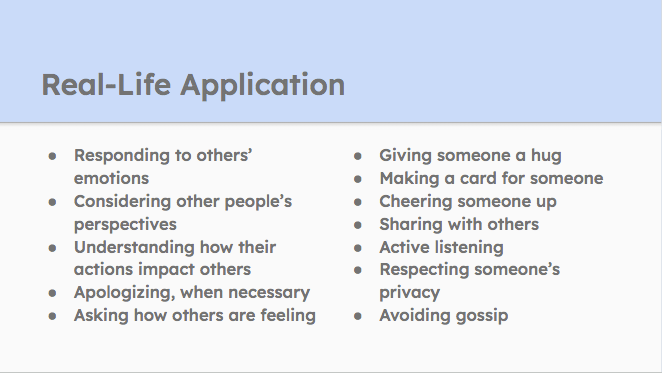
Next, we can begin connecting empathy and compassion with kids’ real lives by helping them recognize what these skills actually look like!

Empathy is a skill that takes some time, practice and modeling to fully develop. How can you be a picture of empathy and compassion this month (and beyond) for your kids or students?

Be sure to follow along all month right here on the blog, YouTubeFacebookInstagram and LinkedIn. I will be sharing all sorts of tips, strategies and resources throughout April.

MARCH 2024 SEL THEME – CONFLICT RESOLUTION & PROBLEM SOLVING – Strategies for Teachers & parents

As promised last week, today I’m sharing a few great conflict resolution/problem solving strategies for kids.

  1. ASWATA – This stands for ask the person to stop, walk away, talk to an adult. This strategy is one to teach kids to use when someone is bothering them or they are dealing with a minor annoyance. First, we politely ask the person to stop doing whatever it is they are doing. If they don’t stop, we walk away. If they continue or follow us, that’s when we talk to an adult. This is a simple strategy that can be used to solve all sorts of minor conflicts between kids in the classroom or at home and puts the focus on the child solving the problem, not the adult.
  2. “I feel…” Statements – I feel statements are a critical component of the conflict resolution process. Why? Because rather than pointing the finger at the other person (which often leads to more anger and hostility), they put the focus on how that person’s actions made you feel. For example, saying “You never listen to me” is just an invitation to escalate a conflict. The other person will go on the defensive, and before you know it, the conflict has grown beyond its initial problem. However, saying “I feel frustrated and hurt when it seems like you aren’t listening to me” is not nearly as defense-inducing and potentially hurtful. Additionally, it’s hard for the other person to argue how you feel and these statements open the possibility of an honest conversation versus an anger-filled fight.
  3. Rock, Paper, Scissors – As a teacher or parent, you probably already know that a large percentage of the conflicts our kids encounter are minor and don’t require extensive problem solving. In fact, some of them are so minor that a quick game of Rock, Paper, Scissors can get the problem solved and all parties moving on with life quickly. It’s a simple but effective strategy for things like who gets the front seat of the car or the line leader position. Don’t waste a bunch of time on these conflicts AND put the ball in the kid’s court! This is the perfect time for them to practice their problem solving skills!

These are just a few of the hundreds of problem solving strategies we can teach our kids, but they have served me well as a teacher and a mom! What are some of your go-to problem solving strategies?

MARCH 2024 SEL THEME – CONFLICT RESOLUTION & PROBLEM SOLVING – Recognizing, Identifying and Labeling Emotions

Today, rather than share any strategies with you (which I’ll do next week), let’s talk about the very first step in conflict resolution – being able to recognize, identify and name our own emotions, also known as having self-awareness.

Think about it. If we are unable to identify what we are feeling, as well as the cause of that feeling, it’s going to be nearly impossible to recognize in another person. This lack of self- and social awareness will make it very difficult to resolve any type of conflict that may arise.

Aside from being a critical component of conflict resolution, these emotional awareness skills are really important in so many other facets of life – from emotional regulation to advocating for ourselves.

So how do we help kids build these muscles? Here are a few things you can start doing with kids of any age (but the earlier, the better!)…

  1. Talk about feelings openly and honestly in your home or classroom. We shouldn’t hide them or be ashamed of how we’re feeling. A safe, loving environment is a must in encouraging kids to share their feelings.
  2. Model, model, model. Constantly talk through how YOU are feeling in different situations. Not only will you send the message that it’s ok to share their feelings, you will also be giving them the vocabulary to do so.
  3. Teach emotion vocabulary words. Kids need to know how to label their emotions, and they need more words than just sad, glad and mad! Dig deep with them to get to the root of what they’re feeling and provide them the words until they’re able to do it on their own.
  4. Help kids to understand that feelings are information. We have to pay attention to them to help us decipher the message. Then, we are able to begin the problem solving process.

What else is missing from this list? What do you do to build your kids’ emotional awareness muscles?

March 2024 SEL THEME – Conflict Resolution & Problem solving – AN INTRODUCTION

Welcome to March and our 3rd social-emotional learning theme of the month! This is a tricky one for many of us so buckle up for some great information and strategies!

In this first week of the month, we will define our theme, discuss why it’s an important SEL skill and talk real-world application. This will serve as a springboard for the resources and other ideas I will be sharing throughout the remainder of the month.

So, let’s dive in!

What are conflict resolution and problem solving exactly? Here’s a good starting point to use with kids of all ages. You can adjust this definition to best fit the needs of the age group you work with. I know many of these themes are pretty self-explanatory, but sometimes we just need someone else to sum it up for us!

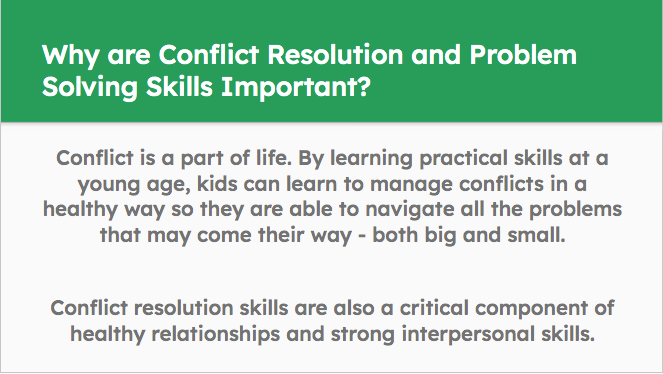
Now that kids know what conflict resolution means and what problem solving skills are, we need to help them understand why these skills are important and how they will be beneficial to them.

Next, we can begin connecting conflict resolution and problem solving with kids’ real lives by helping them recognize the many skills that are part of conflict resolution…and it’s a long list!

I know this is a tricky skill to learn, especially since many of our students are learning to resolve conflict in ways that seemingly go against everything we are trying to instill in them. How can you combat that and make these skills a priority this month (and beyond) for your kids or students?

Be sure to follow along all month right here on the blog, YouTubeFacebookInstagram and LinkedIn. I will be sharing all sorts of tips, strategies and resources throughout March.

February 2024 SEL THEME – Kindness – PICTURE BOOKS

Looking for a curated list of mentor texts to use during a kindness unit or lesson? Look no further!

I also shared about a few of my absolute favorite books on kindness on YouTube earlier this week. You can watch the video here.

What other books would you add to this list? I’m sure there are so many good ones out there that I don’t even know about!