January 2024 SEL Theme – Goal Setting – An introduction

I’m so excited to introduce our very first monthly social-emotional learning theme for this year! Naturally, it’s goal setting!

In this first week of the month, we will define our theme, discuss why it’s an important SEL skill and talk real-world application. This will serve as a springboard for the resources and other ideas I will be sharing throughout the remainder of the month.

So, let’s dive in!

What is goal setting exactly? Here’s a good starting point to use with kids of all ages. You can adjust this definition to best fit the needs of the age group you work with.

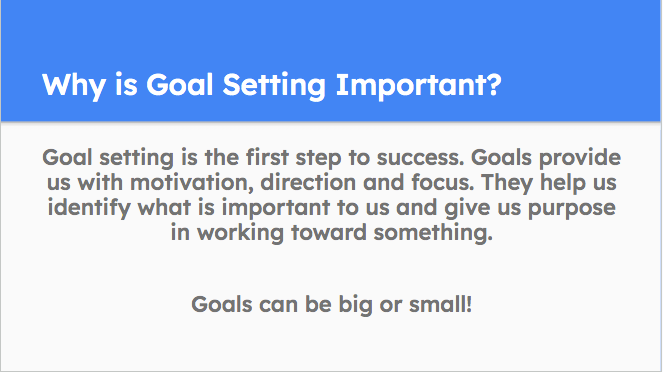
Now that kids know what goal setting is, we need to help them understand why it’s important and how it will be useful in their actual lives.

It’s critical to give examples of both big and small goals so that they understand that a goal can take many shapes.

Begin connecting goal setting with kids’ real lives using the list below.

What other ways do you apply goal setting to your own life? Be sure to share those with kids so they can start to see how this concept applies to their own life and the lives of those around them.

The more tangible we can make it, the more invested they will be when we ask them to begin actually setting goals for themselves (and yes, that’s coming soon!).

Be sure to follow along all month right here on the blog, YouTube, Facebook, Instagram and LinkedIn. I will be sharing all sorts of tips, strategies and resources.

Mind-Body Skills Part 3: Mindfulness

**This is Part 2 of a 7 part series on Mind-Body Skills. Check out the introductory post here or follow along on my YouTube channel.

Self-care is something that has gotten a lot of attention in the past several years, especially in light of the COVID-19 pandemic. It seems there is article after article encouraging us to “put ourselves first,” “care for ourselves” and not “pour from an empty cup.”

These things are all well and good, and I don’t disagree that self-care is important, especially for parents and teachers. That said, bubble baths, wine and chocolate are not a calm person going to make.

If we want to truly care for ourselves, we need to dial into the strategies that give our brains and bodies the rest it needs. Some of these strategies are commonplace and probably familiar to you while others may seem foreign and a bit out of reach.

Not too long ago, that was mindfulness for me. In my mind, mindfulness equaled meditation which, in turn, equaled stress. What do you mean I am supposed to quiet my mind for 20 minutes? How do I do that? When do I do that? I CAN’T do that.

While meditation is a form of mindfulness, it’s not the only one by a long shot. By definition, mindfulness is “a mental state achieved by focusing one’s awareness on the present moment, while calmly acknowledging and accepting one’s feelings, thoughts and bodily sensations.”

Maybe even the definition of the word seems stressful to you. Put more simply, it’s a state of awareness, and meditation is not the only way to achieve awareness. In fact, you might be surprised by the activities that fall under this umbrella term. Here are just a few:

  1. Grounding your feet on the earth
  2. Being still
  3. Praying
  4. Practicing gratitude
  5. Mindfully breathing
  6. Going for a walk
  7. Listening to music

You may be wondering why some of the categories I’ve previously written about are showing up on this list. Well, the short answer is that there is a lot of overlap between various mind-body skills and many of the strategies can help you attain a wide variety of goals, including being more present, easing anxiety, de-escalating from a stressful situation and better understanding your feelings and emotions.

If you’re a parent, teacher or other professional working with children, you would probably agree that these are all skills that kids need to develop and practice as well.

So, how do we introduce mindfulness to kids? The good news is that, because self-care and mindfulness have become such hot topics of late, there are a myriad of ways for kids to practice these skills. Here are a few of my favorites:

Mindful Listening: Take 1-2 minutes to sit in stillness and simply listen to the noises around you. Make a mental note of what you hear. If your mind begins to wander, simply recognize it and bring your focus back to listening.

Mindful Noticing: This strategy is the same as Mindful Listening but with your eyes instead of ears. Assign kids a color, shape, number or letter to “notice” around the classroom or other environment. Allow 1-2 minutes for them to scan the environment, looking for that thing.

One last note…put away the technology! It’s difficult to be mindful and present when we have a ringing, dinging computer in our pocket. So, unless you are using a mindfulness app, take a break from the device!

Mind-Body Skills Part 2: Movement

**This is Part 2 of a 7 part series on Mind-Body Skills. Check out the introductory post here or follow along on my YouTube channel.

Many of us regularly use movement strategies as one of our go-to tools for calming down or relieving stress. Think about it. When you are stressed, anxious or overwhelmed, do you go for a walk…hit the gym…take the dog for a run? Maybe not, but if you’re anything like me, you can identify with this strategy.

Not only does movement keep our body healthy and in tip-top shape, it does the same for our brain. Two good reasons to encourage movement as a regulation strategy for kids, right?

Here are a few of my favorites:

Sensory Path: If you work in a school and don’t have a sensory path, I’d encourage you to check out this website and consider it. Not only are they so cute and kid-friendly, they are a fantastic way to get kids moving in a different way. They can be used by individual kids or the entire class!

Brain Gym: I was introduced to Brain Gym by a teacher at a school I was consulting with. While I had not heard of Brain Gym specifically, I was familiar with the power of exercises that encourage kids to cross the midline. If you’re a newbie, learning more about Brain Gym and the corresponding exercises is a great place to start.

5 Senses Nature Walk: Get outside and work those 5 senses, along with your body! What do you see…hear…smell…feel…taste (well, maybe not this one!)? There are so many benefits to walking in nature. Think you don’t have nature around you? Remember, it certainly doesn’t have to be a forest to count as nature so get creative!

What Time is it, Mr. Fox?: This is a fun (and multi-disciplinary!) game for younger elementary students.

Color Search: Go on a color search. Whether it’s around the house, the school or outdoors, get kids moving and identifying objects of various colors.

Tape Jumping Game: This one is so simple and has a million different versions. While it is more geared toward younger kids, you can certainly amend the rules (and distance between tape pieces) for older kids.

Mind-Body Skills Part 1: Breathing

**This is Part 1 of a 7 part series on Mind-Body Skills. Check out the introductory post here or follow along on my YouTube channel.

Mindful breathing strategies are a great place to begin when teaching kids mind-body skills. Why? Because when we mindfully breathe, our brain sends a message to our heart, telling it to slow down. As a result, our heart rate slows and we can begin to calm down and better regulate. Additionally, breathing strategies are some of the easiest to learn, especially for young children.

Below you will find some of my favorite breathing techniques and other resources…

Five Finger Breathing (sometimes called Mountain Breathing): this is my all-time favorite breathing technique for kids because it’s simple, easily understandable and lends itself well to a simple visual reminder on the wall.

Box Breathing: another favorite for all the same reasons as above. Definitely, my own go-to breathing technique!

Other Deep Breathing Exercises: this post has SO MANY great breathing exercises that kids will find fun to do!

Sesame Street Belly Breathe Video: best for 1st grade and younger!

Alphabreaths and Alphabreaths Too: these are great picture books with lots of breathing techniques.

Breathing Makes It Better: another great book for connecting deep breathing and the emotions we feel. Best for younger kids.

Breathe Like a Bear: another picture book best suited to younger kids.

Breathing is My Superpower: great book of breathing techniques for elementary-aged kids.

Let me know what other breathing exercises you enjoy using with kids! I’d love to hear from you!

The 6 types of Self-Care…A new youTube Series

If you follow me over on YouTube, you probably know that I’ve started a new series all about the 6 different types of self-care.

The idea for this series came about after I took a self-care assessment, and much to my dismay, found that I had failed 5 of the 6 types of self-care. I was honestly shocked. As someone who does what I do, I suppose I thought I had it figured out better than the average person. Clearly, I was wrong.

So what can you expect from the videos in this series?

Each video will take you through one of the types – what it is and what it looks like if you’re doing it well.

I promise that this will not be a series of videos of me telling you to light a candle, take a bath and eat some chocolate. It will be me giving you the tools to build self-awareness and understanding of how you’re caring for yourself well and how you aren’t.

If you’re someone who cares for everyone around you and winds up with an empty fuel tank for yourself, this series is for you. Come on over here and join me!

my 5 favorite picture books for teaching kids about friendship

Friendship is a theme that you can find in a whole host of children’s books which is fortunate since it is a topic that often needs revisited with kids. Whether you have students finding it difficult to be a kind friend or your own children are experiencing friendship struggles at school, I’m sure you’ll find a book on the list below that could be helpful in talking to younger kids about the concept of friendship.

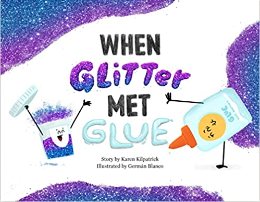
When Glitter Met Glue by Karen Kilpatrick

This wonderful picture book is all about what to do when one person in a friendship feels invisible. Find out how Glitter and Glue team up to help Glue shine like some of their other friends.

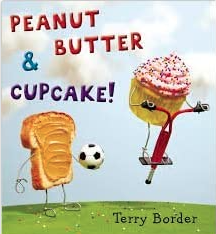
Peanut Butter and Cupcake by Terry Border

This witty picture book with awesome photo illustrations is a great one to turn to when kids are feeling lonely and struggling to find friends. Read to find out how Bread searches and searches for his perfect pairing.

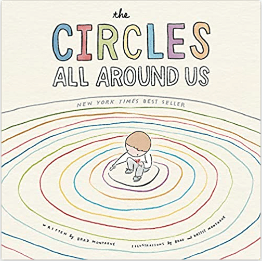
The Circles All Around Us by Brad Montague

This is one of my absolute favorite picture books for so many reasons. There are so many wonderful themes that can be extracted from this book. If you’re looking for a book about friendship, kindness or inclusivity, this is the one!

This book is all about how the circles of people around us (our relationships) grow as we get older to include, not only family, but also friends, neighbors and other people from our community with whom we connect and feel safe. This book serves as a great springboard for a conversation on how we grow those circles through kindness and by being a good friend.

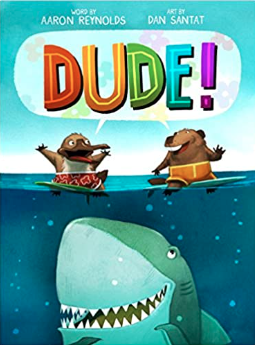
Dude! by Aaron Reynolds

If you have a child who feels excluded or students making snap judgments about another student, this book is for you!

This book is about platypus and beaver, friends who just want to go surfing. Unfortunately, they are afraid to surf because they share an ocean with shark. As he approaches and they get to know him, though, they find out that maybe there’s more to shark than what they originally thought.

You Will Be My Friend! by Peter Brown

This is the perfect book for those kiddos who just aren’t sure how to go about making friends.

In this story, we learn from Bear just how hard it is to make friends, how persistence is the key and how sometimes, we find the best friends in the most unlikely places.

I hope you have a chance to check out these wonderful books! In the comments, let me know what other books you like for the theme of friendship.

4 Ways to get parent buy-in for sel programming

In the time since the COVID-19 pandemic began in 2020, we have seen a sharp increase in the number of schools putting an intentional focus on social-emotional learning. For many administrators, the goal is to give students and teachers the tools to deal with the multitude of challenges that have resulted from the pandemic.

Since 2020, we have seen more and more children struggle with time management, learning stamina, effective communication and self-regulation skills, to name just a few of these challenges. Many children have had difficulty re-acclimating to the in-person school environment. Others seem to have mysteriously forgotten how to communicate with their peers while many more struggle to express their emotions appropriately.

As these challenges have piled up over recent years, coupled with the many professional and personal difficulties teachers are facing, administrators have scrambled to find ways to help both teachers and students.

Enter social-emotional learning or SEL.

The thing is, SEL is not a new idea, born of the challenges of the pandemic. Schools have been incorporating social-emotional learning strategies for decades. According to the Social Emotional Learning Alliance for the United States (SEL4US), social-emotional learning is a practice that helps kids and adults learn and apply the skills necessary to develop healthy identities, manage emotions, set and achieve goals, feel and show empathy, establish strong relationship skills and make responsible decisions.

If you think back to your own schooling, depending on the type of school you attended, you will likely remember something along the lines of character education or virtues training. In other words…social-emotional learning.

So, if SEL has been around for so long and includes critical skills like the ones listed above, why are we just now beginning to see so many parents seemingly against it? Well, there are many answers to that question, but oftentimes, the true answer comes down to just one thing…misunderstanding.

As a whole, we have not done a great job of helping parents to understand what SEL really is, why it is important and how it is being incorporated into the classroom experience. Thus, we have a large number of parents who simply don’t understand what we mean when we say our school focuses on social-emotional learning.

So how do we fix this? There are 4 simple things we can do to help parents and caregivers better understand social-emotional learning and how it is being used in the school.

  1. Use Less Jargon

Educators are good at jargon…too good, and we often use it when communicating with parents who are likely unfamiliar with our terms. Instead, use simple language. Rather than using terms like “social-emotional learning” or “whole child development,” use words like kindness, empathy and being sensitive to other cultures.

At the end of the day, most parents want to know how their child is doing at school, aside from academics and most parents want their child to grow up to be a good human. That’s the goal of SEL, but we can use other language to communicate that.

  1. Be Clear About What SEL Is

Many parents have pre-conceived notions about what SEL actually is, and oftentimes, those notions are incorrect. Clearly communicate to your families what SEL is in YOUR school or district. Perhaps you have a list of traits or virtues that are being taught. Maybe you have adopted a specific curriculum. Share these, along with resources, with families so they clearly understand what SEL means for their child.

  1. Clearly Communicate How and When SEL is Integrated into the Classroom

Once you have communicated what SEL means in your school or district, it’s just as important that you share how and when it is being integrated into learning. If you’re using a specific curriculum, communicate how many minutes or days per week children will be engaging with it. If you are focusing on key traits, will these be introduced each week during a school-wide community meeting, taught once a month by the school counselor or integrated into a variety of classroom activities each week? Clearly communicating these parameters will often help ease parents’ ill feelings.

  1. Engage Parents

After communicating what SEL is and how and when it will be used, it’s critical to continue to engage parents in your school’s programming. Sending resources home to better educate them is a great start, but be sure to continue sharing with them as the school year progresses. Share some of the strategies or language being used at school and encourage them to use these at home as well. Help them understand how the programming is beneficial to their child AND their family, how strategies can be used at home to make life just a little bit easier. Let’s face it…we are all facing challenges in this post-pandemic world and can use all the help we can get…even parents.

I’d love to hear what you are doing (or have done!) to get buy-in from your parents for SEL programming. Comment on this post or shoot me an email at akedconsult@gmail.com.

New Training Announcement! – Fostering family engagement within your school

I’m so excited to roll out my brand new training just in time for the beginning of the school year! This training is a critical component of building a trauma-informed school (see step #6 below).

There’s been a lot of chatter online lately about the difference between parent involvement and family engagement in schools (and yes, there is a huge difference!). Traditionally, schools have considered parents to be involved when they volunteer in the classroom, attend field trips or send in classroom donations. These things are great (and necessary!), but they do not necessarily equate to parents and caregivers being in true collaboration with the school. Additionally, this type of “involvement” is often exclusive to parents who have the time and financial means to participate in their child’s education in this way.

If your school is instead looking to partner with ALL families in a meaningful way by building strong relationships, engaging them in the curriculum and providing tools for helping children at home, this training is for you!

A few things you will learn during this training include:

  1. Specific strategies for engaging families as your partner in educating their child
  2. Tips to streamline family-school communication to reach more families
  3. Steps to establish a parent outreach coordinator or team
  4. How to host family workshops and interactive events that provide caregivers the tools and strategies to help their child academically, behaviorally and social-emotionally
  5. Strategies for building strong relationships between teachers, students and caregivers

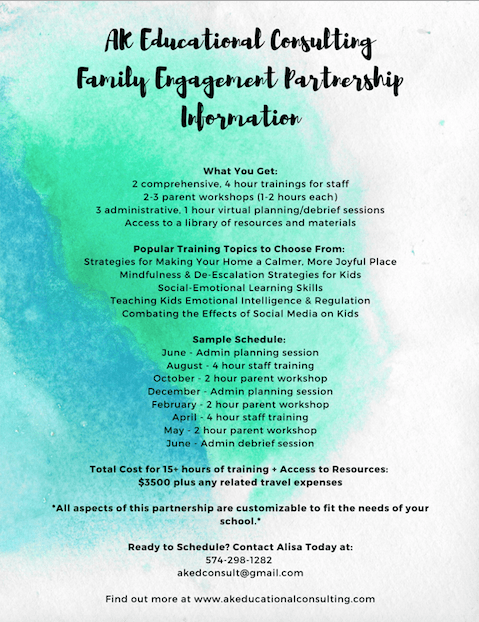
This training is designed for teachers and other school staff. It can be done as a stand-alone 2, 4 or 6 hour professional development or as a partnership, in conjunction with a combination of my parent workshops (see informational flyer below).

If you’re ready to join the thousands of educators (and parents!) who have benefited from my trainings and expertise, send me an email at akedconsult@gmail.com. Let me help you build a trauma-informed school!

5 Ways to Address Mental Health Awareness Month with kids (Plus a freebie!)

Download and print this infographic, highlighting 5 ways you can address Mental Health Awareness month with kids in the classroom or at home!

5 Strategies for building relationship skills in Kids

Over the past month or so, we’ve been focusing on the individual competencies within the CASEL social-emotional learning framework. So far, we’ve talked in depth about self-awareness, self-management and social awareness. Today, we will dive into the next competency – relationship skills.

There’s certainly no denying the fact that our kids’ relationship and communication skills took a hit because of the pandemic. Think about it – kids were isolated from their peers, communicating primarily with the people they live with or via a screen, missing out on critical conflict resolution opportunities (i.e. recess, playdates, etc.). It’s no wonder so many teachers consider the lack of relationship and communication skills to be one of their biggest battles now that in-person school has resumed.

To further illustrate this point, let me tell a personal story. Toward the end of the initial COVID lockdown, my daughter and I were invited over to her best friend’s house for a “porch playdate.” The girls (1st graders at the time) were going to play together on the porch while the moms chatted. This was the first time the girls were going to be together in person in several months. They were both so excited!

That morning, we walked over to their house. Her best friend had pulled out a wide variety of toys they could play with. They sat down on the ground, and her mom and I got to chatting. After several minutes, I realized that neither of the girls were talking to one another. They were both quietly playing with the flip sequins on my daughter’s backpack. I made a joke about how they were allowed to talk to one another and returned to chatting with her mom.

A few more minutes passed, and suddenly her dad popped his head out the front door. He seemed surprised to find us on the porch. He said it seemed so quiet outside, he thought we had gone for a walk. I laughed and said that I had just made a similar comment.

As time went on, the girls seemed to warm up and began to play. As my daughter and I were walking home, I asked her why she seemed so hesitant to talk and play with her best friend, but she didn’t really have an answer.

For the rest of the day, I kept thinking about the playdate, and it finally hit me! The girls had (in a sense) forgotten how to communicate! They had spent so many months in isolation, with just their parents and siblings, they were unsure of how to go about resuming “normal” play.

While it took me awhile to come to this conclusion, it’s since become clear that this is a widespread problem. As I travel to schools all over the country, I’ve had teacher after teacher verbalize this very same issue…even 2 years into the pandemic!

Our kids spent a long time being isolated from their peers and missing out on learning and practicing some pretty critical communication skills. It’s really no wonder this has become such a problem. The question becomes…What can we do about it?

Read on for 5 strategies to help our kids rebuild or strengthen their relationship and communication skills.

practice cooperative learning skills.

With students spending so much time doing virtual learning, hundreds of opportunities to build cooperative learning skills were missed. We need to provide those opportunities now. Allow students to work in partners, trios or larger groups as often as possible. Review, model and practice the skills necessary for successful cooperative learning – listening, encouraging, compromising, coming to a consensus, etc. Give kids the time and space to flex those muscles once again, and it will eventually all come back to them.

Teach kids how to communicate their wants and needs.

A huge component of building healthy relationships is having the ability to advocate for yourself when necessary. This is a skill that most kids are not well versed in. We can help them with this, though, by discussing the difference between needs and wants, listing out possible needs and wants and helping them to understand why it’s so important to be able to communicate these to others. Talk about this concept within the context of different types of relationships – friendships, student/teacher, parent/child, etc.

Know the difference between above the line and below the line behaviors.

I don’t remember where I first heard that term, but it has stuck with me for years now. Above the line behaviors are positive and below the line behaviors are negative. Another way to think of it is above the line behaviors are characteristic of a healthy friendship or relationship while below the line behaviors are those reminiscent of an unhealthy relationship. Create an anchor chart of each type of behavior or the traits of a good friend. Read and discuss stories with examples of strong, healthy relationships, as well as ones where bullying or unhealthy relationships are happening. Help students understand that everyone is deserving of healthy relationships and, depending upon age, discuss ways to seek help if they are involved in an unhealthy relationship.

Teach respectful disagreement strategies.

I know, I know…this same strategy was included in the social awareness post. I feel so strongly about this one, though, I’m including it again. You can read about it more here.

Arm kids with conflict resolution strategies.

Conflict is going to happen. We can’t avoid it, but we can provide kids with a wide variety of conflict resolution strategies so they are ready when it happens. Kids will not learn how to solve conflicts through osmosis. We have to explicitly teach the strategies and model, model, model. Then, we have to walk them through the conflict resolution process over and over again until they feel ready to independently tackle the problem. This is not a quick strategy, but it will pay off in the long run when we have kids who can independently resolve their conflicts and not rely on us to solve every little problem they run into. That’s worth it, in my opinion!

What other strategies would you include on this list?