Social-Emotional Learning

If you’ve been following along with the news recently, you’ve probably run across articles similar to this one, in which the benefits and necessity of addressing social-emotional learning (SEL) skills in schools are called into question. In my home state of Indiana, the debate has now reached the state legislature, where the Indiana General Assembly is currently hearing testimony on House Bill 1134 that states, in part, that schools must obtain written parental consent PRIOR to providing certain mental, social-emotional or psychological services to students. Who knows exactly what is meant by the vague language included in the bill, but one thing is certain – educators and other proponents of SEL are NOT happy.

Why? Because they know firsthand what the research has been saying for a long time – explicit instruction in SEL leads to improved academic performance, improved classroom behavior, increased ability to cope with stress and a more positive outlook on life. Additionally, the benefits are LONG-TERM, meaning the research shows a strong correlation between social-emotional learning and higher emotional intelligence later in life.

With most kids returning to in-person learning this school year, one thing is certain. All of our kids are struggling. I hear the same thing over and over again, from principals from California to Florida and everywhere in between. Students are struggling to focus, they are apathetic and giving up easily when the work gets tough, they are having a hard time appropriately communicating with their peers. The list goes on and on.

The good news (if we can call it that) is that the behaviors that kids are exhibiting are consistent. It doesn’t seem to matter where you live, what socio-economic group you belong to, etc. The social-emotional impacts of the COVID pandemic seem to be equal opportunity. Heck, even my own kids are seriously struggling in many ways…and they are living a much more ideal reality than many kids!

The question becomes…what do we do to help our kids? Well, the answer is simple and utterly complicated at the same time. The short answer is we start focusing on critical social-emotional learning skills and providing kids tools for their toolboxes. What do I mean by that? I mean that we dedicate time and planning to ensure that social-emotional learning skills are explicitly taught to kids. Of course, we all know that time is not something that teachers have an abundance of, and we certainly know that our teachers are already doing the job of 184 different people on any given day (this is the complicated part).

Here’s the good news, though…there are many SIMPLE things that we can begin doing in our classrooms and homes to better support the social-emotional health of our kids. Many of these things don’t take a lot of time or cost any money either. These are simple ideas, books and activities to springboard a conversation with kids about social-emotional learning skills such as friendship, social problem solving or self-esteem.

I’m currently sharing a series of videos on this very topic over on my YouTube channel, if you’re looking for some quick and easy ideas on how to get started at home or school.

Going forward, it is going to be critical for school administrators and parents to recognize the importance of supporting social-emotional learning at school. We are living in a world much different than any of us has ever experienced, and unfortunately, it has taken a serious toll on one of our most vulnerable populations – school-aged children. The sooner we accept this as our current reality, the sooner we can take steps toward changing this reality for the future.

**If you’re looking for resources on social-emotional learning, please check out my TPT store here or contact me at akedconsult@gmail.com to find out more about the professional development and consultation services I offer to schools.

New YouTube Series: Social-Emotional Learning


Click here to view Part I

I’ve been in a “series” kind of mood lately. I wrapped up the YouTube series on coping skills and decided to start a new one on social-emotional learning. Why? Because I am getting SOOO many questions on this topic right now, from educators and parents alike.

I think we’re all in this place where we realize that our kids/students are struggling (heck, WE are struggling!), but we’re just not really sure what else we can do to help them.

So let’s talk about it. What exactly IS social-emotional learning? How can we integrate it into our classrooms and homes? What does it look like? Over the next several weeks, we are going to tackle all these questions plus many, many more.

We will discuss the importance of social-emotional learning (although, I think most of us have been forced to figure that out in the past two years!), the competencies we can teach kids and specific strategies we can use at home or in the classroom.

I hope you’ll join me for this series, and when you do, don’t forget to subscribe to my YouTube channel so you don’t miss out on any of the great content I’m sharing!

New YouTube Series on coping skills

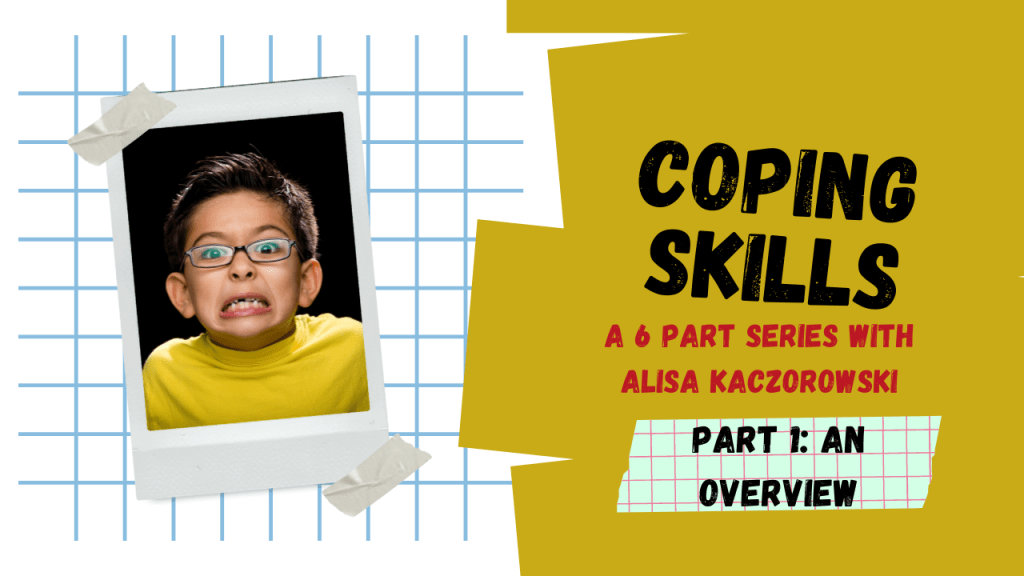
Check out my brand new 6 part series on coping skills over on YouTube! If you’ve ever felt angry, anxious or overwhelmed (and who hasn’t?!?), this topic is for you!

In Part 1, you will learn what coping skills are, why they are important and who might benefit from them (hint: EVERYONE!). You will also learn about the 5 categories that coping skills fall into.

In Parts 2-6, we will dive deeper into each of the 5 categories and identify specific skills within each one and when they might be beneficial to use.

Videos will drop on Tuesdays and Thursdays so be sure to follow my channel to get notifications! I hope you enjoy this series!

New Training! – Building Emotional Intelligence Through Social-Emotional Learning

I’m so excited to introduce my newest trauma-informed schools training: Building Emotional Intelligence Through Social-Emotional Learning!

Since 2011, emotional intelligence levels have been declining across the globe. What does this mean? It means that our ability to be self-aware, feel motivation and to self-regulate, show empathy and communicate effectively is worsening. For children, this may result in a lack of understanding of emotions and the inability to correctly identify and appropriately express these feelings.

The great news about emotional intelligence is that it is not static! We can actually build our EQ muscles through a multitude of strategies. One of the most beneficial ways to do this in a school is through the implementation of social-emotional learning skills.

In this training, you will learn all about the topics above and so much more, including:

  1. What is Emotional Intelligence?
  2. The importance/benefits of Emotional Intelligence
  3. The 5 components of Emotional Intelligence
  4. Specific strategies for building Emotional Intelligence
  5. Helping students recognize, identify and regulate their emotions
  6. De-escalation and mindfulness strategies
  7. The 11 key areas of Social-Emotional Learning
  8. Specific strategies for building SEL skills

Want to learn more or get a training scheduled? Contact Alisa today at akedconsult@gmail.com.

New Resource! – Building a Trauma-Informed Classroom Video Series

Get the video series here!

Are you ready to build a more trauma-informed classroom or school? If so, this video series is for you. Whether you are a teacher, administrator, school counselor or support staff member, there is something for everyone in these courses.

In this series, I will take you through the basics of trauma, how trauma impacts students in the school setting and specific strategies you can implement to help build resilience in your students.

Course 1 focuses on understanding the basics of trauma in our society, why schools should be trauma-informed and how to recognize the characteristics of trauma in children of various ages.

Course 2 focuses on understanding how traumatic experiences impact the brain and learning. You will learn how the flight/fight/freeze response works, how the stress response can be turned off and the benefits of mindfulness.

Course 3 focuses on understanding how traumatic experiences impact student behavior and how to implement a more trauma-informed classroom management system. You will learn about private logic and how that drives behavior and how to evaluate the pros and cons of the classroom management system you use.

Course 4 focuses on 10 specific strategies that can be used to build a more trauma-informed classroom. You will learn about the guiding principle of all 10 trauma-informed practices and reflect on the culture and climate of your own classroom in order to assess where improvements can be made.

Be sure to check out the video series bundle here, as well as all the resources in my TPT store that support the content in the videos!

Building a Trauma-Informed School Video Series

Get Course 1 here!

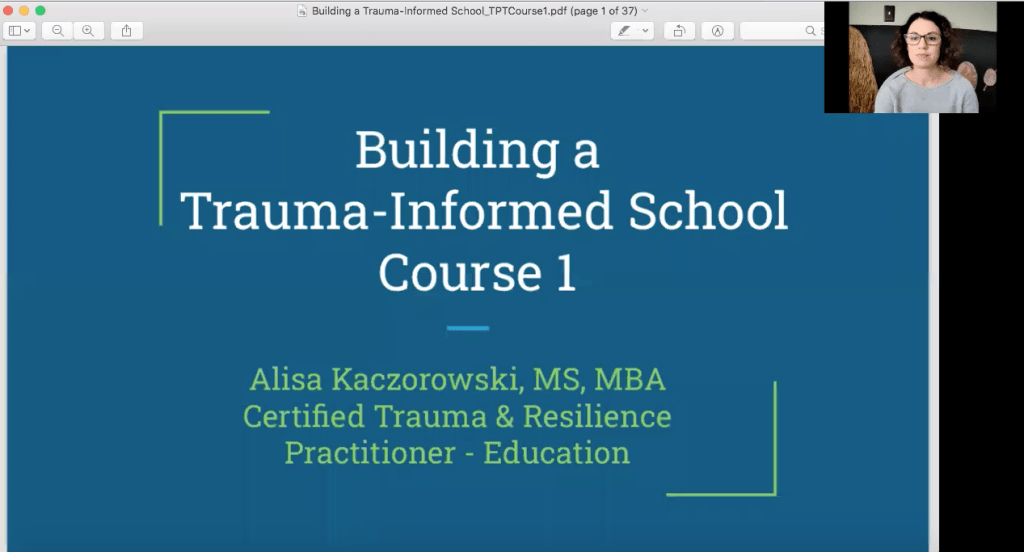
Course 1 of my new video series on Building a Trauma-Informed School launches today on Teachers Pay Teachers! I’m excited to make the content I teach to schools all over the country accessible to educators at the click of a button and at an affordable price.

This series will break down the information I present in a full-day professional development into smaller, easy to watch chunks. Course 1 focuses on understanding the basics of trauma in our society, why schools should be trauma-informed and recognizing the characteristics of trauma in children of various age levels.

Course 2 will go live in the next two weeks. It will dive into understanding the neuroscience of trauma – how traumatic experiences impact, and cause changes to, the brain that affect students in a learning environment. It will cover the impact of trauma on learning, as well as a variety of mindfulness techniques that can be implemented in the classroom.

At least two more courses will follow and will focus on the impact of trauma on behavior, trauma-informed classroom management strategies and strategies for building a more trauma-informed culture in the classroom.

Head on over to Teachers Pay Teachers and grab Course 1 here!

New Workshop Coming Soon!

Virtual parent workshops will be coming soon!

During these 1 hour workshops, you can expect to learn more about:

  • The impacts of the pandemic on children’s social-emotional health
  • Strategies for helping kids cope with feelings of sadness, anxiety, anger, loneliness and more
  • Tips for teaching kids to recognize and name their emotions
  • Tools that kids can use to self-regulate
  • Tricks for making your home a calmer, more joyful place

Who doesn’t need a little extra help right now? Contact me today at akedconsult@gmail.com to find out how to get on the list.

Parenting in a Pandemic

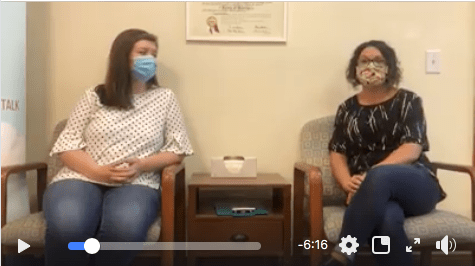
Click here to view the entire video.

Last week, I had the opportunity to shoot a few videos with my new friends over at Indy Direct Docs on parenting in a pandemic. While I primarily train educators on trauma-informed practices, the strategies are just as useful and effective for parents, especially now when we’re all wearing so many different hats.

I was super excited to partner with Drs. Moore-Ostby and Holliday for a variety of reasons. First of all, their innovative take on healthcare puts the focus on the relationship between a doctor and patient, similar to the idea of relationship-building between a teacher and student. Second, they are invested in providing resources of all sorts to their patients through their blog. From nutrition and cooking tips to parenting strategies, they are in tune with the content their patients want. Lastly, I feel strongly about the trauma-informed strategies I teach, as both an educator and a mom, so why not share them with others? Parenting is hard. Parenting in a pandemic is nearly impossible. We’ve all felt it over the past 8 months. I know I need some help, and I’m guessing others do too.

There’s a really disappointing myth in our society that trauma-informed practices are only beneficial to kids living in poverty or kids who have experienced trauma. NO! Not true. Trauma-informed practices are beneficial to ALL kids. They nurture and repair relationships, encourage social-emotional health and well-being and help kids learn to be more in tune with their emotions. Isn’t that what we all want for our kids? I know I do!

Despite what we sometimes think, all kids have experienced some sort of trauma in their lives. From divorce and death to absentee parents and COVID-19, traumatic experiences are everywhere. It doesn’t have to be abuse or neglect to be considered trauma. Even if a child’s exposure to trauma is minimal at best, the strategies I teach are still useful. Have a child who struggles to control their anger, sadness, worry, etc.? I have strategies for that. What about kids who have difficulty resolving social conflicts? I have strategies for that too. Perhaps you just need some new ideas for surviving this trying time as a parent. I’m right there with you, and I can help.

Let’s give our kids the tools they need to grow into compassionate, empathetic human beings, living in a society where emotions are normalized and stigmas around mental illness and trauma are non-existent. If you’re interested in learning more about how trauma-informed practices can be useful to your kids, drop me an email or Facebook message!

***The first video can be viewed here.

Fostering Communication Between Kids in a Post-Quarantine Classroom

About a month ago, my 6 year old had a porch playdate with her best friend. While it wasn’t the first time they were seeing each other post-quarantine, it was the first time they were spending a decent amount of time with one another and actually playing together. As her best friend’s mom and I sat on the porch chatting, I kept looking down at the girls, thinking they were unusually quiet. These are two outgoing, chatty girls so it seemed odd that they were quietly playing with the flip sequins on my daughter’s backpack and not really interacting with one another. I commented on this to the girls and jokingly told them it was ok to talk. A few minutes later, her friend’s dad came outside and was surprised to see us on the porch still. He said that it was so quiet outside, he thought we had gone for a walk.

This went on for the first hour or so of our visit, but eventually, the girls seemed to warm up and began playing and talking like their normal selves. I didn’t really give it much further thought until a week or so later when I was working with the staff of a small Catholic school in northern Indiana.

During the training, I asked the teachers to name their fears about returning to school in-person with students. One primary teacher in the back of the room raised her hand and said, “I’m worried about how the students will do communicating with one another.” She went on to add that since the kids had been quarantined for so long and not had the opportunity to interact with anyone outside of their immediate family, she was concerned about how they would interact with one another. Would they feel shy or scared? Would it cause anxiety in some? Many other teachers went on to agree with her and share their own stories of the anxiety they felt after their first trip to the grocery store or doctor’s office.

As the teachers continued talking through this with one another, I thought back to the day of the playdate. I suddenly realized that my daughter and her best friend were the perfect example of this teacher’s fear. I shared the story with the staff, and we all took the opportunity to reflect on how this might play out in the classroom environment.

Since that day, I have told this story at every school I’ve worked with, and without exception, at least one teacher raises their hand to say this is one of their fears. So, as educators and parents, what can we do to address this in our homes and classrooms?

  • Talk about it

Be open and honest with kids about the things we may now find difficult. Help them to understand that some things are going to be harder since we are out of practice. Tell the story of how overwhelmed you felt after your first trip to the grocery store. Talk about the things you did to help ease those feelings.

  • Validate their feelings

Be sure to let kids know that the way they are feeling is normal and they are not alone. Once we are able to name our recognize and name our emotions, they lose their power over us.

  • Brainstorm strategies

Understanding the root cause of a child’s fear is key to identifying strategies that will work for them. Are they fearful of being around people outside of their immediate family because of the virus? Do they feel overwhelmed by suddenly being thrown into a classroom with 20 other people? Are they feeling shy because they are away from their parents for the first time in 6 months? Dedicate a time to brainstorming strategies to help all students feel more comfortable communicating with their peers.

  • Practice

Practice, practice, practice. Given time, kids will become more comfortable doing the things that were once second nature. Provide them the time and space to make this happen. Role play a variety of situations, reinforce the strategies you brainstormed and integrate oral communication with peers into instruction as often as possible. Just as kids do at the beginning of every school year, they will soon become comfortable with this new environment they are in.

  • Be patient

It will come. We are all adjusting to a new normal – new feelings, new routines, new rules. It may take a bit more time and practice than normal, but before you know it, the kids will be back to communicating more than you ever wanted them to!

My Favorite De-Escalation Strategy

Oftentimes, as adults, it can be very difficult for us to step back and think logically when our students or our own children are angry. Some of us may feel ourselves escalating. Others may feel the need to “fix” the situation for the child. Still others may think that ignoring the behavior will help the child to calm down. While there is nothing inherently “bad” about any of these reactions, there is a better way.

Most often, when kids are activated, they need us to remain calm and present for them, and they need us to help them through, not around, the situation. How do we do this?

First, we validate the feelings, but not the behavior, of the child. This may sound something like, “It is ok for you to feel angry right now, but it’s not ok to hit your friend.” This lets the child know that feeling big emotions is not only ok but perfectly normal! Once they know that it is ok to feel the way they do, but that you do not condone making poor choices, you can move onto the next step.

Start by ingraining this phrase (or another similar phrase) into your brain, “In this moment, what can I do to help you?” Asking this of the child puts the ball in their court and teaches them important problem solving and communication skills. Now it is not you, the adult, fixing the situation but the child communicating their needs to you which is the ultimate goal.

I have found that, by using this strategy with my own children, they are initially surprised by this question. I think so many adults (myself included!) spend so much time trying to “control” the thoughts, words and actions of children, they are not accustomed to being asked about their needs. Once the phrase becomes more commonplace in your classroom or home, though, you may be amazed at what your students or children are able to communicate to you.

Perhaps they really want someone to listen to them or maybe they need a quiet place to sit for a few minutes. I’ve even gotten the response, “A granola bar…I’m just hangry!” Sometimes the solution to the problem is simpler than we might think.