New Student Workshop Announcement for Catholic Schools

NEW STUDENT WORKSHOP – In the Spirit of St. Carlo: Play, Pray and Stay Unplugged

Empower your students to take control of their digital lives! This engaging workshop for elementary and middle school students helps them understand the importance of setting healthy boundaries around screen time and social media use. Through interactive discussions and real-life testimonials from kids their own age, students will learn how to make mindful choices to protect their well-being in a tech-driven world.

What will they learn during this training?

  1. How social media and technology use impact the brain
  2. How social media and technology use impact social-emotional and mental health
  3. How to set boundaries and limitations around screen usage at home
  4. Tips for balancing online and offline activities
  5. Strategies for building habits that foster focus, self-control and prayerfulness

What else will you get from this training?

  1. Access to a Google folder full of aligned resources
  2. Ongoing support from me

Our children are growing up in a world that values technology and instant gratification over most everything else. This has resulted in less praying and playing and more staying on screens for many of our kids. If you’re looking to empower students to walk boldly and faithfully in St. Carlo’s footsteps, this workshop will do just that!

New Student Workshop Announcement!

NEW STUDENT WORKSHOP – Offline & Thriving: Living Unplugged in a Screen-Driven World

Empower your students to take control of their digital lives! This engaging workshop for elementary and middle school students helps them understand the importance of setting healthy boundaries around screen time and social media use. Through interactive discussions and real-life testimonials from kids their own age, students will learn how to make mindful choices to protect their well-being in a tech-driven world.

What will they learn during this training?

  1. How social media and technology use impact the brain
  2. How social media and technology use impact social-emotional and mental health
  3. How to set boundaries and limitations around screen usage at home
  4. Tips for balancing online and offline activities
  5. Strategies for building habits that foster focus and self-control

What else will you get from this training?

  1. Access to a Google folder full of aligned resources
  2. Ongoing support from me

Our children are growing up in a world that values technology and instant gratification over most everything else. This has resulted in less playing and more staying on screens for many of our kids. If you’re looking to empower students to have a healthy relationship with technology, this workshop will do just that!

January 2024 SEL Theme – Goal Setting – Tips & Strategies for Parents

Every year in January, each of my kids and I set a goal for ourselves for the new year. It’s typically a new skill we want to learn or something big we are challenging ourselves to complete.

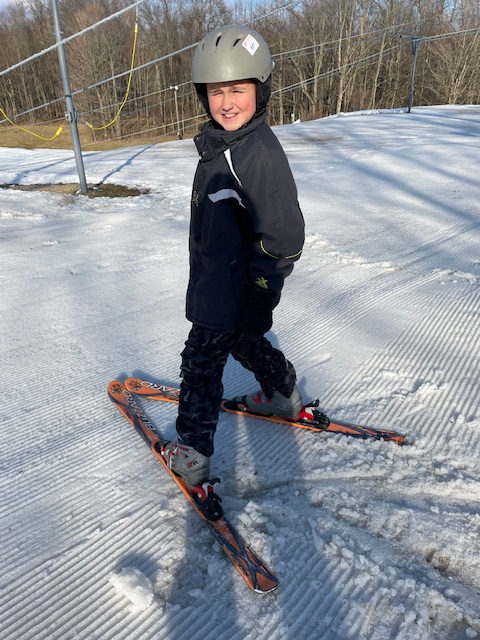
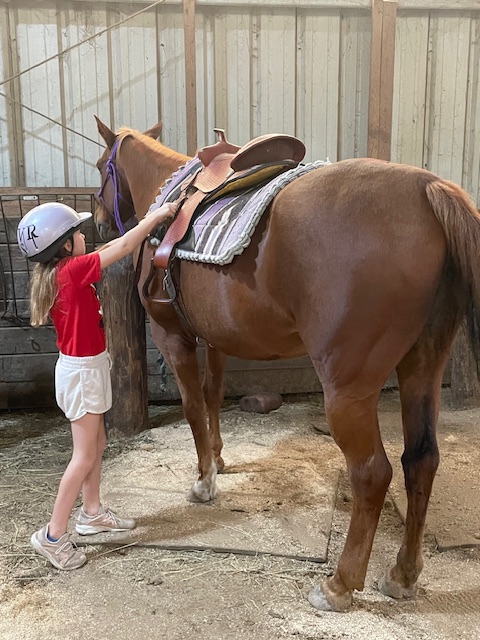
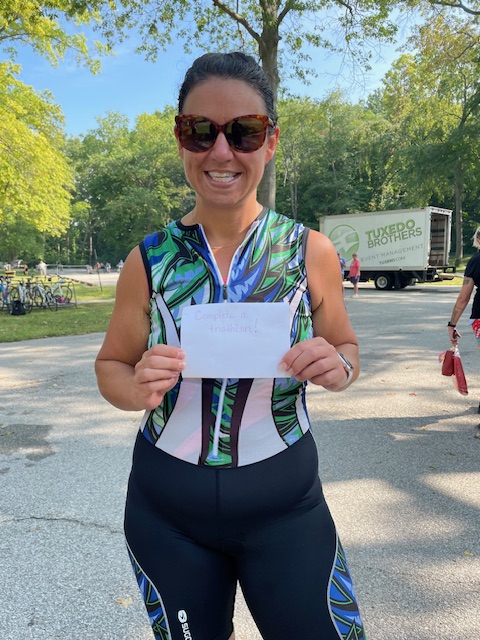
Two years ago, my oldest child’s goal was to learn to ski and my middle child’s goal was to learn to trot on a horse. In true youngest child fashion, for the life of me, I cannot remember what my littlest’s goal was…ha! My own goal was to complete a triathlon.

His first time hitting the slopes

After some time spent thinking and brainstorming, we write our goals on index cards and hang them up on the refrigerator where we can see them each and every day. We also discuss the steps we will need to take to accomplish our goal.

This is where we come in as parents because typically, our kids’ goals will involve us to some extent. In the case of the goals I talked about above, I had to commit to finding the time to take my kids skiing and horseback riding regularly so they could practice.

I find that it’s helpful to get dates on the calendar as early as possible so I don’t feel like we’re scrambling at the last minute. This also sends the message to kids that their goals are important to us and that we are invested in helping them succeed.

Grooming her favorite horse, Jake

Since beginning this goal setting project a few years ago, I have created this resource to help my kids in setting their goals and identifying their action steps. It’s a simple way to help guide their thinking.

As you begin thinking about setting goals with your kids, here are a few things to keep in mind and/or discuss with them:

  1. Goals can be big or small, but I encourage my kids to make this a BIG goal since they have all year to work on it.
  2. Encourage them to think outside the box. What is something they’ve always wanted to try? What is a new skill they’d like to learn?
  3. Have them help you plan out the action steps/get dates on the calendar. It’s their goal; they need to own it.
  4. Celebrate the small wins! As they inch closer to achieving their goal, get excited about the small steps they take along the way. This will help keep their momentum going as well!
  5. Discuss failure. What happens if they don’t achieve their goal? How might they feel? What might they be able to do differently in the future? Reassure them that failure is possible and OK! It happens to all of us!
  6. Celebrate the accomplishment! Make a big deal when they reach their goal! In our house, we write the date the goal was accomplished on the index card and take a picture of the person with their card to commemorate the achievement. We also keep all of their index card goals in their “box of memories” so they can look back on them later in life.
I even brought my index card goal with me to the triathlon so I could take a picture as soon as I finished!

If you try this strategy with your kids, I’d love to hear what some of their goals are for 2024! What are your own goals?

school safety drills are here to stay: empowering educators with best practice tools and strategies for lockdown and active shooter drills

For the past week, I have struggled with what to say about the school shooting in Nashville. Not because I don’t have any thoughts or feelings on it, but because I’m not sure I have anything worthwhile or new to add to the conversation.

As an educator and mom, it’s frightening how numb our society is becoming to these mass shootings. But I suppose, as is the case for many scary things, we learn to compartmentalize in order to go on living and sending our kids to school each day.

For the past week (and if I’m being honest, for many more months prior to that), I have mulled over a myriad of thoughts about this school shooting, as well as all the others. Because my passion is kid’s social-emotional health and well-being, most of my thoughts center around that topic, and I have found myself returning over and over again to the same question.

Do the benefits of active shooter and lockdown drills outweigh the risks to our students and teachers?

The answer seems to be that no one knows for sure.

As a school administrator, I remember announcing these drills and walking the building, jiggling classroom door handles to ensure they were locked, peering through classroom windows to ensure the kids weren’t visible from where I was standing and admonishing teachers whose class “failed the test.”

I cringe now to think of the psychological damage being done to the students and teachers I loved like my own family, and I wonder how many hundreds or thousands of other schools in our country are doing the same.

As a mom of three kids, I feel outrage when I hear about active shooter and lockdown drills being conducted, not from the school administrators, but from my kids when they return home in the afternoon.

While I certainly don’t have all the answers (and from my research, it appears no one does), I do know that we can do better. We MUST do better.

So, rather than focusing on all that’s wrong (because that list is too long to think about), I am choosing to focus on empowering educators with tools and resources to reflect upon, share with administrators and use with students.

Here we go.

  1. National Association of School Psychologist’s “Best Practice Considerations for Armed Assailant Drills in Schools” – this is a very comprehensive manual that should be used by school or district administrators as part of their emergency preparedness plan
  2. Your Local Epidemiologist’s “Active Shooter Drills: Do Risks Outweigh Benefits?” – a quick and easy read for anyone
  3. National Association of School Psychologist’s “Mitigating Psychological Effects of Lockdowns” – a great fact sheet of tips and to-dos for before, during and after a lockdown drill
  4. National Association of School Psychologist’s “Talking to Children About Violence: Tips for Parents and Teachers” – a fantastic infographic of tips for talking with children of all ages about violence, includes specific talking points and is available in Spanish
  5. National Education Association’s “Unannounced Active Shooter Drills Scaring Students Without Making Them Safer” – a great article on what NOT to do when conducting active shooter drills at school
  6. NPR’s “2 Big Teachers Unions Call for Rethinking Student Involvement in Lockdown Drills” – the case against lockdown drills
  7. Everytown’s “The Impact of Active Shooter Drills in Schools” – a whitepaper that includes loads of data and anecdotal evidence
  8. National Association of School Psychologist’s “School Safety Drills and Exercises for Students with Autism Spectrum Disorder (ASD): Tips and Resources for Educators” – best practices and specific strategies for a population of students often forgotten about during school safety drills

What other resources have you found helpful? Please share them in the comments.

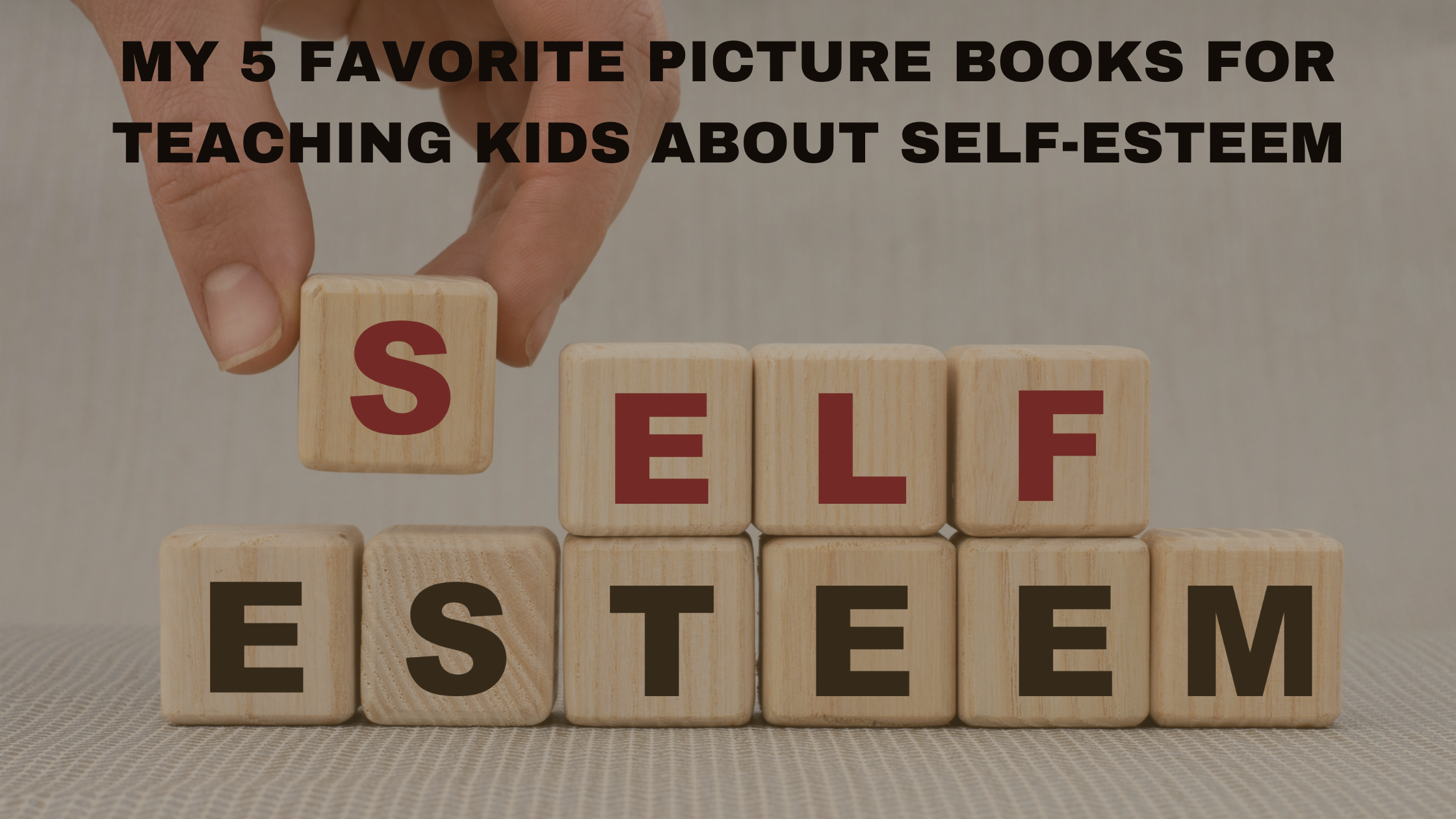
My 5 favorite picture books for teaching kids about self esteem

Self-esteem is something many kids (and adults!) struggle with. It’s the ability to see the good in ourselves, be proud of ourselves and believe in ourselves, even when we may not, at first, succeed.

This is a daunting task for many kids, though. Does this scenario sound familiar? Your child (or student) makes a simple mistake or is redirected by an adult and immediately starts beating themselves up, berating themselves for messing up or calling themselves ugly names. Despite your best efforts to the contrary, this is a trap many of our kids fall into, and it’s not healthy for a lot of reasons.

According to the American Psychological Association, having high self-esteem is critical to our mental health and well-being. In fact, studies show that low self-esteem is highly correlated to depression, anxiety disorders, substance abuse, eating disorders and suicidal ideation.

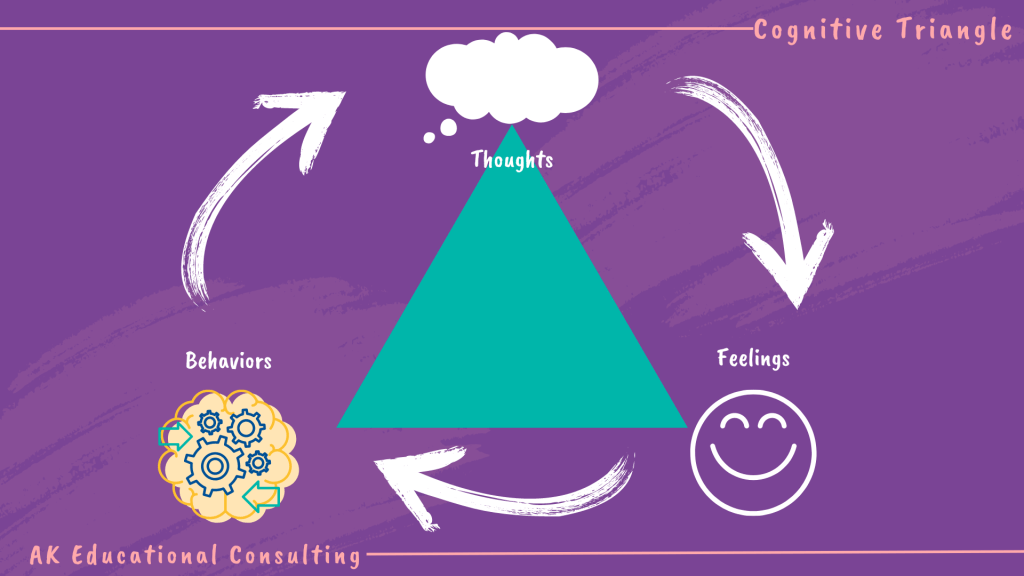
So how do we help kids beef up their self-esteem? It’s all about changing thought patterns. Remember, our thoughts determine our feelings and behaviors or actions (see the Cognitive Triangle below). If the cycle begins with negative thoughts, it’s more likely that the feelings and behaviors that follow will also be negative. However, if the cycle begins positive, then positive feelings and behaviors are more likely to follow.

So how do we encourage kids to engage in positive self-talk (or teach them what that even means!) or springboard a discussion on self-esteem? Check out my list of favorite picture books on this topic below.

Giraffes Can’t Dance by Giles Andreae

This is the story of Gerald the giraffe. He has dreams of dancing, but his knobby knees and spindly legs make it hard for him UNTIL he gets some encouraging words from a friend.

Fiona Flamingo by Rachael Urrutia Chu

Fiona gets made fun of for being the only flamingo with different colored feathers. Find out how she finally learns to accept being different than the rest of her flock in this wonderful story that also has a great message about emotional intelligence.

Ricky, the Rock that Couldn’t Roll by Jay Miletsky

Ricky is the only one of his rock friends who can’t play around and roll. Why? Because he has one flat side. Determined to include their friend, the other rocks set out to help Ricky roll.

Elmer by David McKee

There’s something different about Elmer, and although, the other elephants love Elmer for those differences, he just wants to look like everyone else. Find out how Elmer learns to love himself and be celebrated by all his friends when he sets out to look like all the other elephants.

Pink is for Boys by Robb Pearlman

With a group of very relatable characters, this book sets out to bust gender stereotypes by encouraging boys and girls to do what they love and express themselves in every color of the rainbow.

What are some of your favorite books on self-esteem? I’d love to hear about them!

My Thoughts on yesterday’s school shooting in uvalde, Texas

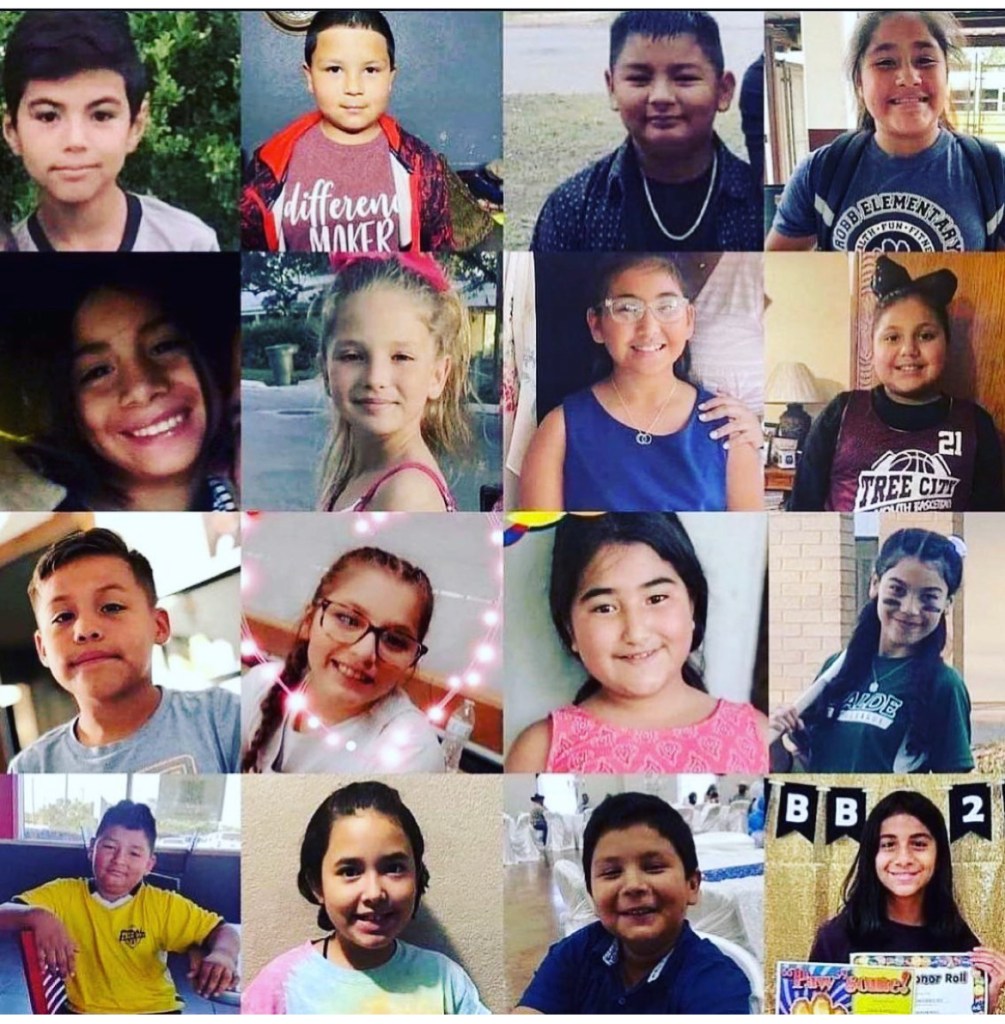
Photo courtesy of NBC News

I’m sitting here wondering how to express the thoughts going through my mind this morning, wondering what I could possibly say that is of any importance right now, wondering how our nation got to this place. I’m heartbroken for the people of Uvalde, Texas. As an educator and more importantly, as a mother, I’m feeling devastated, sad, helpless, scared and angry.

The shooting that occurred yesterday at Robb Elementary School killed 19 children and 2 adults, making it the 2nd deadliest school shooting on record behind Sandy Hook, and was the 27th school shooting of 2022. 27th. Let that sink in for a minute. In 2021, there were 34 school shootings and yesterday marked the 27th of this year. In May.

Between 1970 and 2021, 637 people were killed in school shootings. Obviously, this number has increased with the additional 27 shootings that have happened in 2022.

When does enough become enough? When do we stop being ok with children regularly practicing lockdown and active shooter drills during instructional time? When do we stop expecting school leaders to walk through their buildings several times a year, jiggling doorknobs and peeking through windows to ensure classrooms are locked and all children are out of sight?

I know that our country is full of “experts” this morning; people who think they know where we’ve gone wrong and how to fix it, people who will use this tragedy to push their own political platform and agenda. I am not one of those people. Why? Because, in my opinion, the number of ways we’ve gone wrong, as a country, is too many to count, particularly when it comes to our educational system. Because I don’t believe there is ONE solution to this problem. Because I don’t view the devastation that occurred in Uvalde yesterday as a political event. I view it as a human event; one where dozens of parents lost their babies and the community lost two beloved teachers.

Maybe, this morning, you’re wondering what can be done to stop this madness. Perhaps, like me, you’re not there yet and are still just full of grief and heartbreak for this community and our nation, as whole. I’m sure the coming days and weeks will be a barrage of “next steps,” but for me, for now, I am going to allow myself the time and space to feel sad, helpless and angry. Then, when I’m ready, I’m going to keep doing what I can to continue to bring awareness to the importance of trauma-informed practices, social-emotional learning and relationship building in schools. I’m not naive enough to believe that these things alone will even remotely impact the monumental mess we are facing in this country, but I know, for a fact, that they can and DO make a HUGE difference in the lives of individual children. And for now, that is good enough for me.

5 Strategies for Building decision making skills in kids

Over the past several blog posts, we’ve focused on each of the individual competencies within the CASEL social-emotional learning framework. So far, we have talked about the first four competencies – self-awareness, self-management, social awareness and relationship skills. Today, we will dig into the final competency – responsible decision making.

I think we can all agree that the skills within this competency are probably the ones that keep most parents awake at night. How do we teach our kids to not only make decisions but make RESPONSIBLE decisions?

This skill is critical to a child’s safety and really sets the tone for the kind of person they will become. Making responsible decisions really encompasses so many different facets of a child’s life – behavior, personal safety, social interactions, their well-being and the well-being of those around them. The list goes on and on.

While there are so many different skills within this competency, there are a few key strategies we can teach kids to set a strong foundation for responsible decision making all the way through adulthood.

Teach kids to identify bullying and know what to do about it

Kids need to know what bullying is – what it looks like, what it sounds like and what they can do about it. Talk about the different types of bullying (physical, verbal, social and cyber). Help them to understand that bullying means repetitive, unwanted, aggressive and one-sided behaviors that target a specific person or group. Empower kids with the tools to recognize bullying, stand up for the person being bullied and seek help from an adult.

There are so many amazing tools online to help teach kids about bullying. This website is a great place to start and includes a wealth of information and resources to support you.

Teach kids to advocate for themselves

If we are going to give kids the tools to stand up for other people, we should probably also give them the tools to stand up and advocate for themselves. This is something that I have really been working on with my 2nd and 5th graders for the past year or so.

Begin by talking through social situations your child encounters after the fact. My children often come home from school upset about something that was said or done to them. In those situations, I always review with them what is ok for them to say and/or do. For example, if my preschooler mentions that someone hit him because they wanted the toy he was playing with, the conversation may go something like this:

Me: Did you tell him not to hit you, that you don’t like that?

Preschooler: No, I told on him.

Me: If someone is hurting you, it’s ok to say, “Don’t hit me. I do not like that.” You can stand up for yourself. Then, if he doesn’t stop, you can find an adult to help you.

This takes time and practice, but it’s so worth it. Not only am I modeling what is ok to say and do, I’m helping my kids understand that they don’t always have to rely on an adult to solve their problems.

With older children, the situation may involve an adult such as a teacher. Those are important conversations to model as well because you’re helping your child understand how to handle a situation in which they are likely uncomfortable and unsure of themselves.

Introduce kids to the decision making process

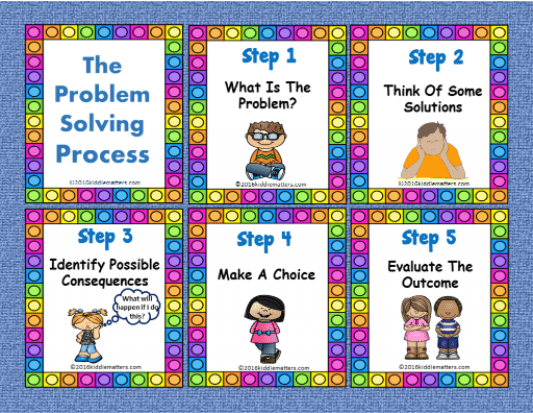
I really like this visual for teaching the decision making process from Kiddie Matters because it is simple to follow and fairly self-explanatory. Go over each step of the process, model what it might look like and practice by applying it to a variety of situations to give kids practice.

If we give kids the foundation for making responsible decisions when they are young, we can support them in applying it to more complex decisions as they get older.

Stop, Think, Act Strategy

This is a fantastic strategy for kids to have in their toolbox for a variety of situations. It can be used as a coping skill, a problem solving strategy or a way to make responsible decisions. The idea behind this strategy is that kids stop and take a moment to think through the situation, decision, problem, etc. before acting. This allows kids to be more reflective and proactive rather than impulsive and reactive. That’s never a bad thing!

Know the difference between above the line and below the line behaviors

You may remember this strategy from the post on relationship skills, and that’s ok! There is a lot of overlap within the competencies.

I don’t remember where I first heard that term, but it has stuck with me for years now. Above the line behaviors are positive and below the line behaviors are negative. Another way to think of it is above the line behaviors are characteristic of a healthy friendship or relationship while below the line behaviors are those reminiscent of an unhealthy relationship. Create an anchor chart of each type of behavior or the traits of a good friend. Read and discuss stories with examples of strong, healthy relationships, as well as ones where bullying or unhealthy relationships are happening. Help students understand that everyone is deserving of healthy relationships and, depending upon age, discuss ways to seek help if they are involved in an unhealthy relationship.

It’s helpful for kids to have a solid understanding of this, as it will (hopefully!) inform their own decision making regarding their behavior, personal safety, advocacy of others and relationships.

Have other ideas of great strategies for building decision making skills in kids? Share them with me!

Trauma-Informed School Partnership Opportunity

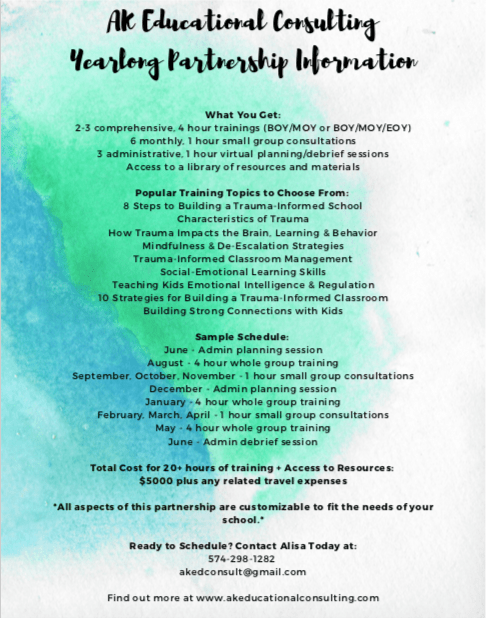
A few weeks ago, I rolled out a new training/consulting opportunity in my bi-weekly newsletter to schools. This is a fantastic opportunity for schools or districts to get a lot of bang for their buck and make tremendous headway toward building a trauma-informed culture in their building or district.

The informational flyer below outlines the details, but many aspects of this partnership are customizable to fit the needs of each particular school. I originally opened up 5 spots for the 2022-2023 school year, and I have 2 spots remaining.

Interested in learning more? Reach out to me at akedconsult@gmail.com.

5 Strategies for building relationship skills in Kids

Over the past month or so, we’ve been focusing on the individual competencies within the CASEL social-emotional learning framework. So far, we’ve talked in depth about self-awareness, self-management and social awareness. Today, we will dive into the next competency – relationship skills.

There’s certainly no denying the fact that our kids’ relationship and communication skills took a hit because of the pandemic. Think about it – kids were isolated from their peers, communicating primarily with the people they live with or via a screen, missing out on critical conflict resolution opportunities (i.e. recess, playdates, etc.). It’s no wonder so many teachers consider the lack of relationship and communication skills to be one of their biggest battles now that in-person school has resumed.

To further illustrate this point, let me tell a personal story. Toward the end of the initial COVID lockdown, my daughter and I were invited over to her best friend’s house for a “porch playdate.” The girls (1st graders at the time) were going to play together on the porch while the moms chatted. This was the first time the girls were going to be together in person in several months. They were both so excited!

That morning, we walked over to their house. Her best friend had pulled out a wide variety of toys they could play with. They sat down on the ground, and her mom and I got to chatting. After several minutes, I realized that neither of the girls were talking to one another. They were both quietly playing with the flip sequins on my daughter’s backpack. I made a joke about how they were allowed to talk to one another and returned to chatting with her mom.

A few more minutes passed, and suddenly her dad popped his head out the front door. He seemed surprised to find us on the porch. He said it seemed so quiet outside, he thought we had gone for a walk. I laughed and said that I had just made a similar comment.

As time went on, the girls seemed to warm up and began to play. As my daughter and I were walking home, I asked her why she seemed so hesitant to talk and play with her best friend, but she didn’t really have an answer.

For the rest of the day, I kept thinking about the playdate, and it finally hit me! The girls had (in a sense) forgotten how to communicate! They had spent so many months in isolation, with just their parents and siblings, they were unsure of how to go about resuming “normal” play.

While it took me awhile to come to this conclusion, it’s since become clear that this is a widespread problem. As I travel to schools all over the country, I’ve had teacher after teacher verbalize this very same issue…even 2 years into the pandemic!

Our kids spent a long time being isolated from their peers and missing out on learning and practicing some pretty critical communication skills. It’s really no wonder this has become such a problem. The question becomes…What can we do about it?

Read on for 5 strategies to help our kids rebuild or strengthen their relationship and communication skills.

practice cooperative learning skills.

With students spending so much time doing virtual learning, hundreds of opportunities to build cooperative learning skills were missed. We need to provide those opportunities now. Allow students to work in partners, trios or larger groups as often as possible. Review, model and practice the skills necessary for successful cooperative learning – listening, encouraging, compromising, coming to a consensus, etc. Give kids the time and space to flex those muscles once again, and it will eventually all come back to them.

Teach kids how to communicate their wants and needs.

A huge component of building healthy relationships is having the ability to advocate for yourself when necessary. This is a skill that most kids are not well versed in. We can help them with this, though, by discussing the difference between needs and wants, listing out possible needs and wants and helping them to understand why it’s so important to be able to communicate these to others. Talk about this concept within the context of different types of relationships – friendships, student/teacher, parent/child, etc.

Know the difference between above the line and below the line behaviors.

I don’t remember where I first heard that term, but it has stuck with me for years now. Above the line behaviors are positive and below the line behaviors are negative. Another way to think of it is above the line behaviors are characteristic of a healthy friendship or relationship while below the line behaviors are those reminiscent of an unhealthy relationship. Create an anchor chart of each type of behavior or the traits of a good friend. Read and discuss stories with examples of strong, healthy relationships, as well as ones where bullying or unhealthy relationships are happening. Help students understand that everyone is deserving of healthy relationships and, depending upon age, discuss ways to seek help if they are involved in an unhealthy relationship.

Teach respectful disagreement strategies.

I know, I know…this same strategy was included in the social awareness post. I feel so strongly about this one, though, I’m including it again. You can read about it more here.

Arm kids with conflict resolution strategies.

Conflict is going to happen. We can’t avoid it, but we can provide kids with a wide variety of conflict resolution strategies so they are ready when it happens. Kids will not learn how to solve conflicts through osmosis. We have to explicitly teach the strategies and model, model, model. Then, we have to walk them through the conflict resolution process over and over again until they feel ready to independently tackle the problem. This is not a quick strategy, but it will pay off in the long run when we have kids who can independently resolve their conflicts and not rely on us to solve every little problem they run into. That’s worth it, in my opinion!

What other strategies would you include on this list?

5 Strategies for Building Social Awareness In Kids

If you’ve been following along with the blog and my YouTube channel recently, you may remember a month or so ago I wrote an overview of the CASEL framework.

In the weeks following, I began a deeper dive into each competency within the CASEL framework, beginning with self-awareness and then self-management. Today we will dig deeper into the third competency – social awareness.

Social awareness is all about being aware of those around you, understanding that your words and actions impact others, knowing how to respect the differences among people and being a socially responsible and active participant in society.

While a wide variety of skills fall into this competency, we will focus on the following five in this post:

  1. Understand social cues and how to read them.
  2. Teach respectful disagreement strategies.
  3. Know how to maintain personal boundaries and respect the boundaries of others.
  4. Identify ways to be helpful to others.
  5. Learn about and celebrate different cultures.

Understand social cues and how to read them.

Cl One critical component of social awareness is knowing how to “read the room,” or interpret the social cues of others. This is a skill that can be difficult for many kids and needs to be taught explicitly and practiced consistently. You can do this easily through role play and modeling. Point out the different facial expressions or body language cues being given by others in the classroom or school building. Ask kids to try to interpret what that person is thinking or feeling. Dig deeper by asking students how we might need to adjust our communication with that person, based on those cues.

For example, if you notice that many students seem really sleepy on a Monday morning during your math lesson, you may point this out to the class and suggest a movement break. You may say, “It seems like we are a group of very sleepy 3rd graders this morning which is probably making it hard to concentrate on this multiplication strategy. Why don’t we stand up and choose a movement break from our jar to get our bodies moving and our brains awake and ready to think.”

By adjusting your plan, you are sending the message that sometimes we need to be flexible in how we communicate to best fit the needs of our listeners. This is especially important for chatty kids who like to go on and on, despite no one actively listening.

One last thing to keep in mind is that wearing masks made this skill especially hard for kids so it’s very likely they will be out of practice. Have patience…they will get there!

Teach respectful disagreement strategies.

If you spend any time on social media, you know that we live in a society of adults who have no idea how to respectfully disagree with one another. If adults can’t seem to master this skill, how do we expect our students to? Admittedly, this skill is going to take time to develop in kids, but it’s a critical one. Think about all the grown-ups out there who have cut ties with a family member or friend over political beliefs, pandemic opinions, etc. rather than choosing to be ok with the fact that we are all different and disagreements are bound to occur.

The best way to teach this skill to kids is through modeling when disagreements do pop up. Whether it’s in the classroom, the cafeteria or on the playground, take the time to walk the students through the disagreement in an appropriate manner. Help them to understand that they do not have to see eye to eye with every other person, but that there are ways to be respectful of our differences in opinion.

Don’t shy away from discussion topics that are sure to be controversial among students. If they are never given the opportunity to debate, disagree and voice their opinion (especially within the context of a safe environment), they will be missing out on key opportunities to learn this critical skill.

Know how to maintain personal boundaries and respect the boundaries of others.

Talk to your students about boundaries! Whether in the context of space, personal belongings or their bodies, help them to understand that we all have different comfort levels.

Start by setting specific expectations for the entire class. Perhaps it’s a rule that students do not get into the desks of others without their permission or they ask prior to giving hugs.

Be open in discussing that it’s ok to set boundaries and request that others respect them while also recognizing that we must extend the same courtesy to those around us. This skill can be tied into the skill of reading social cues by helping students recognize that sometimes people give us facial or body language cues to let us know that we are not respecting a boundary they have set.

Identify Ways to be helpful to others.

As I mentioned in the introduction, part of social awareness is understanding that we are part of larger groups and communities (i.e. classroom, school, city, nation, etc.), and that, as a member of these groups, it is our responsibility to contribute in some way. There are usually a multitude of ways to do this.

Whenever my own kids complain about doing chores, I remind them that, as a member of our family, it is each person’s responsibility to help take care of our house, the dog, our belongings, etc. It wouldn’t be fair for all the work to be done by just one person. I also like to remind them that chores get done much more quickly when we work together as a team.

The same holds true for a classroom or school community or a neighborhood community. Expect students to follow through on their responsibilities within the classroom or school and help them to identify new ways they can be helpful, both as individuals and as a group. Be sure to place an emphasis on WHY they should be helpful and what the benefits are being helpful are.

Learn about and celebrate different cultures.

There’s no way I can do this one justice within just a few paragraphs, but I think you’ll get the point. In order to be truly socially aware, we need to break down the barriers (both literal and figurative) that exist between people or groups who are different from one another. This means respecting the dignity of all humans and understanding the concepts of stereotyping, discrimination and prejudice. It means working to combat these things when they are happening within the walls of our school building. It means not only learning about different cultures but CELEBRATING and RESPECTING our differences and how we can learn from one another.