Being informed about trauma doesn’t make you trauma-informed

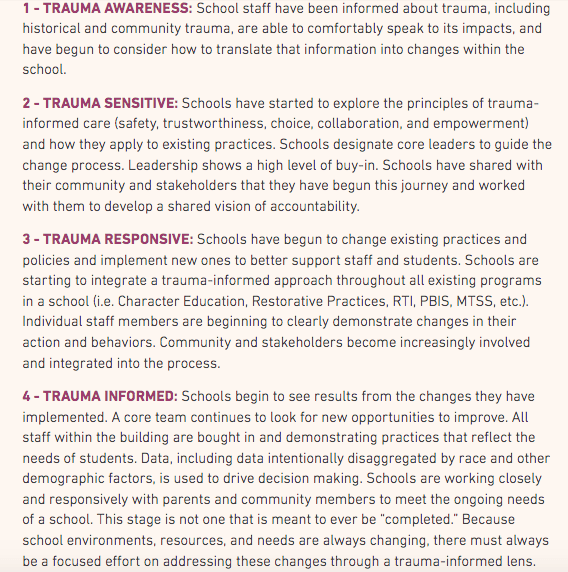
I’ve been reviewing the Missouri Model for Trauma-Informed Schools guidance document, and I LOVE this breakdown of stages to becoming trauma-informed.

I often say that I hate the term “trauma-informed” because it’s so overused and seldom actually understood.

This is such great insight into how most schools are actually only in stage 1 – trauma awareness. Until you begin to research and implement change at the building level, and see the results of those changes, you can’t leave the first stage.

Being informed about trauma does not make you TRAUMA-INFORMED.

MAY 2024 SEL THEME – RESILIENCE & PERSEVERANCE – How connection and community build resilience

***Trigger Warning: This blog post contains references to gun violence.***

Today, I’m going to digress from my typical content and tell a more personal story that highlights the importance of connection and community in building resilience in kids.

Allow me to begin by laying the foundation. My family lives in the city, in a fairly gentrified neighborhood that is surrounded by both up-and-coming areas and not-so-great areas. The police station, fire station, library and my kid’s school are all within a half mile of our house. It’s a front porch community, a walking neighborhood and, despite the violence that Indianapolis regularly experiences (and that we can often hear from our house in the form of gunshots), we feel very safe.

Our block, in particular, is a cozy, insulated city block with 20+ houses and 20+ kids. While the kids range in age from toddler to high school age, they all get along well and are outside constantly. They play soccer, race RC cars, ride bikes, draw with chalk, make up games, play with dolls, hang out on porches and just generally act like kids. I like to say that the kids on our block are living their best 1980’s childhoods.

Most of the older kids have free range of the block. Our families are all close, and we all watch out for one another. I know that if I don’t have eyes on my kids, another adult does. We all feel comfortable redirecting and correcting each others’ kids, and the kids feel comfortable talking to, and engaging with, all the grown-ups.

I realize how fortunate we are to live this life. I am grateful everyday for our neighbors, my kids’ friends and the community we’ve built on this block. I know that even just a street or two over from where we live, this is not the reality. I know that many people who live in the city don’t feel comfortable allowing their kids to run freely because they don’t know their neighbors or it just doesn’t feel safe.

That said, two weeks ago, we had a random incident of gun violence on our block, less than an hour before the kids would begin arriving home from school. Thanks to several quick calls to 911, police arrived quickly and fatally shot the gunman. However, because it was an officer-involved shooting, our block was shut down and crawling with police officers, detectives, forensics and others well into the evening hours.

In our family, my husband and I are very transparent with our kids and aren’t afraid to have tough conversations and answer hard questions, in an age-appropriate manner. Our kids feel very comfortable talking to us about just about anything (and they do, much to our chagrin sometimes!).

That day, we picked them up from school so that we could discuss what happened with them and allow them to ask questions, prior to them seeing all the action on the block where they live. As we walked and talked, we reinforced that the neighbors on our block are part of our community and that it’s our job to always look out for one another and do all that we can to keep everyone safe.

Later that evening, several parents from our block had a conversation via our block’s text thread about how to truthfully and appropriately communicate what happened to our kids to avoid them becoming fearful. In discussing how different families had approached, or were planning to approach, the subject with their children, something became so clear to me. Our kids were going to be ok.

Why was I so certain about this? Because the kids on our block are resilient, and that is because the adults around them have thoughtfully built a community of individuals who intentionally connect with one another, cultivate a sense of belonging and believe in empowering kids by allowing them to problem-solve, resolve conflict, build upon friendship and social skills and so much more, all in a safe environment.

It was entirely coincidental that all of this happened just as I had introduced the May social-emotional learning theme of resilience and perseverance. I knew right away, though, that I wanted to share this story during the month to highlight just how important connection and community are to building resilience.

When I speak in schools or at conferences about resilience (or SEL or trauma-informed care, for that matter), the one point that I always stress is this – connection matters. More than anything, in fact.

According to a study done at Harvard University’s Center on the Developing Child, “the single most common factor for children who develop resilience is at least one stable and committed relationship with a supportive parent, caregiver, or other adult.”

Many of us are fortunate enough that our kids have this many times over, in the form of parents, family members, neighbors, teachers, coaches, youth group leaders, etc.

What about the kids who don’t, though?

As a mom who also does double (quintuple???) duty as a teacher, coach, mentor, volunteer, etc., I always walk around with this question in the back of my mind.

When I’m serving as the dugout coach for my 7 year old’s baseball team or when I’m going on a field trip with my 10 year old’s class, I think about ways that I can intentionally connect with the kids around me so that maybe, just maybe, one day they will view me as one of their “people.”

It’s such a simple thing, but it’s so important. Although I truly hope not, perhaps one day, your student or child will be in a situation where resilience is the difference between them living in fear vs. processing through an event, choosing a healthy coping mechanism vs. an unhealthy one or talking to a trusted adult vs. keeping a dangerous or harmful secret.

Let’s work now to set them up for success later. It truly begins with a simple connection to build a beautiful community like the one in which I am so fortunate to live.

Do me a favor – I want you to think about how you can intentionally and meaningfully connect with another person whose path you cross today. And then, do it again tomorrow and the next day and the day after that.

May 2024 SEL THEME – Resilience & Perseverance – AN INTRODUCTION

Welcome to May and our 5th social-emotional learning theme of the month! This is, arguably, one of the most important skills we can help our kids develop so get ready for some great information and strategies!

In this first week of the month, we will define our theme, discuss why it’s an important SEL skill and talk real-world application. This will serve as a springboard for the resources and other ideas I will be sharing throughout the remainder of the month.

So, let’s dive in!

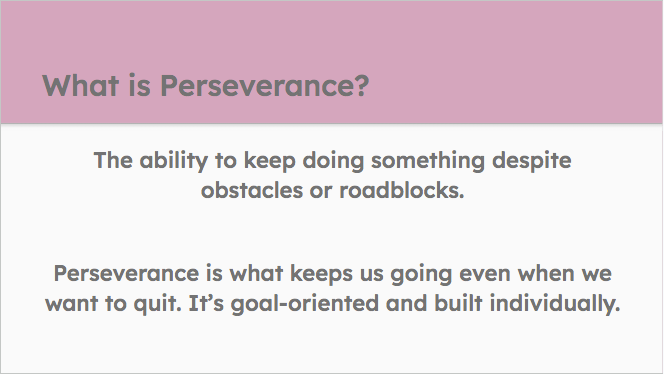
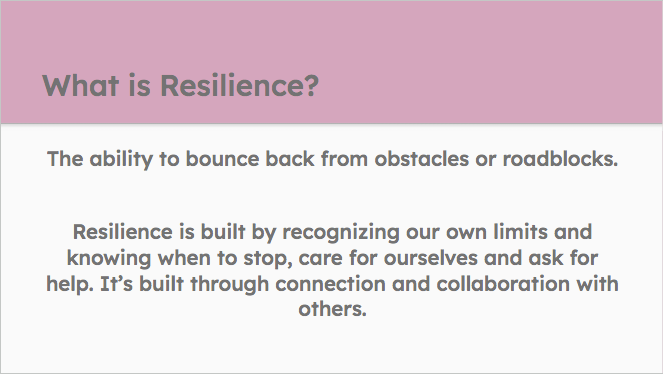
What are resilience and perseverance exactly? You may not know there is a difference between them, but there is! Here’s a good starting point to use with kids of all ages. You can adjust this definition to best fit the needs of the age group you work with. I know many of these themes are pretty self-explanatory, but sometimes we just need someone else to sum it up for us!

Now that kids know what resilience and perseverance are, we need to help them understand why these skills are important and how they will be beneficial to them.

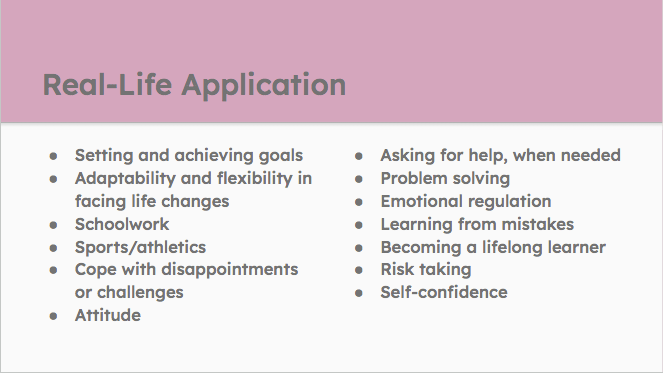
Next, we can begin connecting resilience and perseverance with kids’ real lives by helping them recognize what these skills actually look like and when they may come in handy!

Resilience is a skill that takes some time and support to fully develop. How can you aid your kids or students in resilience building this month and beyond?

Be sure to follow along all month right here on the blog, YouTubeFacebookInstagram and LinkedIn. I will be sharing all sorts of tips, strategies and resources throughout May.

Mind-Body Skills Part 2: Movement

**This is Part 2 of a 7 part series on Mind-Body Skills. Check out the introductory post here or follow along on my YouTube channel.

Many of us regularly use movement strategies as one of our go-to tools for calming down or relieving stress. Think about it. When you are stressed, anxious or overwhelmed, do you go for a walk…hit the gym…take the dog for a run? Maybe not, but if you’re anything like me, you can identify with this strategy.

Not only does movement keep our body healthy and in tip-top shape, it does the same for our brain. Two good reasons to encourage movement as a regulation strategy for kids, right?

Here are a few of my favorites:

Sensory Path: If you work in a school and don’t have a sensory path, I’d encourage you to check out this website and consider it. Not only are they so cute and kid-friendly, they are a fantastic way to get kids moving in a different way. They can be used by individual kids or the entire class!

Brain Gym: I was introduced to Brain Gym by a teacher at a school I was consulting with. While I had not heard of Brain Gym specifically, I was familiar with the power of exercises that encourage kids to cross the midline. If you’re a newbie, learning more about Brain Gym and the corresponding exercises is a great place to start.

5 Senses Nature Walk: Get outside and work those 5 senses, along with your body! What do you see…hear…smell…feel…taste (well, maybe not this one!)? There are so many benefits to walking in nature. Think you don’t have nature around you? Remember, it certainly doesn’t have to be a forest to count as nature so get creative!

What Time is it, Mr. Fox?: This is a fun (and multi-disciplinary!) game for younger elementary students.

Color Search: Go on a color search. Whether it’s around the house, the school or outdoors, get kids moving and identifying objects of various colors.

Tape Jumping Game: This one is so simple and has a million different versions. While it is more geared toward younger kids, you can certainly amend the rules (and distance between tape pieces) for older kids.

school safety drills are here to stay: empowering educators with best practice tools and strategies for lockdown and active shooter drills

For the past week, I have struggled with what to say about the school shooting in Nashville. Not because I don’t have any thoughts or feelings on it, but because I’m not sure I have anything worthwhile or new to add to the conversation.

As an educator and mom, it’s frightening how numb our society is becoming to these mass shootings. But I suppose, as is the case for many scary things, we learn to compartmentalize in order to go on living and sending our kids to school each day.

For the past week (and if I’m being honest, for many more months prior to that), I have mulled over a myriad of thoughts about this school shooting, as well as all the others. Because my passion is kid’s social-emotional health and well-being, most of my thoughts center around that topic, and I have found myself returning over and over again to the same question.

Do the benefits of active shooter and lockdown drills outweigh the risks to our students and teachers?

The answer seems to be that no one knows for sure.

As a school administrator, I remember announcing these drills and walking the building, jiggling classroom door handles to ensure they were locked, peering through classroom windows to ensure the kids weren’t visible from where I was standing and admonishing teachers whose class “failed the test.”

I cringe now to think of the psychological damage being done to the students and teachers I loved like my own family, and I wonder how many hundreds or thousands of other schools in our country are doing the same.

As a mom of three kids, I feel outrage when I hear about active shooter and lockdown drills being conducted, not from the school administrators, but from my kids when they return home in the afternoon.

While I certainly don’t have all the answers (and from my research, it appears no one does), I do know that we can do better. We MUST do better.

So, rather than focusing on all that’s wrong (because that list is too long to think about), I am choosing to focus on empowering educators with tools and resources to reflect upon, share with administrators and use with students.

Here we go.

  1. National Association of School Psychologist’s “Best Practice Considerations for Armed Assailant Drills in Schools” – this is a very comprehensive manual that should be used by school or district administrators as part of their emergency preparedness plan
  2. Your Local Epidemiologist’s “Active Shooter Drills: Do Risks Outweigh Benefits?” – a quick and easy read for anyone
  3. National Association of School Psychologist’s “Mitigating Psychological Effects of Lockdowns” – a great fact sheet of tips and to-dos for before, during and after a lockdown drill
  4. National Association of School Psychologist’s “Talking to Children About Violence: Tips for Parents and Teachers” – a fantastic infographic of tips for talking with children of all ages about violence, includes specific talking points and is available in Spanish
  5. National Education Association’s “Unannounced Active Shooter Drills Scaring Students Without Making Them Safer” – a great article on what NOT to do when conducting active shooter drills at school
  6. NPR’s “2 Big Teachers Unions Call for Rethinking Student Involvement in Lockdown Drills” – the case against lockdown drills
  7. Everytown’s “The Impact of Active Shooter Drills in Schools” – a whitepaper that includes loads of data and anecdotal evidence
  8. National Association of School Psychologist’s “School Safety Drills and Exercises for Students with Autism Spectrum Disorder (ASD): Tips and Resources for Educators” – best practices and specific strategies for a population of students often forgotten about during school safety drills

What other resources have you found helpful? Please share them in the comments.

New Training Announcement!

Do your students struggle to control their brains and bodies? Do your teachers need tools to proactively engage disruptive or defiant students? Do you want calmer, more productive classrooms?My new training will help you address all this and more!

What will you learn during this training?

  1. What emotional regulation is and how we can help students achieve it
  2. Why some students struggle to self-regulate
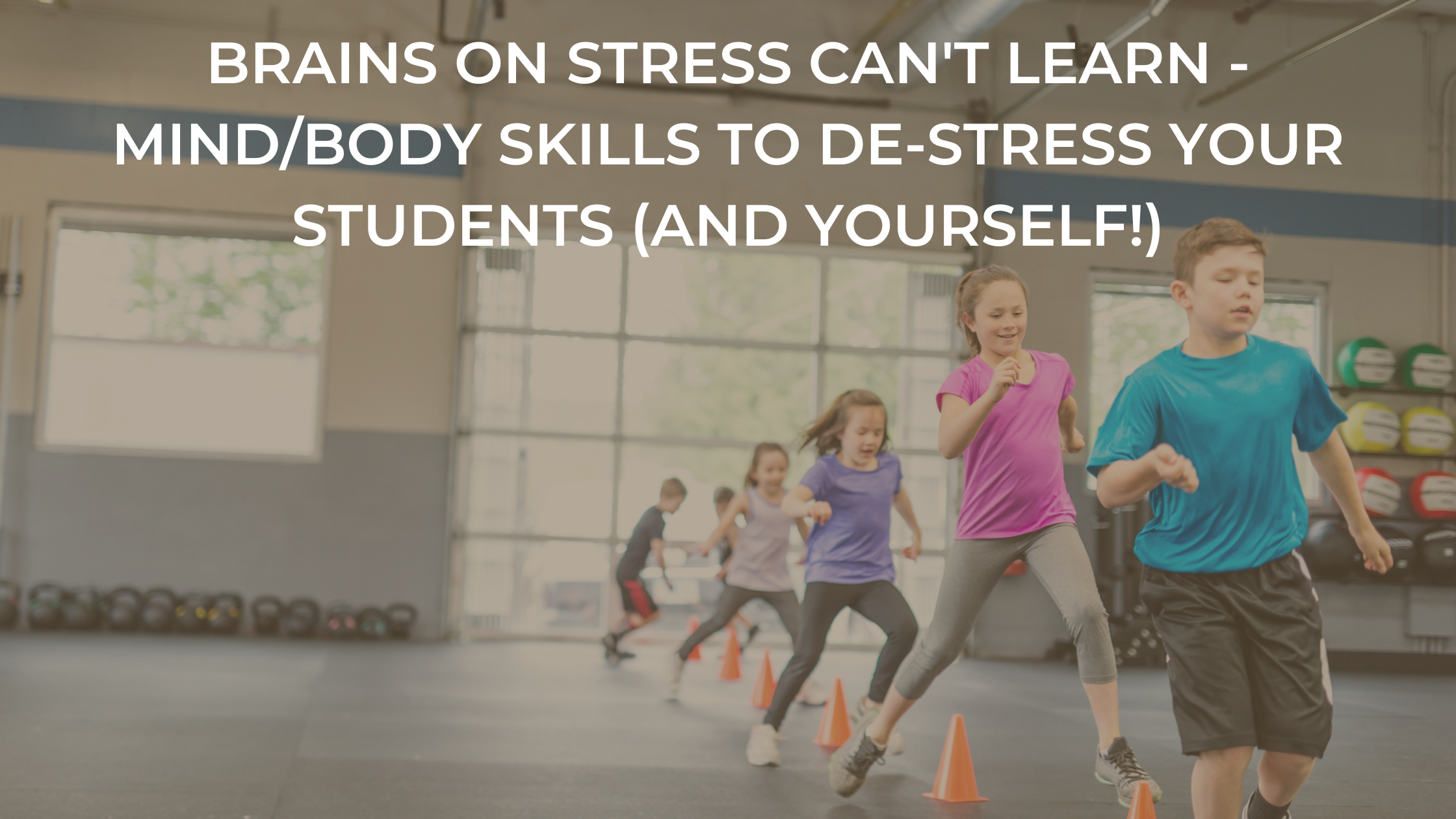
  3. Why brains on stress can’t learn
  4. The importance of mind-body skills
  5. Dozens of mind-body skills that can be easily used in the classroom

What else will you get from this training?

  1. Access to a Google folder full of aligned resources
  2. An electronic workbook with dozens of mind-body activities and directions for use
  3. Ongoing support from me

Many of our students are lacking the skills to express their emotions appropriately. This results in disruptive behaviors, chaotic classrooms and stressed out teachers. If you’re looking for a way to empower your teachers, decrease behavior referrals and increase academic achievement, this training is for you. Let me help you make this a reality for your school! Contact me today through my website or at akedconsult@gmail.com.

Podcast Announcement!

I’ve been so excited to share this news for awhile, and finally, I can! Several months ago, I was honored to be asked to sit down for an interview for the “Inspiring School Counselors” podcast and the episode aired yesterday!

I’m so grateful to be able to share several practical tips on building a trauma-informed classroom or school. It doesn’t have to be complicated or a whole school effort! Even one person can make a dramatic difference to a struggling child.

I hope you’ll take a few minutes to listen to the episode (and check out some of the other awesome guests they’ve interviewed!). It really is a great podcast for any educator! Enjoy!

10 Strategies for Building a More Trauma-Informed Classroom

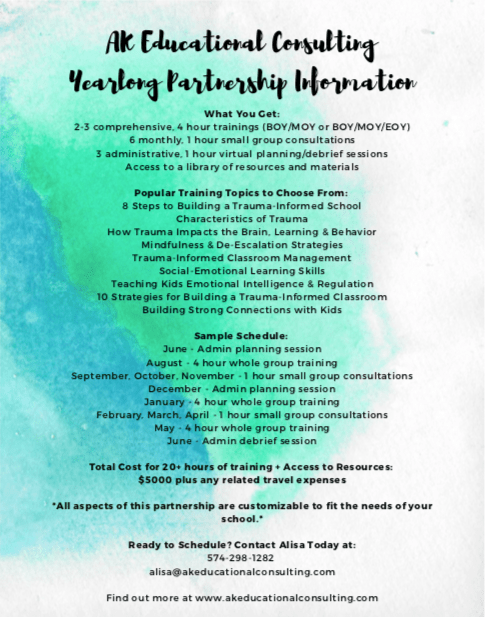
My flagship, and most popular, training is 10 Strategies for Building a More Trauma-Informed Classroom. This training covers a LOT of material and is a great introduction for teachers and school staff who do not have a lot of experience with trauma-informed practices in the school environment. Not only will teachers get a solid foundation in what trauma-informed care looks like in a classroom and why it is critical to the success of their students, but they will also walk away with a toolbox full of strategies that they can begin using immediately. These strategies don’t cost a lot of money or take a lot of time to implement. They are simple, common sense strategies that are just best practice for ALL kids.

Additionally, this training will cover:

  1. The 3 Types of Trauma
  2. Adverse Childhood Experiences (or ACEs)
  3. Characteristics of Trauma
  4. How Trauma Impacts the Brain, Learning and Behavior
  5. Trauma-Informed Discipline
  6. Mindfulness and De-Escalation Strategies
  7. 10 Strategies for Building a More Trauma-Informed Classroom
  8. How to Get Started

If you are looking to give your teachers a toolbox full of strategies to help them have a successful year with students, particularly struggling students, this training is a great place to begin. It is typically a 6 hour training but topics can be added or subtracted, as necessary. This training is also great done in smaller 1-2 chunks during monthly staff meetings. Contact me today for more information or to schedule your next professional development.

Coming soon!!! – Indiana School Counselor and Administrator Collaboration Institute (ISCACI)

Calling all school leaders (principals, assistant principals), school counselors, and graduate students/alumni in school counseling and educational leadership programs! You are cordially invited to join us at the inaugural Indiana School Counselor and Administrator Collaboration Institute (ISCACI). This conference focuses on school administrator-school counselor collaboration to better meet all PK-12 student needs. Three nationally and internationally known speakers will provide workshops and a keynote, and 34 local presenters will share knowledge and resources in breakout sessions during this exciting two-day event in June at Ball State University. We hope to see you there!  

Conference information

Dates: June 13-14, 2022

Location: Ball State Alumni Center, 2800 W. Bethel Ave., Muncie, IN  47304

Website: https://ncyionline.org/conferences/iscaci/

Cost: $20 (Graduate Student) and $95 (Early Bird Regular Registration)

Meals provided: Breakfast and Lunch for Two Days

Breakout session presenters are from a variety of organizations, such as the Indiana Department of Education, Standard for Success, local Indiana school districts, Indiana Online, and much more! Breakout session topics include:

  • Student Success
  • Community Engagement
  • College & Career Readiness
  • Educational Equity 
  • Principal/Counselor Relationships

Workshop: “Integrating MTSS Into Your Comprehensive School Counselor Program (CSCP)” with Dr. Carol Dahir from New York Institute of Technology

Workshop: “Working Together to Support Students” with Dr. Leigh Bagwell who recently served with the Tennessee Department of Education.

Keynote: “How Do You View the World? A Discussion of Diversity and Equity” with Robert Jamison from Virginia Beach City Public Schools.

Please contact Dr. Rachel Geesa (rlgeesa@bsu.edu) and Dr. Theresa Kruczek (tkruczek@bsu.edu) if you have questions about the conference.

My Thoughts on yesterday’s school shooting in uvalde, Texas

Photo courtesy of NBC News

I’m sitting here wondering how to express the thoughts going through my mind this morning, wondering what I could possibly say that is of any importance right now, wondering how our nation got to this place. I’m heartbroken for the people of Uvalde, Texas. As an educator and more importantly, as a mother, I’m feeling devastated, sad, helpless, scared and angry.

The shooting that occurred yesterday at Robb Elementary School killed 19 children and 2 adults, making it the 2nd deadliest school shooting on record behind Sandy Hook, and was the 27th school shooting of 2022. 27th. Let that sink in for a minute. In 2021, there were 34 school shootings and yesterday marked the 27th of this year. In May.

Between 1970 and 2021, 637 people were killed in school shootings. Obviously, this number has increased with the additional 27 shootings that have happened in 2022.

When does enough become enough? When do we stop being ok with children regularly practicing lockdown and active shooter drills during instructional time? When do we stop expecting school leaders to walk through their buildings several times a year, jiggling doorknobs and peeking through windows to ensure classrooms are locked and all children are out of sight?

I know that our country is full of “experts” this morning; people who think they know where we’ve gone wrong and how to fix it, people who will use this tragedy to push their own political platform and agenda. I am not one of those people. Why? Because, in my opinion, the number of ways we’ve gone wrong, as a country, is too many to count, particularly when it comes to our educational system. Because I don’t believe there is ONE solution to this problem. Because I don’t view the devastation that occurred in Uvalde yesterday as a political event. I view it as a human event; one where dozens of parents lost their babies and the community lost two beloved teachers.

Maybe, this morning, you’re wondering what can be done to stop this madness. Perhaps, like me, you’re not there yet and are still just full of grief and heartbreak for this community and our nation, as whole. I’m sure the coming days and weeks will be a barrage of “next steps,” but for me, for now, I am going to allow myself the time and space to feel sad, helpless and angry. Then, when I’m ready, I’m going to keep doing what I can to continue to bring awareness to the importance of trauma-informed practices, social-emotional learning and relationship building in schools. I’m not naive enough to believe that these things alone will even remotely impact the monumental mess we are facing in this country, but I know, for a fact, that they can and DO make a HUGE difference in the lives of individual children. And for now, that is good enough for me.