
5 Ways to Address Mental Health Awareness Month with kids (Plus a freebie!)

Download and print this infographic, highlighting 5 ways you can address Mental Health Awareness month with kids in the classroom or at home!

Mental Health Awareness Month

Did you know that May is Mental Health Awareness month? It’s time to start talking about the health of our brains, just like we do the health of our bodies. It’s time to BREAK THE STIGMA. That’s what this month is all about.

Not only do I feel passionately about this topic because it’s what I talk about for a living but also because my own family is impacted by mental illness just like so many of yours are. In fact, it’s one of the main reasons I focus my trainings and content on topics such as trauma, chronic stress and social-emotional learning.

The pandemic has certainly brought to light many of the challenges people with mental health issues face on a daily basis. It is also to blame for exacerbating these issues for tens of thousands of adults and children.

There has never been a better time to break the cycle of silence and gain a better understanding of mental illness. If not for your benefit, for the benefit of someone you love.

If you or someone you know is thinking about suicide, please call the Suicide Prevention Lifeline at 1-800-273-TALK. Trained crisis workers are available 24/7.

Adverse childhood experiences: what are they and what can be done about them

Every time I present at a school or conference, I ask the question, “Who here knows what ACEs are?” and every time, I am astounded that rooms full of extremely knowledgable educators, school counselors and administrators have never even heard the term before. Every. Single. Time.

Now, to be clear, I’m not astounded because I expect them to know. Quite the opposite, in fact. I’ve trained enough educators and school staff to expect that only a handful of them will raise their hand when I ask the question. My astonishment stems from the fact that I want them to know. I want every educator in our country to have a clear understanding of what Adverse Childhood Experiences (ACEs) are, how they impact our students and what actionable steps can be taken to help prevent them. I want our education system to do a better job of preparing our teachers for the behaviors they will encounter due to trauma and chronic stress. I want these things because I believe the lack of understanding, and the many things that result from this lack of understanding, is one of the reasons the teaching profession boasts such high levels of burnout. Add to all this the fact that we now have MORE struggling kids than ever before.

So what are ACEs? And how will better understanding them help teachers and kids? Let’s start at the beginning. According to the CDC, ACEs are “potentially traumatic events that occur in childhood.” Think abuse, neglect, divorce of parents, incarceration of someone close to them, etc. Here’s the really bad news about ACEs, though – we are learning that they increase a person’s risk of developing a multitude of physical and mental illnesses later in life. Things like lung cancer, heart disease and diabetes, just to name a few. We also know that, in the short-term, ACEs (and trauma, in general) impact the brain and as a result, learning and behavior.

It follows then that trauma and chronic stress are major contributing factors in many of the academic and behavioral issues we see in students. Have you noticed an increase in negative or aggressive behaviors at your school or your child’s school this year? Schools all over the country are reporting this very thing. Why? Because we have a whole lot of kids living with the stress and anxiety of the COVID-19 pandemic, among other things.

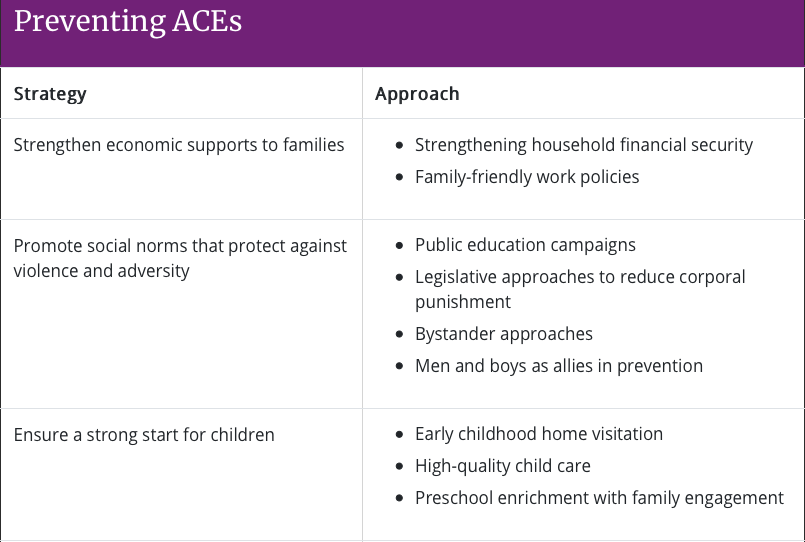
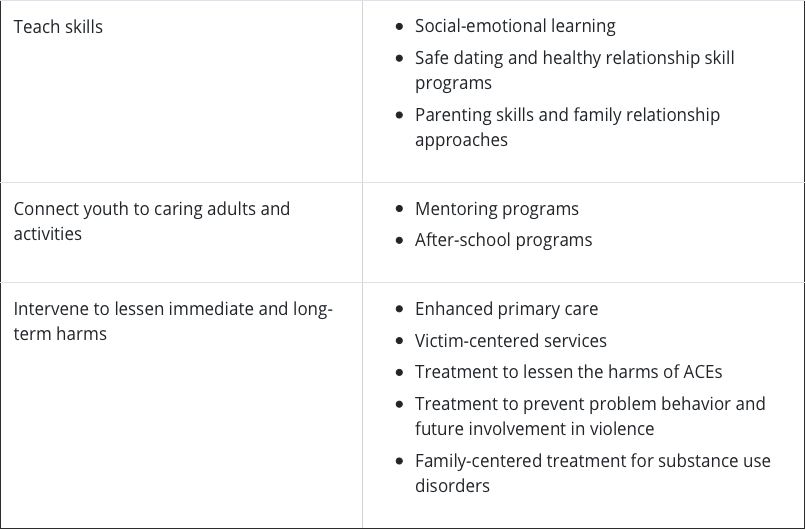
So the real question becomes – what can we, as educators and parents, do about this sticky situation we are in? Well, for starters, let’s check out this list of prevention strategies from the CDC’s ACE page which you can find here.

Now obviously, the reach of teachers only goes so far, but “Teach skills” and “Connect youth to caring adults and activities” lands directly in the laps of educators and school counselors. Our schools need to quickly realize that going about with a “business as usual” mindset is doing our students NO FAVORS. The world we are currently living in is far from “usual.” We need to prioritize the social-emotional health of every single child, if we ever hope to get them back on track. Now is not the time to try to “catch them up.” It is not the time to say, “We need to try to move on.” It is the time to realize that what our kids are experiencing is unprecedented and needs to be addressed. We need to help them process through the changes they’ve experienced, the emotions they’re feeling to help them understand they are not alone and provide them the tools to build resiliency.

Heck, think about how YOU have felt over the past 18 months. Do we expect that children should be able to ride that rollercoaster of emotions for so long, hop on off and just go about their business in ways that many adults have not been able to do? Of course not!

Wondering where to begin? I encourage you to check out all the information and resources on the CDC’s ACE page. There is so much to delve into there. If you’re wanting to learn more about incorporating trauma-informed practices or social-emotional learning into your classroom or school, email me at akedconsult@gmail.com. There is so much that we can do to help ALL students be successful at school right now.

New Resource! – Building a Trauma-Informed Classroom Video Series

Get the video series here!

Are you ready to build a more trauma-informed classroom or school? If so, this video series is for you. Whether you are a teacher, administrator, school counselor or support staff member, there is something for everyone in these courses.

In this series, I will take you through the basics of trauma, how trauma impacts students in the school setting and specific strategies you can implement to help build resilience in your students.

Course 1 focuses on understanding the basics of trauma in our society, why schools should be trauma-informed and how to recognize the characteristics of trauma in children of various ages.

Course 2 focuses on understanding how traumatic experiences impact the brain and learning. You will learn how the flight/fight/freeze response works, how the stress response can be turned off and the benefits of mindfulness.

Course 3 focuses on understanding how traumatic experiences impact student behavior and how to implement a more trauma-informed classroom management system. You will learn about private logic and how that drives behavior and how to evaluate the pros and cons of the classroom management system you use.

Course 4 focuses on 10 specific strategies that can be used to build a more trauma-informed classroom. You will learn about the guiding principle of all 10 trauma-informed practices and reflect on the culture and climate of your own classroom in order to assess where improvements can be made.

Be sure to check out the video series bundle here, as well as all the resources in my TPT store that support the content in the videos!

Building a Trauma-Informed School Video Series: Course 2

Get Course 2 here!

Course 2 of my new video series on Building a Trauma-Informed School launched yesterday on Teachers Pay Teachers! I’m excited to make the content I teach to schools all over the country accessible to educators at the click of a button and at an affordable price.

This series will break down the information I present in a full-day professional development into smaller, easy to watch chunks. Course 1 is already available and focuses on understanding the basics of trauma in our society, why schools should be trauma-informed and recognizing the characteristics of trauma in children of various age levels.

Course 2 dives into understanding the neuroscience of trauma – how traumatic experiences impact, and cause changes to, the brain that affect students in a learning environment. It covers the impact of trauma on learning, as well as a variety of mindfulness techniques that can be implemented in the classroom.

Course 3 will go live in the next two weeks. It will focus on the impact of trauma on behavior, trauma-informed classroom management strategies and assess the pros and cons of a variety of common classroom management systems.

At least one more course will follow and will include 10 strategies for building a more trauma-informed culture in the classroom.

Head on over to Teachers Pay Teachers and grab Course 2 here!

Mindfulness vs. De-Escalation

Have you ever really stopped to think about the difference between mindfulness strategies and de-escalation strategies? No…just me? At first thought, it seems that they are the opposite of one another, right? I mean, when I think of mindfulness, I visualize someone meditating or deep breathing in a peaceful, quiet place. When I think of de-escalation, calm and peaceful are certainly not words that come to mind. I picture a child who is feeling very angry or emotional and adults trying to help. This visual is very noisy and chaotic in my mind.

Take a minute to think about a few de-escalation strategies that the child in the example above might use. What would be on your list? Perhaps deep breathing, some type of movement activity or productive destruction (my term for satisfying the need to destroy something without ACTUALLY destroying something – think tearing paper or putty)?

Now think about common mindfulness strategies. What did you come up with? Deep breathing and exercise again?

See, the funny thing is…the strategies we use for de-escalation and the strategies we use to practice mindfulness are THE SAME! We just call them something different, depending upon WHEN we use them.

We need de-escalation strategies when our amygdala has already been activated, and we’ve moved into flight or fight mode. When we use the strategies at this time, they help bring us back into balance.

On the flip side, we practice mindfulness strategies to train our brain to respond more calmly and reflectively when faced with adversity. By practicing mindfulness regularly, we can actually retrain our amygdala to “false alarm” less frequently so we don’t need to de-escalate as often.

Now that you know that mindfulness and de-escalation strategies are the same thing, how will you incorporate them into your classroom or home environment? It’s critical that we explicitly introduce a variety of these strategies to kids so they can begin to decide what does and does not work for them. Providing time for mindfulness practice is also key to helping kids strengthen the neural pathways in their brains and be proactive about emotional regulation.

Need help getting started? Check out this infographic I have available on Teachers Pay Teachers.

Building a Trauma-Informed School Video Series

Get Course 1 here!

Course 1 of my new video series on Building a Trauma-Informed School launches today on Teachers Pay Teachers! I’m excited to make the content I teach to schools all over the country accessible to educators at the click of a button and at an affordable price.

This series will break down the information I present in a full-day professional development into smaller, easy to watch chunks. Course 1 focuses on understanding the basics of trauma in our society, why schools should be trauma-informed and recognizing the characteristics of trauma in children of various age levels.

Course 2 will go live in the next two weeks. It will dive into understanding the neuroscience of trauma – how traumatic experiences impact, and cause changes to, the brain that affect students in a learning environment. It will cover the impact of trauma on learning, as well as a variety of mindfulness techniques that can be implemented in the classroom.

At least two more courses will follow and will focus on the impact of trauma on behavior, trauma-informed classroom management strategies and strategies for building a more trauma-informed culture in the classroom.

Head on over to Teachers Pay Teachers and grab Course 1 here!

Becoming a Trauma-Informed School: Where to Begin

The term “trauma-informed” was already picking up steam in the education world prior to the Covid-19 pandemic, but man is it everywhere now! In light of the events of the past year, every school administrator, counselor and teacher is looking for ways to become more trauma-informed. This is a good thing. As educators, we should be more aware of the types of trauma, what trauma looks like, how it impacts our kids and what we can do to help them. Perhaps this is one of the more positive things to come out of the ugliness of 2020.

But I have said this before, and I will say it a thousand more times – trauma-informed practices aren’t only beneficial to kids who have actually experienced trauma. They are beneficial to ALL kids. Let’s say it louder for the people in the back. Trauma-informed practices are good for all kids. Therefore, all schools should be learning about and implementing them. I’m so tired of this myth that trauma-informed practices are only for certain types of kids or certain types of schools. Not true!

So the question is – where do you begin? The short answer is – anywhere. There are so many facets to being trauma-informed that the possibilities are endless. But I’m guessing you’re looking for a more clear-cut answer than that.

Whether your school (or classroom) is at a beginner, intermediate or advanced level of being trauma-informed, I recommend starting with a self-assessment. This way, you can hone in on specific areas of strength and weakness to help identify next steps. Think of it as the pre-assessment to guide your instruction.

Well, I went in search of the trauma-informed school assessment of my dreams, but after a lot of research, I couldn’t find one that didn’t seem too specific, too broad, too complex or too ridiculously expensive. So I created my own. In it, I have identified 6 key domains of being trauma-informed with 4 assessment questions each. It’s simple to complete, simple to score and simple to identify areas of strength and weakness for your school. Plus it includes space to begin action planning for each domain.

So if you’re looking for a place to begin your journey or want to take a step back and assess the effectiveness of practices already in place in your school, this tool is a great place to begin. Complete it with other key stakeholders to get a variety of opinions then do some brainstorming of actionable steps that can be taken.

Often, the most difficult step is the first one. This one is so worth it, though.

Get the assessment tool by clicking on the icon above or right here.

Winter/Spring Professional Development Opportunities

PLAN YOUR WINTER & SPRING PROFESSIONAL DEVELOPMENT DAYS NOW! 

If you’re looking for a comprehensive, relevant and highly engaging training to fill your winter and spring professional development days, check out the list of my most popular trainings below. All trainings are customizable to fit the needs and budgets of individual schools. Both in-person and virtual trainings are available.

  1. How to Build a Trauma-Informed School
  2. 10 Strategies for Building a More Trauma-Informed Classroom Right Now
  3. Understanding and Addressing Trauma in Students in the Wake of the Covid-19 Pandemic
  4. De-Escalation Strategies for Kids
  5. Mindfulness Strategies for Children
  6. Secondary Trauma is Real: Self-Care Strategies for Educators

Now is the time to prepare your teachers with the strategies necessary to have a successful remainder of the school year. Read more here or contact me today to schedule your next professional development!

Creating a Calm Down Corner for Kids

Yesterday, I had the opportunity to sit down (virtually, of course) and talk with my friend, Casey VanPutten, a Certified EFT Practitioner and leader extraordinaire of the Mothering Freely Facebook group. We chatted about the importance of calm down corners and how to create one in your home or classroom. Plus, as a bonus at the end, we talk about tapping with kids, a topic that is close to both of our hearts! Enjoy!

**I will be adding this topic as a Parent Workshop in January! Shoot me an email for more details!