February 2024 SEL THEME – Kindness – TIPS & STRATEGIES FOR PARENTS

As parents, we all know the types of things we need to do to raise kind kids. We set expectations for manners, we model through our words and actions, we correct when we see fit.

One thing that can be tricky about teaching kindness to kids, though, is something that even adults often struggle with – how to be kind and take the high road when being kind is hard.

We’ve all encountered situations where someone has been extremely unkind to us, bullied us or lashed out at us for no reason. In those instances, being the bigger person can be especially difficult.

Now imagine being a kid and trying to make the right choice in one of those situations.

What can we do to help our kids not react in these situations but instead, take the high road and continue to be kind? Here are a few tips…

  1. Put yourself in their shoes – This can be hard, but sometimes putting ourselves in another person’s shoes brings out empathy rather than anger. This is certainly not an easy skill to build, especially for kids, but it is one that is so important so start building those muscles now!
  2. Practice – Set kids up for success by practicing what to say to someone who is grieving, going through something difficult, is differently abled, etc. Oftentimes, kids are unsure of what to say or how to react in situations like these, and that uncertainty can come off as fear or unkindness. Prep them ahead of time by practicing what is appropriate and what’s not.
  3. Walk away – Sometimes it’s better to just disengage and walk away.
  4. Apologize – Teach your kids to apologize! There are going to be times when they mess up, don’t take the high road, etc., and that’s ok. In those situations, they need to know how to genuinely apologize. Model this for them by apologizing when YOU are unkind.

Being kind to someone who is being unkind to us is a hard skill for anyone to learn. Start building their emotional regulation muscles early with these tips.

What else would you add to this list?
February 2024 SEL Theme – Kindness – An Introduction

Our second monthly SEL theme is perfect for the month of February – kindness!

In this first week of the month, we will define our theme, discuss why it’s an important SEL skill and talk real-world application. This will serve as a springboard for the resources and other ideas I will be sharing throughout the remainder of the month.

So, let’s dive in!

What is kindness exactly? Here’s a good starting point to use with kids of all ages. You can adjust this definition to best fit the needs of the age group you work with. I know this one is pretty self-explanatory, but sometimes we just need someone else to sum it up for us!

Now that kids know what kindness is, we need to help them understand why it’s important and how it will be beneficial to both others and themselves.

It’s critical to help kids understand that modeling kindness is one of the best ways to build a happier world because kindness is CONTAGIOUS!

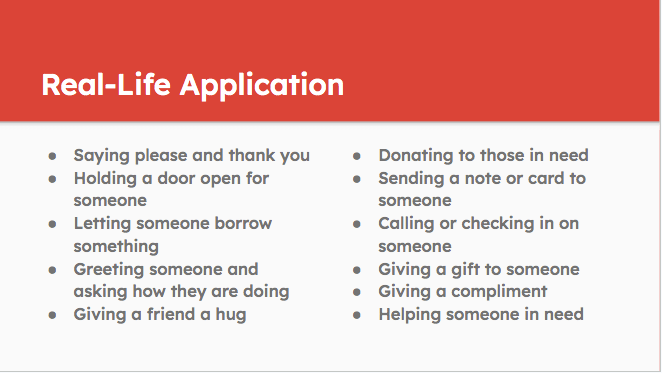
Next, we can begin connecting kindness with kids’ real lives using the list below.

What other ways do you show kindness in your own life? This is something I’ve been thinking a lot about over the past few days and something I want to really highlight for my kids this month. I’ve already done a few small acts of kindness, and I have several more (both big and small) planned.

How can you make kindness a priority this month (and beyond) for your kids or students?

Be sure to follow along all month right here on the blog, YouTubeFacebookInstagram and LinkedIn. I will be sharing all sorts of tips, strategies and resources throughout February.

JANUARY 2024 SEL THEME – GOAL SETTING – Wrapping up

Well, it’s time to wrap up our very first SEL theme of the month – goal setting. If you’ve been following along and setting goals for yourself or with your kids or students, you might be wondering how to keep the momentum going throughout the year.

Here are a few things you can do to ensure achievement of your goals:

  1. Break them down into smaller pieces – It’s a dream for a reason! It’s going to take time and effort to achieve. Do yourself a favor and break it down into more manageable chunks.
  2. Celebrate the small wins – Don’t wait until you achieve the goal to celebrate! Celebrate all the small successes you have along the way. You deserve it!
  3. Be consistent – It takes time and consistency to achieve a big goal. Keep at it and try not to get discouraged when it takes longer than you think it should.
  4. Stay organized – Have a system in place to map out the small steps you will take to reach your goal. Write it in your planner, add it to your calendar – whatever it takes to keep you on track!
  5. Visualize your success – What will it look like, feel like, sound like, etc. when you achieve your goal? Visualize every little detail of that success!
  6. Set up an accountability system – Find yourself an accountability partner to keep you focused and on track.

Now that you are well on your way to achieving your goal for the year, you may be wondering where we are heading for February and our next SEL theme. Well, I’ll tell you…tomorrow!

JANUARY 2024 SEL THEME – GOAL SETTING – Resources and Picture books

As we begin to wrap up this first social-emotional learning theme of the year, I want to share a few resources that I have come across over this past month. These can be used by parents or teachers, at home or in the classroom.

  1. This is a great list of goal-setting activities from Big Life Journal. Some are individual, some can be done as a family and many can be adapted to work in a classroom.
  2. Also from Big Life Journal, check out this handy dandy set of tips for goal-setting with kids.
  3. This is a great set of activities from Edutopia to foster a goal-setting mindset in the classroom.
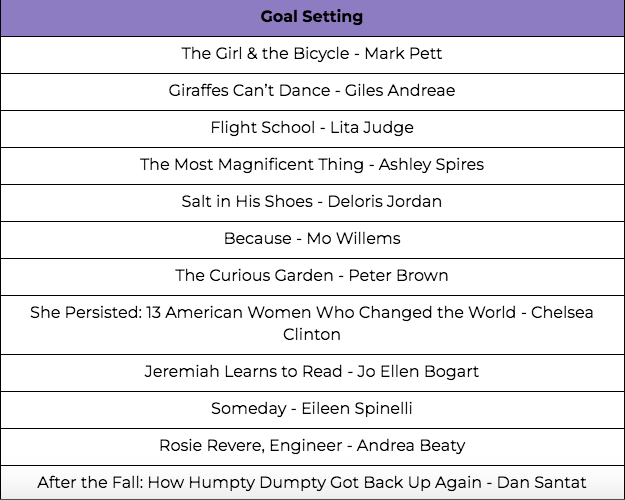
  4. Below is the list of picture books I have curated over the past month while researching goal-setting.

Be sure to check out my YouTube channel for so many other goal-setting activities and resources! I hope you’ve enjoyed this first SEL theme of 2024! I will be announcing February’s theme very soon!

JANUARY 2024 SEL THEME – GOAL SETTING – TIPS & STRATEGIES FOR Teachers

In last week’s blog, I talked about setting goals with kids and what that looks like at my house. This week, we are going to dig deeper into the idea of goal setting and take a look at two strategies that are beneficial in helping us achieve our goals.

First, let’s talk about visualizing our goals. This is a strategy that many athletes, performers and businesspeople use regularly. The idea is that we visualize every small detail of our race, performance, goal, etc., from the very beginning to the very end. We focus on our five senses to help us really feel as though we are experiencing the achievement. We acknowledge any obstacles that we may face and work through how we might overcome them. We see ourselves celebrating the accomplishment of achieving our goal.

The second strategy is the use of affirmations to help us overcome challenges while working toward our goal and remind us that we can accomplish what we set out to do. An affirmation can be a statement or mantra that you write down, read and repeat regularly. It’s basically putting the power of positive thinking to work for you.

Examples include:

  1. I can do hard things.
  2. I will overcome every challenge that is put in front of me while working toward my goal.
  3. I will achieve my goal.

Of course, you can add more detail to make the affirmation more specific to your goal.

Affirmations are great to write down and post in an area where you can read them regularly. They can stay the same for as long as you want/need or you can change them up daily/weekly/monthly to fit your needs at the time.

Here’s your homework for today…think about a big goal you have for this year. How can you incorporate visualization and affirmations into your routine to help you achieve your goal?

Once you’ve had practice with each of these strategies, think about how you can introduce them to students. Help them make connections between visualization that we use while reading, visualization we use to calm down and this type of visualization. Similarly, make connections between using affirmations for a self-esteem or self-confidence boost and for goal setting.

There are so many great ways to use these strategies with kids, especially since they are both fairly multi-purpose strategies! How do you foresee these strategies working in your classroom or home environment?

January 2024 SEL Theme – Goal Setting – Tips & Strategies for Parents

Every year in January, each of my kids and I set a goal for ourselves for the new year. It’s typically a new skill we want to learn or something big we are challenging ourselves to complete.

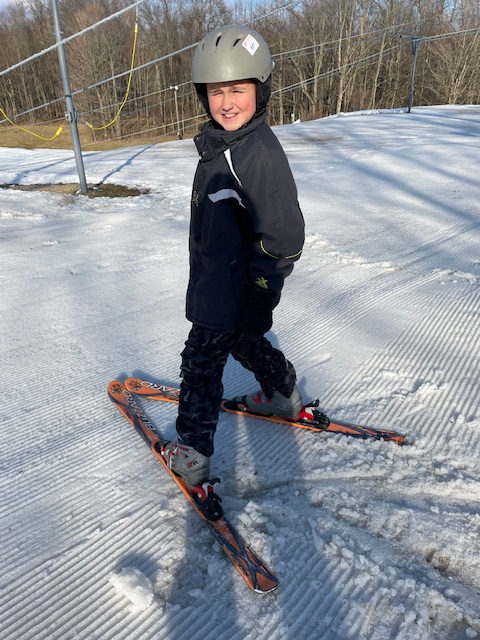
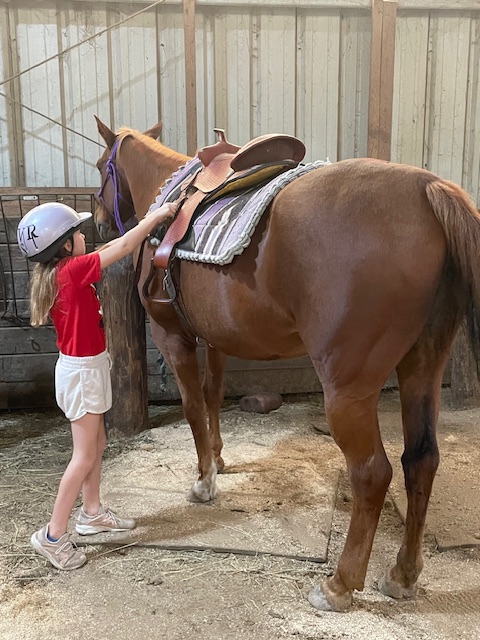
Two years ago, my oldest child’s goal was to learn to ski and my middle child’s goal was to learn to trot on a horse. In true youngest child fashion, for the life of me, I cannot remember what my littlest’s goal was…ha! My own goal was to complete a triathlon.

His first time hitting the slopes

After some time spent thinking and brainstorming, we write our goals on index cards and hang them up on the refrigerator where we can see them each and every day. We also discuss the steps we will need to take to accomplish our goal.

This is where we come in as parents because typically, our kids’ goals will involve us to some extent. In the case of the goals I talked about above, I had to commit to finding the time to take my kids skiing and horseback riding regularly so they could practice.

I find that it’s helpful to get dates on the calendar as early as possible so I don’t feel like we’re scrambling at the last minute. This also sends the message to kids that their goals are important to us and that we are invested in helping them succeed.

Grooming her favorite horse, Jake

Since beginning this goal setting project a few years ago, I have created this resource to help my kids in setting their goals and identifying their action steps. It’s a simple way to help guide their thinking.

As you begin thinking about setting goals with your kids, here are a few things to keep in mind and/or discuss with them:

  1. Goals can be big or small, but I encourage my kids to make this a BIG goal since they have all year to work on it.
  2. Encourage them to think outside the box. What is something they’ve always wanted to try? What is a new skill they’d like to learn?
  3. Have them help you plan out the action steps/get dates on the calendar. It’s their goal; they need to own it.
  4. Celebrate the small wins! As they inch closer to achieving their goal, get excited about the small steps they take along the way. This will help keep their momentum going as well!
  5. Discuss failure. What happens if they don’t achieve their goal? How might they feel? What might they be able to do differently in the future? Reassure them that failure is possible and OK! It happens to all of us!
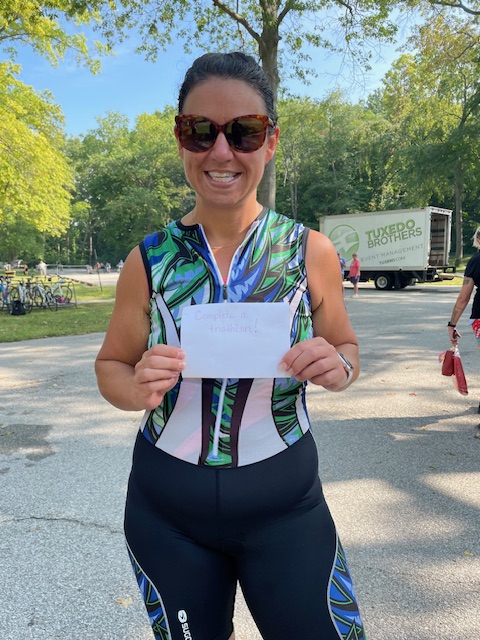
  6. Celebrate the accomplishment! Make a big deal when they reach their goal! In our house, we write the date the goal was accomplished on the index card and take a picture of the person with their card to commemorate the achievement. We also keep all of their index card goals in their “box of memories” so they can look back on them later in life.
I even brought my index card goal with me to the triathlon so I could take a picture as soon as I finished!

If you try this strategy with your kids, I’d love to hear what some of their goals are for 2024! What are your own goals?

January 2024 SEL Theme – Goal Setting – An introduction

I’m so excited to introduce our very first monthly social-emotional learning theme for this year! Naturally, it’s goal setting!

In this first week of the month, we will define our theme, discuss why it’s an important SEL skill and talk real-world application. This will serve as a springboard for the resources and other ideas I will be sharing throughout the remainder of the month.

So, let’s dive in!

What is goal setting exactly? Here’s a good starting point to use with kids of all ages. You can adjust this definition to best fit the needs of the age group you work with.

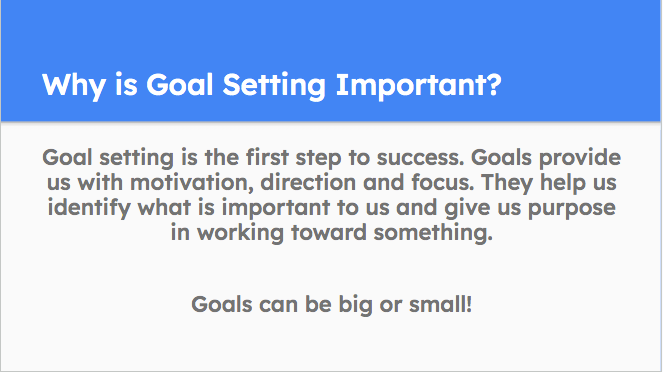
Now that kids know what goal setting is, we need to help them understand why it’s important and how it will be useful in their actual lives.

It’s critical to give examples of both big and small goals so that they understand that a goal can take many shapes.

Begin connecting goal setting with kids’ real lives using the list below.

What other ways do you apply goal setting to your own life? Be sure to share those with kids so they can start to see how this concept applies to their own life and the lives of those around them.

The more tangible we can make it, the more invested they will be when we ask them to begin actually setting goals for themselves (and yes, that’s coming soon!).

Be sure to follow along all month right here on the blog, YouTube, Facebook, Instagram and LinkedIn. I will be sharing all sorts of tips, strategies and resources.

Coming in 2024!

Photo by cottonbro studio on Pexels.com

As 2023 is winding down and I take time to reflect on all that this past year brought, I am so grateful to every single person that supported me. Whether you brought me into your school to facilitate a training, invited me to speak at your conference, purchased a resource from my TPT store, read my social media updates or simply cheered me on, I am thankful for you and so glad you are part of this community.

As 2024 approaches, I am busy planning new content, new ways of connecting with you and so much more. I love the feel of a new year and fresh start. I love taking the time to reflect and plan and the opportunity to change course, if necessary.

Although I will roll out many new things in 2024, one of the changes I am most excited about is the implementation of monthly themes. Beginning in January, each month will focus on a different social-emotional learning theme. Throughout the month, I will share articles, resources, books, videos, lessons and more that relate to that theme. This is just one way I hope to better organize the information and resources I share with you.

More details on this and other improvements I plan to make will be coming soon! For now, thank you again for supporting me and happy holidays to each and every one of you. I wish you nothing but the best in 2024!

Mind-Body Skills Part 7: Visualization

**This is Part 7 of a 7 part series on Mind-Body Skills. Check out the introductory post here or follow along on my YouTube channel.

Photo by 100 files on Pexels.com

We’ve come to the final mind-body skill in this series – visualization, the process of creating mental images using our imagination. This might seem like a childish technique, but the benefits of visualization are aplenty.

Studies have shown that visualization can help us achieve goals, reduce stress, increase self-confidence and enhance our creativity and problem solving skills.

Additionally, visualization is a technique that can be employed in a variety of areas in life, including sports training, academics, goal setting, relaxation and more.

There are lots of different visualization strategies. Here are a few:

  1. Guided Imagery – In this strategy, you listen to or read a script that describes a relaxing scene or inspiring scenario to promote relaxation and stress reduction. You can also do this on your own by simply imagining yourself in a relaxing setting or a place that brings you comfort and joy.
  2. Positive Affirmations – This strategy uses positive self-talk, combined with visualization, to reinforce certain beliefs about yourself or goals you are working toward. You, simultaneously, repeat a statement such as “I am loved by many” while imagining yourself surrounded by those who love and care for you.
  3. Mental Rehearsal – This strategy is a way to rehearse events or situations that you will be in that you find difficult, challenging or frightening. For instance, if you have to give a speech in front of a large audience and are terrified of public speaking, mental rehearsal can be used to imagine yourself, from the very beginning to the very end, successfully giving the speech to an engaged and supportive group of people. In this strategy, it’s important to focus on the feelings of confidence and success.

The key to deepening the visualization experience in any of these strategies is employing as many of the five senses as you can. Imagine the sights, sounds and smells around you, the things you can reach out and touch, what something would taste like (if this applies to your visualization journey).

Another important thing to remember about visualization is that it is not just a strategy for adults. Kids can be taught to effectively use visualization strategies in a variety of ways. Visualizing while reading a book is already something we teach in our classrooms; this is a great introduction for teaching kids to use the same strategy in different ways.

You can find a multitude of guided imagery practices online or on different apps like Headspace and Calm. Many of these are even geared specifically toward kids.

How do you use visualization in your life? What benefits have you enjoyed?

Mind-Body Skills Part 6: Writing & journaling

**This is Part 6 of a 7 part series on Mind-Body Skills. Check out the introductory post here or follow along on my YouTube channel.

Photo by olia danilevich on Pexels.com

Whenever I ask a group of educators what they do to calm down or ease stress and anxiety, very few of them say they write or journal. These seem to be activities that people either love or hate.

For the people out there who love them, here are some great ways to incorporate writing into your de-escalation/stress relief/calm down routine. All of these activities can easily be used with kids at home or in the classroom as well.

  1. Ten Favorite… – Pick a category, any category, and write your 10 favorites. For instance, jot down your 10 favorite meals, your 10 favorite things about fall or your 10 favorite ways to spend a lazy day. This writing strategy serves as a great activity for distracting our brain from the stress/anxiety/anger/etc. we are feeling.
  2. Today, I Feel… – At the beginning or end of each day, write 1-2 sentences describing how you feel. How do you feel about the day ahead? How do you feel now that the day is behind you?
  3. Brain Dump – Are there any others out there who struggle to fall asleep at night because of all the thoughts jumbled up in your brain…the things you need to remember or do the next day? Put a little notebook next to your bed, and the next time those thoughts are keeping you awake, get them all out on paper. It doesn’t have to look pretty (sometimes I even do this in the dark!)…you just need to get all those thoughts out of your head. Once you’ve done so, give your brain permission to rest and go to sleep!
  4. Gratitude Journaling – Did you know that speaking your gratitude aloud actually makes you happier? Yep, it’s true! So write it down! Make a list, write it in paragraph form, whatever…just take a few minutes each day to focus on what you’re grateful for.

Are you a journal-er? What writing activities do you enjoy doing to de-stress?