New YouTube Series on coping skills

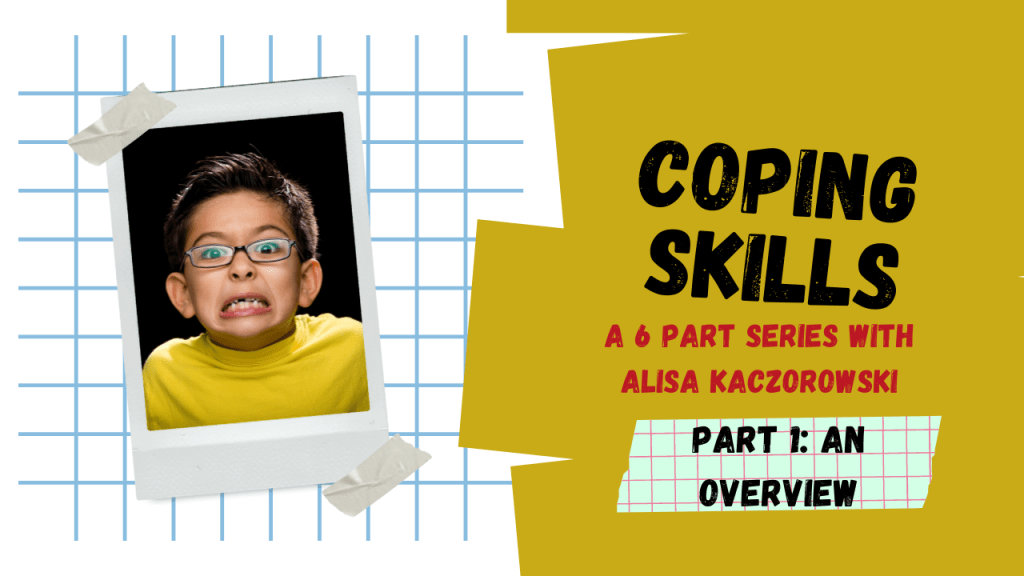
Check out my brand new 6 part series on coping skills over on YouTube! If you’ve ever felt angry, anxious or overwhelmed (and who hasn’t?!?), this topic is for you!

In Part 1, you will learn what coping skills are, why they are important and who might benefit from them (hint: EVERYONE!). You will also learn about the 5 categories that coping skills fall into.

In Parts 2-6, we will dive deeper into each of the 5 categories and identify specific skills within each one and when they might be beneficial to use.

Videos will drop on Tuesdays and Thursdays so be sure to follow my channel to get notifications! I hope you enjoy this series!

Social-Emotional learning & picture books (plus a big freebie!!)

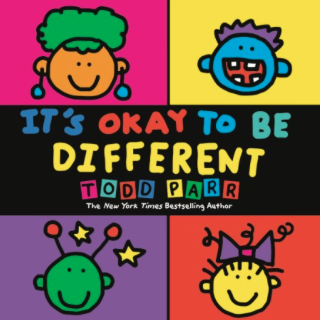
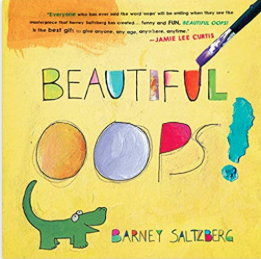
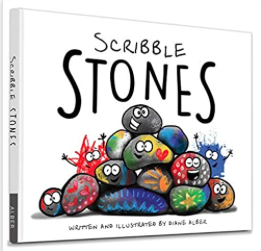
If you follow me on YouTube, you know that I’ve been sharing some of my favorite pictures books to support various areas of social-emotional learning. My belief in the power of picture books in the classroom, ANY classroom, rivals my belief in trauma-informed practices in schools. We don’t spend enough time reading aloud to students anymore or encouraging them to read for pleasure because time is not something we have in excess in classrooms these days. Unfortunately, most of us also don’t have the time to teach explicit social-emotional learning lessons to our students which is a shame because these skills are JUST AS CRITICAL as the reading and math skills we teach.

As educators, we have to get creative in sharing real literature with our students (especially if you have a reading curriculum that doesn’t value really excellent children’s literature). How do we do that? We embed as many awesome picture books, graphic novels and young adult literature into the instruction we already provide. Morning meeting, quiet time after recess, restroom breaks and before dismissal are all times that we can sneak in a great book and conversation. Read a book and use it as a springboard for a conversation on a specific SEL topic such as kindness, friendship or acceptance. Or use the books you already have to use for your reading and writing blocks. Just be sure to sprinkle in a question or thought, here and there, that align to an area of social-emotional learning.

Don’t think your middle or high schoolers will dig reading a picture book? Give it a try. I dare you. The older kids are often the ones that enjoy reading a picture book EVEN MORE than the younger ones. I speak from experience, I promise! If that feels out of your comfort zone, though, try a graphic novel or other young adult book. There is so much hidden wisdom in all types of children’s and young adult books.

Wondering where to start? Already on board but need more book ideas? Well, have I got a big surprise for you!It just so happens that I started a Google Doc of social-emotional learning picture books many moons ago that has morphed into a very large, curated list of books that is organized into 11 key areas of social-emotional learning. Those areas are:

  • Growth Mindset
  • Acceptance & Diversity
  • Self-Esteem
  • Friendship
  • Conflict Resolution
  • Social Problem Solving
  • Feelings & Emotions
  • Coping Skills
  • Self-Control
  • Bullying Prevention
  • Kindness

There’s even a couple of bonus sections!

Here’s the best part…I add to this list ALL THE TIME! So head on over to this link and bookmark the page. Since it’s a Google Doc, it will always be there. Once you have it bookmarked, you can refer back to it at any time and check out any new books I’ve added.

Have a book idea that’s not on the list? Email me at akedconsult@gmail.com. I’d love to hear from you!

Adverse childhood experiences: what are they and what can be done about them

Every time I present at a school or conference, I ask the question, “Who here knows what ACEs are?” and every time, I am astounded that rooms full of extremely knowledgable educators, school counselors and administrators have never even heard the term before. Every. Single. Time.

Now, to be clear, I’m not astounded because I expect them to know. Quite the opposite, in fact. I’ve trained enough educators and school staff to expect that only a handful of them will raise their hand when I ask the question. My astonishment stems from the fact that I want them to know. I want every educator in our country to have a clear understanding of what Adverse Childhood Experiences (ACEs) are, how they impact our students and what actionable steps can be taken to help prevent them. I want our education system to do a better job of preparing our teachers for the behaviors they will encounter due to trauma and chronic stress. I want these things because I believe the lack of understanding, and the many things that result from this lack of understanding, is one of the reasons the teaching profession boasts such high levels of burnout. Add to all this the fact that we now have MORE struggling kids than ever before.

So what are ACEs? And how will better understanding them help teachers and kids? Let’s start at the beginning. According to the CDC, ACEs are “potentially traumatic events that occur in childhood.” Think abuse, neglect, divorce of parents, incarceration of someone close to them, etc. Here’s the really bad news about ACEs, though – we are learning that they increase a person’s risk of developing a multitude of physical and mental illnesses later in life. Things like lung cancer, heart disease and diabetes, just to name a few. We also know that, in the short-term, ACEs (and trauma, in general) impact the brain and as a result, learning and behavior.

It follows then that trauma and chronic stress are major contributing factors in many of the academic and behavioral issues we see in students. Have you noticed an increase in negative or aggressive behaviors at your school or your child’s school this year? Schools all over the country are reporting this very thing. Why? Because we have a whole lot of kids living with the stress and anxiety of the COVID-19 pandemic, among other things.

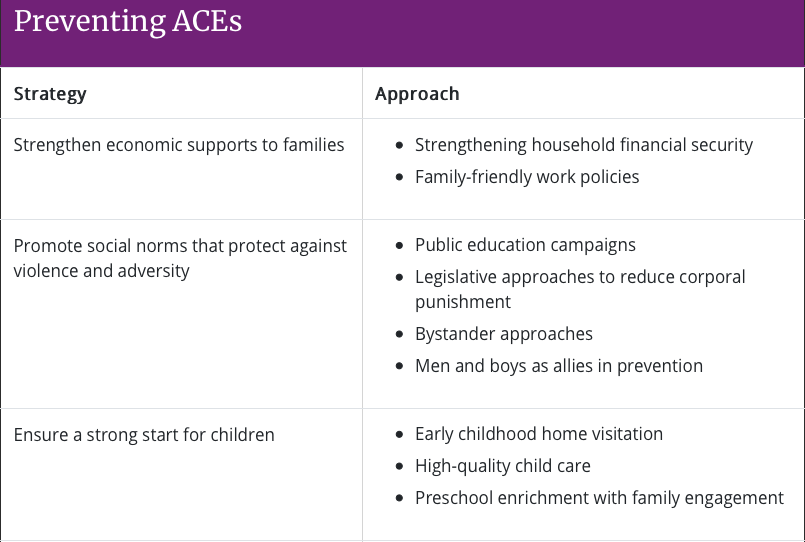
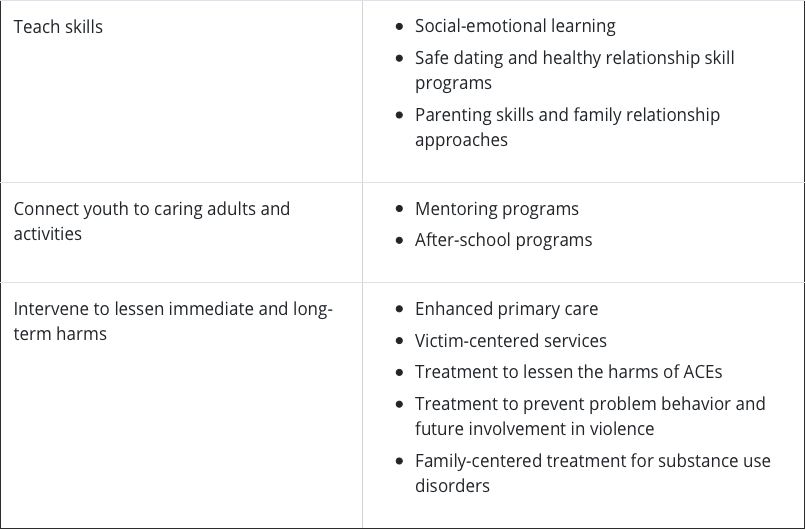
So the real question becomes – what can we, as educators and parents, do about this sticky situation we are in? Well, for starters, let’s check out this list of prevention strategies from the CDC’s ACE page which you can find here.

Now obviously, the reach of teachers only goes so far, but “Teach skills” and “Connect youth to caring adults and activities” lands directly in the laps of educators and school counselors. Our schools need to quickly realize that going about with a “business as usual” mindset is doing our students NO FAVORS. The world we are currently living in is far from “usual.” We need to prioritize the social-emotional health of every single child, if we ever hope to get them back on track. Now is not the time to try to “catch them up.” It is not the time to say, “We need to try to move on.” It is the time to realize that what our kids are experiencing is unprecedented and needs to be addressed. We need to help them process through the changes they’ve experienced, the emotions they’re feeling to help them understand they are not alone and provide them the tools to build resiliency.

Heck, think about how YOU have felt over the past 18 months. Do we expect that children should be able to ride that rollercoaster of emotions for so long, hop on off and just go about their business in ways that many adults have not been able to do? Of course not!

Wondering where to begin? I encourage you to check out all the information and resources on the CDC’s ACE page. There is so much to delve into there. If you’re wanting to learn more about incorporating trauma-informed practices or social-emotional learning into your classroom or school, email me at akedconsult@gmail.com. There is so much that we can do to help ALL students be successful at school right now.

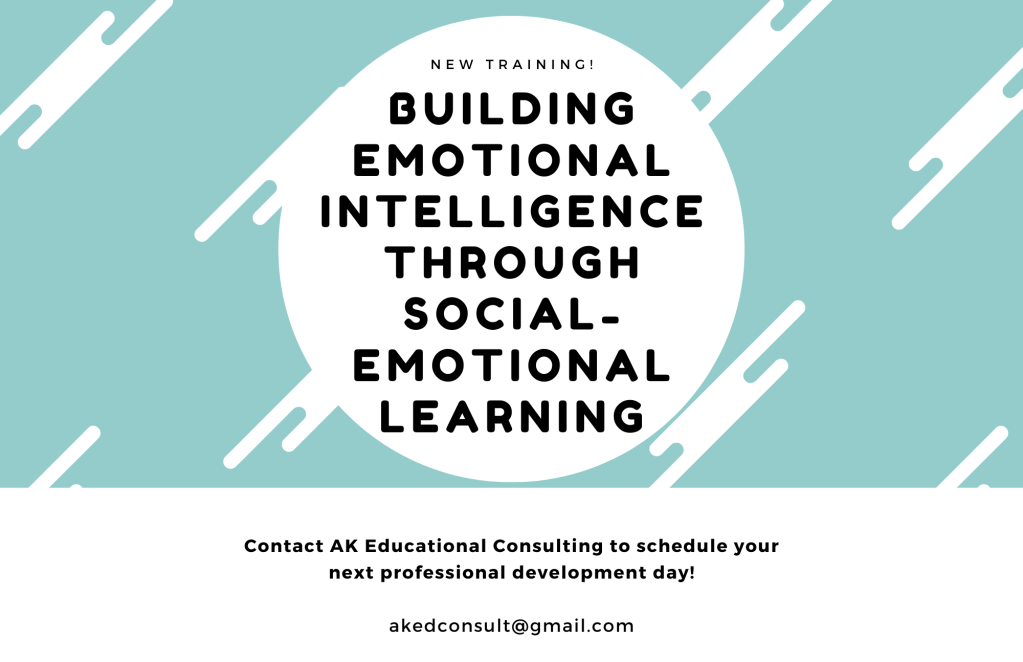
New Training! – Building Emotional Intelligence Through Social-Emotional Learning

I’m so excited to introduce my newest trauma-informed schools training: Building Emotional Intelligence Through Social-Emotional Learning!

Since 2011, emotional intelligence levels have been declining across the globe. What does this mean? It means that our ability to be self-aware, feel motivation and to self-regulate, show empathy and communicate effectively is worsening. For children, this may result in a lack of understanding of emotions and the inability to correctly identify and appropriately express these feelings.

The great news about emotional intelligence is that it is not static! We can actually build our EQ muscles through a multitude of strategies. One of the most beneficial ways to do this in a school is through the implementation of social-emotional learning skills.

In this training, you will learn all about the topics above and so much more, including:

  1. What is Emotional Intelligence?
  2. The importance/benefits of Emotional Intelligence
  3. The 5 components of Emotional Intelligence
  4. Specific strategies for building Emotional Intelligence
  5. Helping students recognize, identify and regulate their emotions
  6. De-escalation and mindfulness strategies
  7. The 11 key areas of Social-Emotional Learning
  8. Specific strategies for building SEL skills

Want to learn more or get a training scheduled? Contact Alisa today at akedconsult@gmail.com.

New Resource! – Building a Trauma-Informed Classroom Video Series

Get the video series here!

Are you ready to build a more trauma-informed classroom or school? If so, this video series is for you. Whether you are a teacher, administrator, school counselor or support staff member, there is something for everyone in these courses.

In this series, I will take you through the basics of trauma, how trauma impacts students in the school setting and specific strategies you can implement to help build resilience in your students.

Course 1 focuses on understanding the basics of trauma in our society, why schools should be trauma-informed and how to recognize the characteristics of trauma in children of various ages.

Course 2 focuses on understanding how traumatic experiences impact the brain and learning. You will learn how the flight/fight/freeze response works, how the stress response can be turned off and the benefits of mindfulness.

Course 3 focuses on understanding how traumatic experiences impact student behavior and how to implement a more trauma-informed classroom management system. You will learn about private logic and how that drives behavior and how to evaluate the pros and cons of the classroom management system you use.

Course 4 focuses on 10 specific strategies that can be used to build a more trauma-informed classroom. You will learn about the guiding principle of all 10 trauma-informed practices and reflect on the culture and climate of your own classroom in order to assess where improvements can be made.

Be sure to check out the video series bundle here, as well as all the resources in my TPT store that support the content in the videos!

Video #3: Sharing Difficult News with Children

The third video in my collaborative series with Indy Direct Docs is now up on their website! You can view it here. I sat down with Dr. Holliday to discuss how to share difficult news and current events with children. This is such a timely topic right now, as parents and educators navigate the tricky waters of appropriately informing kids of current events while being mindful of their age and emotional well-being.

Interested in learning more about topics like this? Check out the other videos in the series here and here or shoot me an email at akedconsult@gmail.com. You can also find out more about Indy Direct Docs at their website.

New Workshop Coming Soon!

Virtual parent workshops will be coming soon!

During these 1 hour workshops, you can expect to learn more about:

  • The impacts of the pandemic on children’s social-emotional health
  • Strategies for helping kids cope with feelings of sadness, anxiety, anger, loneliness and more
  • Tips for teaching kids to recognize and name their emotions
  • Tools that kids can use to self-regulate
  • Tricks for making your home a calmer, more joyful place

Who doesn’t need a little extra help right now? Contact me today at akedconsult@gmail.com to find out how to get on the list.

Parenting in a Pandemic

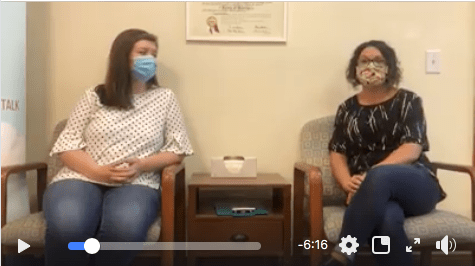
Click here to view the entire video.

Last week, I had the opportunity to shoot a few videos with my new friends over at Indy Direct Docs on parenting in a pandemic. While I primarily train educators on trauma-informed practices, the strategies are just as useful and effective for parents, especially now when we’re all wearing so many different hats.

I was super excited to partner with Drs. Moore-Ostby and Holliday for a variety of reasons. First of all, their innovative take on healthcare puts the focus on the relationship between a doctor and patient, similar to the idea of relationship-building between a teacher and student. Second, they are invested in providing resources of all sorts to their patients through their blog. From nutrition and cooking tips to parenting strategies, they are in tune with the content their patients want. Lastly, I feel strongly about the trauma-informed strategies I teach, as both an educator and a mom, so why not share them with others? Parenting is hard. Parenting in a pandemic is nearly impossible. We’ve all felt it over the past 8 months. I know I need some help, and I’m guessing others do too.

There’s a really disappointing myth in our society that trauma-informed practices are only beneficial to kids living in poverty or kids who have experienced trauma. NO! Not true. Trauma-informed practices are beneficial to ALL kids. They nurture and repair relationships, encourage social-emotional health and well-being and help kids learn to be more in tune with their emotions. Isn’t that what we all want for our kids? I know I do!

Despite what we sometimes think, all kids have experienced some sort of trauma in their lives. From divorce and death to absentee parents and COVID-19, traumatic experiences are everywhere. It doesn’t have to be abuse or neglect to be considered trauma. Even if a child’s exposure to trauma is minimal at best, the strategies I teach are still useful. Have a child who struggles to control their anger, sadness, worry, etc.? I have strategies for that. What about kids who have difficulty resolving social conflicts? I have strategies for that too. Perhaps you just need some new ideas for surviving this trying time as a parent. I’m right there with you, and I can help.

Let’s give our kids the tools they need to grow into compassionate, empathetic human beings, living in a society where emotions are normalized and stigmas around mental illness and trauma are non-existent. If you’re interested in learning more about how trauma-informed practices can be useful to your kids, drop me an email or Facebook message!

***The first video can be viewed here.

Fostering Communication Between Kids in a Post-Quarantine Classroom

About a month ago, my 6 year old had a porch playdate with her best friend. While it wasn’t the first time they were seeing each other post-quarantine, it was the first time they were spending a decent amount of time with one another and actually playing together. As her best friend’s mom and I sat on the porch chatting, I kept looking down at the girls, thinking they were unusually quiet. These are two outgoing, chatty girls so it seemed odd that they were quietly playing with the flip sequins on my daughter’s backpack and not really interacting with one another. I commented on this to the girls and jokingly told them it was ok to talk. A few minutes later, her friend’s dad came outside and was surprised to see us on the porch still. He said that it was so quiet outside, he thought we had gone for a walk.

This went on for the first hour or so of our visit, but eventually, the girls seemed to warm up and began playing and talking like their normal selves. I didn’t really give it much further thought until a week or so later when I was working with the staff of a small Catholic school in northern Indiana.

During the training, I asked the teachers to name their fears about returning to school in-person with students. One primary teacher in the back of the room raised her hand and said, “I’m worried about how the students will do communicating with one another.” She went on to add that since the kids had been quarantined for so long and not had the opportunity to interact with anyone outside of their immediate family, she was concerned about how they would interact with one another. Would they feel shy or scared? Would it cause anxiety in some? Many other teachers went on to agree with her and share their own stories of the anxiety they felt after their first trip to the grocery store or doctor’s office.

As the teachers continued talking through this with one another, I thought back to the day of the playdate. I suddenly realized that my daughter and her best friend were the perfect example of this teacher’s fear. I shared the story with the staff, and we all took the opportunity to reflect on how this might play out in the classroom environment.

Since that day, I have told this story at every school I’ve worked with, and without exception, at least one teacher raises their hand to say this is one of their fears. So, as educators and parents, what can we do to address this in our homes and classrooms?

  • Talk about it

Be open and honest with kids about the things we may now find difficult. Help them to understand that some things are going to be harder since we are out of practice. Tell the story of how overwhelmed you felt after your first trip to the grocery store. Talk about the things you did to help ease those feelings.

  • Validate their feelings

Be sure to let kids know that the way they are feeling is normal and they are not alone. Once we are able to name our recognize and name our emotions, they lose their power over us.

  • Brainstorm strategies

Understanding the root cause of a child’s fear is key to identifying strategies that will work for them. Are they fearful of being around people outside of their immediate family because of the virus? Do they feel overwhelmed by suddenly being thrown into a classroom with 20 other people? Are they feeling shy because they are away from their parents for the first time in 6 months? Dedicate a time to brainstorming strategies to help all students feel more comfortable communicating with their peers.

  • Practice

Practice, practice, practice. Given time, kids will become more comfortable doing the things that were once second nature. Provide them the time and space to make this happen. Role play a variety of situations, reinforce the strategies you brainstormed and integrate oral communication with peers into instruction as often as possible. Just as kids do at the beginning of every school year, they will soon become comfortable with this new environment they are in.

  • Be patient

It will come. We are all adjusting to a new normal – new feelings, new routines, new rules. It may take a bit more time and practice than normal, but before you know it, the kids will be back to communicating more than you ever wanted them to!

Exciting News!

I am super excited to announce that I have been selected to present a breakout session at the 2020 Southeastern School Behavioral Health Community Annual Conference next month in Myrtle Beach! I will be presenting “10 Strategies for Building a More Trauma-Informed Classroom Right Now.” I’m looking forward to connecting with educators, school leaders and mental health professionals in the Southeast region. Stay tuned for more information and more BIG news!