Welcome to April and our 4th social-emotional learning theme of the month! This is a tricky one for many of our kiddos so get ready for some great information and strategies!
In this first week of the month, we will define our theme, discuss why it’s an important SEL skill and talk real-world application. This will serve as a springboard for the resources and other ideas I will be sharing throughout the remainder of the month.
So, let’s dive in!
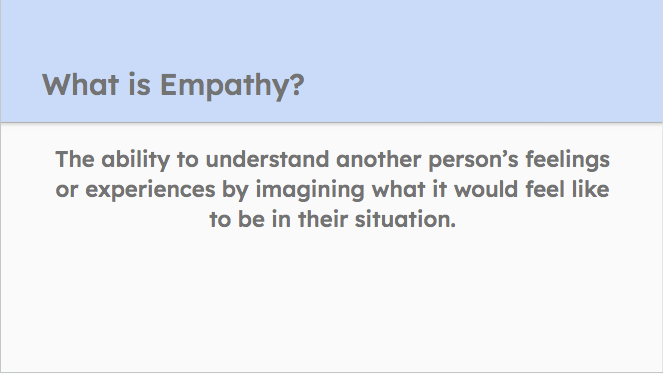
What are empathy and compassion exactly? You may not know there is a difference between them, but there is! Here’s a good starting point to use with kids of all ages. You can adjust this definition to best fit the needs of the age group you work with. I know many of these themes are pretty self-explanatory, but sometimes we just need someone else to sum it up for us!
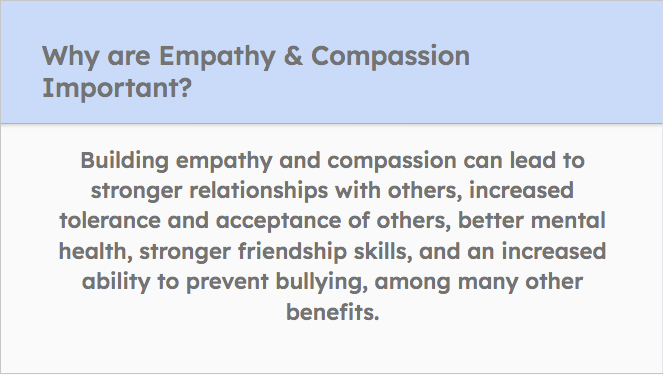
Now that kids know what empathy and compassion are, we need to help them understand why these skills are important and how they will be beneficial to them.
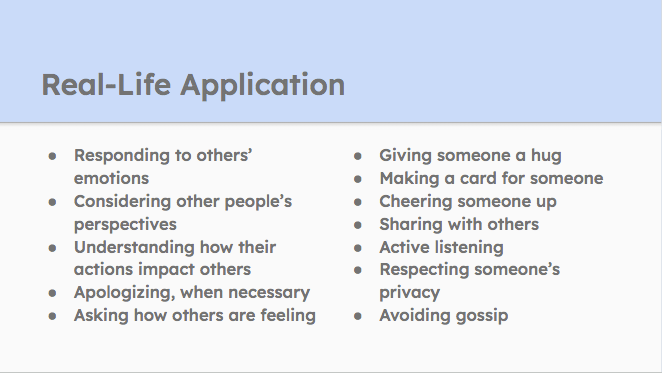
Next, we can begin connecting empathy and compassion with kids’ real lives by helping them recognize what these skills actually look like!
Empathy is a skill that takes some time, practice and modeling to fully develop. How can you be a picture of empathy and compassion this month (and beyond) for your kids or students?
Be sure to follow along all month right here on the blog, YouTube, Facebook, Instagram and LinkedIn. I will be sharing all sorts of tips, strategies and resources throughout April.
Today, rather than share any strategies with you (which I’ll do next week), let’s talk about the very first step in conflict resolution – being able to recognize, identify and name our own emotions, also known as having self-awareness.
Think about it. If we are unable to identify what we are feeling, as well as the cause of that feeling, it’s going to be nearly impossible to recognize in another person. This lack of self- and social awareness will make it very difficult to resolve any type of conflict that may arise.
Aside from being a critical component of conflict resolution, these emotional awareness skills are really important in so many other facets of life – from emotional regulation to advocating for ourselves.
So how do we help kids build these muscles? Here are a few things you can start doing with kids of any age (but the earlier, the better!)…
Talk about feelings openly and honestly in your home or classroom. We shouldn’t hide them or be ashamed of how we’re feeling. A safe, loving environment is a must in encouraging kids to share their feelings.
Model, model, model. Constantly talk through how YOU are feeling in different situations. Not only will you send the message that it’s ok to share their feelings, you will also be giving them the vocabulary to do so.
Teach emotion vocabulary words. Kids need to know how to label their emotions, and they need more words than just sad, glad and mad! Dig deep with them to get to the root of what they’re feeling and provide them the words until they’re able to do it on their own.
Help kids to understand that feelings are information. We have to pay attention to them to help us decipher the message. Then, we are able to begin the problem solving process.
What else is missing from this list? What do you do to build your kids’ emotional awareness muscles?
As 2023 is winding down and I take time to reflect on all that this past year brought, I am so grateful to every single person that supported me. Whether you brought me into your school to facilitate a training, invited me to speak at your conference, purchased a resource from my TPT store, read my social media updates or simply cheered me on, I am thankful for you and so glad you are part of this community.
As 2024 approaches, I am busy planning new content, new ways of connecting with you and so much more. I love the feel of a new year and fresh start. I love taking the time to reflect and plan and the opportunity to change course, if necessary.
Although I will roll out many new things in 2024, one of the changes I am most excited about is the implementation of monthly themes. Beginning in January, each month will focus on a different social-emotional learning theme. Throughout the month, I will share articles, resources, books, videos, lessons and more that relate to that theme. This is just one way I hope to better organize the information and resources I share with you.
More details on this and other improvements I plan to make will be coming soon! For now, thank you again for supporting me and happy holidays to each and every one of you. I wish you nothing but the best in 2024!
We’ve come to the final mind-body skill in this series – visualization, the process of creating mental images using our imagination. This might seem like a childish technique, but the benefits of visualization are aplenty.
Studies have shown that visualization can help us achieve goals, reduce stress, increase self-confidence and enhance our creativity and problem solving skills.
Additionally, visualization is a technique that can be employed in a variety of areas in life, including sports training, academics, goal setting, relaxation and more.
There are lots of different visualization strategies. Here are a few:
Guided Imagery – In this strategy, you listen to or read a script that describes a relaxing scene or inspiring scenario to promote relaxation and stress reduction. You can also do this on your own by simply imagining yourself in a relaxing setting or a place that brings you comfort and joy.
Positive Affirmations – This strategy uses positive self-talk, combined with visualization, to reinforce certain beliefs about yourself or goals you are working toward. You, simultaneously, repeat a statement such as “I am loved by many” while imagining yourself surrounded by those who love and care for you.
Mental Rehearsal – This strategy is a way to rehearse events or situations that you will be in that you find difficult, challenging or frightening. For instance, if you have to give a speech in front of a large audience and are terrified of public speaking, mental rehearsal can be used to imagine yourself, from the very beginning to the very end, successfully giving the speech to an engaged and supportive group of people. In this strategy, it’s important to focus on the feelings of confidence and success.
The key to deepening the visualization experience in any of these strategies is employing as many of the five senses as you can. Imagine the sights, sounds and smells around you, the things you can reach out and touch, what something would taste like (if this applies to your visualization journey).
Another important thing to remember about visualization is that it is not just a strategy for adults. Kids can be taught to effectively use visualization strategies in a variety of ways. Visualizing while reading a book is already something we teach in our classrooms; this is a great introduction for teaching kids to use the same strategy in different ways.
You can find a multitude of guided imagery practices online or on different apps like Headspace and Calm. Many of these are even geared specifically toward kids.
How do you use visualization in your life? What benefits have you enjoyed?
Whenever I ask a group of educators what they do to calm down or ease stress and anxiety, very few of them say they write or journal. These seem to be activities that people either love or hate.
For the people out there who love them, here are some great ways to incorporate writing into your de-escalation/stress relief/calm down routine. All of these activities can easily be used with kids at home or in the classroom as well.
Ten Favorite… – Pick a category, any category, and write your 10 favorites. For instance, jot down your 10 favorite meals, your 10 favorite things about fall or your 10 favorite ways to spend a lazy day. This writing strategy serves as a great activity for distracting our brain from the stress/anxiety/anger/etc. we are feeling.
Today, I Feel… – At the beginning or end of each day, write 1-2 sentences describing how you feel. How do you feel about the day ahead? How do you feel now that the day is behind you?
Brain Dump – Are there any others out there who struggle to fall asleep at night because of all the thoughts jumbled up in your brain…the things you need to remember or do the next day? Put a little notebook next to your bed, and the next time those thoughts are keeping you awake, get them all out on paper. It doesn’t have to look pretty (sometimes I even do this in the dark!)…you just need to get all those thoughts out of your head. Once you’ve done so, give your brain permission to rest and go to sleep!
Gratitude Journaling – Did you know that speaking your gratitude aloud actually makes you happier? Yep, it’s true! So write it down! Make a list, write it in paragraph form, whatever…just take a few minutes each day to focus on what you’re grateful for.
Are you a journal-er? What writing activities do you enjoy doing to de-stress?
I shared this on my various social media channels this week but figured I’d jot a few thoughts here as well.
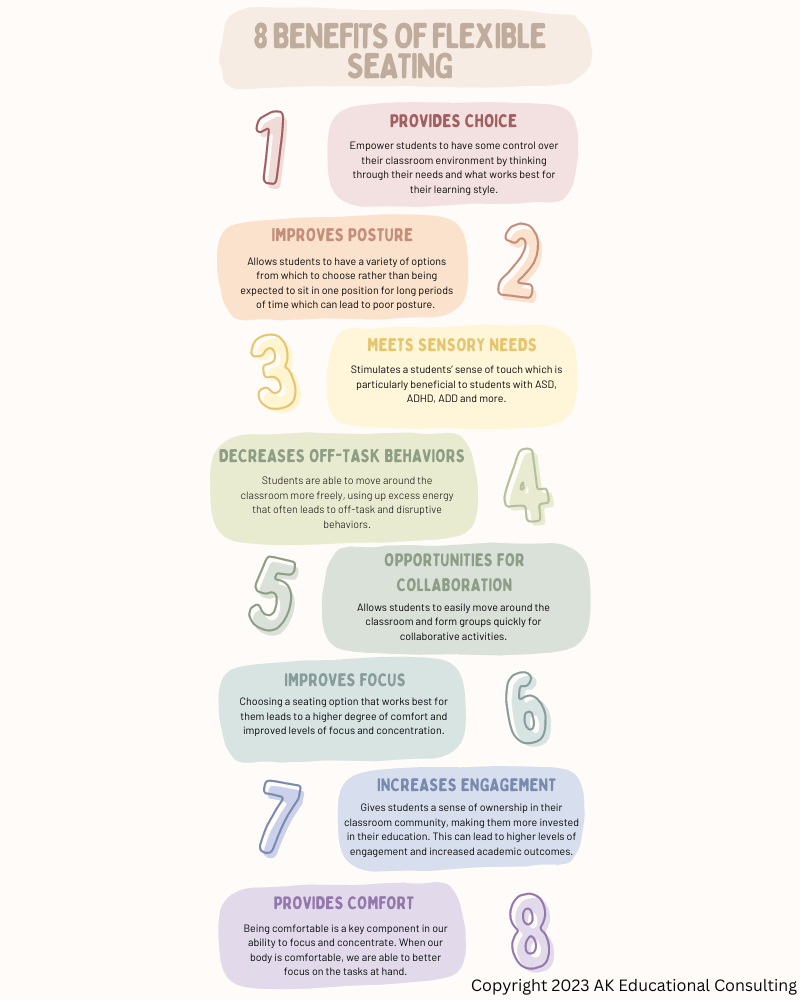
I really started thinking about this last week. After a long car ride at the end of Labor Day weekend, I was struggling to sit at my desk the following day and get work done. I couldn’t sit still. I couldn’t focus. I couldn’t get comfortable. It really hit me that some of our students struggle with these feelings on a daily basis.
Even thought I’m well aware of the inherent benefits of flexible seating, I had never truly thought about how this can be a total game changer for some kids. I know some of this information is common sense, but we can’t ignore the fact that providing flexible seating options is a shift in mindset for many educators.
If you are one of those educators, it’s OK! Take a minute to read over the infographic above. How could you implement small changes to your classroom seating to benefit your students? What baby steps can you take?
If you’re an educator who has fully bought in, what changes have you noticed in your students? What flexible seating options do you provide in your classroom? I’d love to hear!
I am not at all musically inclined. I actually prefer to never have music playing in the background – at home, in the car, anywhere. I know, I know…it’s weird.
As you can imagine, this category of mind-body skills is not one that I lean into very often, and that’s ok. Music is life for many people so, once in awhile, it’s good to push ourselves outside of our comfort zone and try something new. For me, when creating my mind-body skills training, that meant finding musical activities that would speak to a wide variety of people.
We all know there are a million different YouTube and Spotify channels where we can stream music and calming sounds into our classrooms. Those are great to use during transitions, independent work time, etc. Many of us use music in a cross-disciplinary manner through phonics chants, math songs, etc. These are all fantastic ways to incorporate music into the classroom, but what other ways can we tap into the power of music?
Hands down, my favorite activity that I came across while researching for the mind-body skills training was an activity where we connect music to specific memories. Remember, anything sensory (sounds, smells, sights, textures, tastes, etc.) can evoke both positive and negative memories from even the deepest recesses of our brain. Often, recalling those positive memories can bring us peace, joy, laughter or contentment.
The example I used recently at a school I was working with can be found below.
I only intended to play a portion of this song and then connect it to a specific memory, as an example for the group of teachers. However, about 10 seconds into the song, I realized we would be listening to the entire thing because the song immediately began to evoke memories for all of THEM!
Even if they did not tie this song to a specific memory, as I do, it brought back memories for many of them of the movie, being in a certain place in life, where they first saw this movie, etc. We ended up having the best time just singing along to this song!
Give it a try! What song evokes strong, positive memories for you? Go give it a listen and just sit with it for a few minutes.
Ask your music-loving students to try out this exercise. Not only can we recall these memories when we are in a place of balance, but we can also use them when we are feeling sad, angry or overwhelmed. That’s what mind-body skills are all about!
Typically, in schools, art projects are left to the art teacher except in preschool and kindergarten. However, art is one of the best ways for kids to express themselves and their emotions. Fortunately, there are some very simple ways for classroom teachers to incorporate expressive art into their classrooms as a mind-body skill.
Remember several years back when adult coloring books became all the rage? Why do you think that is? As adults, we are so stressed out and overwhelmed by life – jobs, kids, keeping the house clean – that we are constantly seeking out ways to de-stress. Unfortunately, we typically convince ourselves that we don’t have time to do the things that bring us peace and joy – reading, exercising, taking a walk – and we turn to unhealthy behaviors that make us feel good quickly – eating, drinking, shopping. Adult coloring books changed that for many people. We found a sort of calm in breaking out our good markers or colored pencils and mindlessly coloring designs on a page.
While coloring books are still a great option for kids and adults alike, there are so many other simple ways to use art as a calming tool. Here are a few of my favorites:
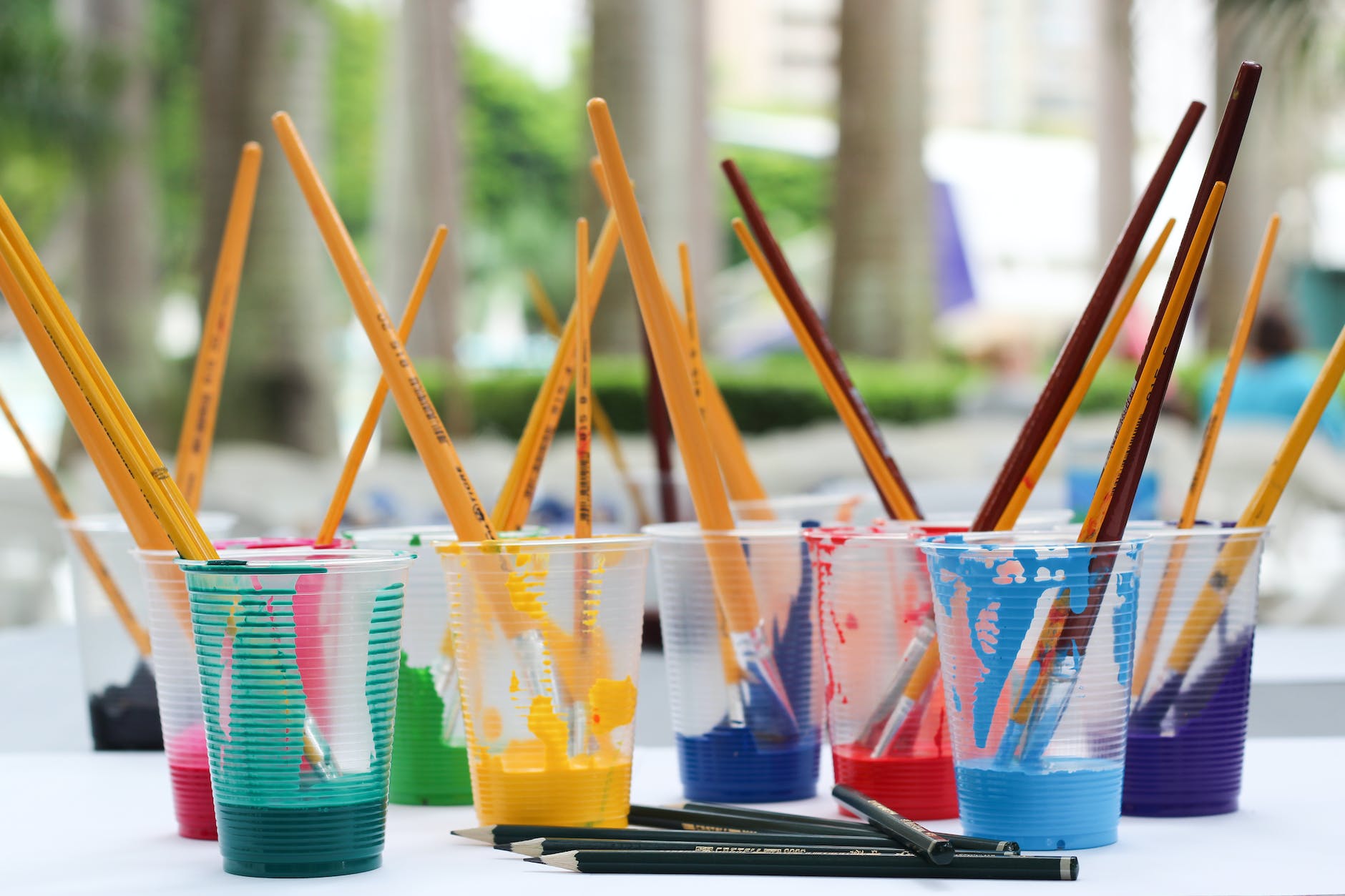
Try a New Medium – Fingerpaint, charcoals, chalk, modeling clay…the list goes on and on. The next time you ask your students to pull out their crayons or markers, consider a different medium. Switching to one of the mediums listed above (or one of the dozens of others) is a great way to provide kids a different kind of sensory experience that they may not be accustomed to.
Sand – Instead of having students practice their spelling words or complete their phonics work with paper and a pencil, give them a sand tray! This multi-sensory experience has many developmental benefits and has been proven to activate the brain!
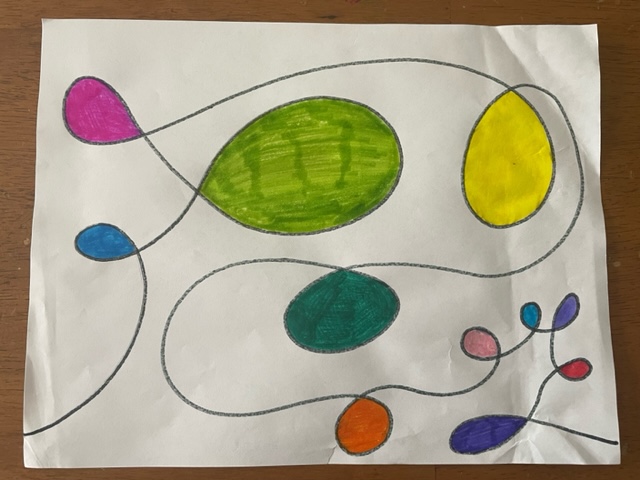
Create Your Own Coloring Page – Have students create their own coloring page for mindful coloring. These can be used during transitions, at the end of the day or class or when work is completed. Bonus – they are so simple to create!
First, create a simple design of loops or other shapes, using a black marker. It can be as simple or intricate as you’d like.
Then, color it in, as you have time!
What other ways do you incorporate art into the classroom? How do your students respond to these activities?
We all know that two things are true of teaching – one is that teachers wear many hats and the other is that there is never enough time during the school day to get everything done.
While I feel VERY strongly about explicit instruction of social-emotional learning skills in the classroom, I also know how hard this is. Most schools are not fortunate enough to have an SEL coach or a dedicated SEL block during the day so teachers have to get creative.
When I am working with schools, I always recommend that SEL instruction be embedded into the instruction that is already happening in the classroom. Reading a specific book during ELA? Think about the SEL themes that can be pulled out and discussed. Students need to write a narrative piece? Brainstorm ways that SEL can be tied in or assigned as the prompt. Having a specific problem in the classroom that needs to be addressed (i.e. friendship skills, conflict resolution, etc.)? Let’s address it through meaningful SEL instruction rather than another lecture that no one is paying attention to.
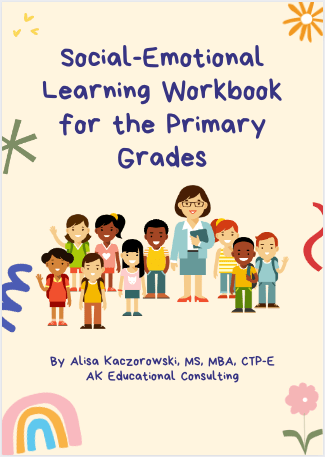
Of course, all of this is much easier said than done, right? That’s why I decided to create this workbook. I wanted to give teachers a set of pre-made lessons that take the research and guesswork out of explicit SEL instruction.
I used those skills to create 34 week-long lessons that include all the things a teacher would need to carry out instruction – a lesson plan, graphic organizers, printables, picture book lists, cross-curricular activities and more. Plus, each lesson uses a fantastic picture book as the foundation for instruction.
I am so excited that this workbook is done and available for teachers at the beginning of a new school year, and I sincerely hope it is a valuable and time-saving resource for teachers. Find it, along with many other trauma-informed and SEL resources, right here in my TPT store!
**This is Part 2 of a 7 part series on Mind-Body Skills. Check out the introductory post here or follow along on my YouTube channel.
Self-care is something that has gotten a lot of attention in the past several years, especially in light of the COVID-19 pandemic. It seems there is article after article encouraging us to “put ourselves first,” “care for ourselves” and not “pour from an empty cup.”
These things are all well and good, and I don’t disagree that self-care is important, especially for parents and teachers. That said, bubble baths, wine and chocolate are not a calm person going to make.
If we want to truly care for ourselves, we need to dial into the strategies that give our brains and bodies the rest it needs. Some of these strategies are commonplace and probably familiar to you while others may seem foreign and a bit out of reach.
Not too long ago, that was mindfulness for me. In my mind, mindfulness equaled meditation which, in turn, equaled stress. What do you mean I am supposed to quiet my mind for 20 minutes? How do I do that? When do I do that?I CAN’T do that.
While meditation is a form of mindfulness, it’s not the only one by a long shot. By definition, mindfulness is “a mental state achieved by focusing one’s awareness on the present moment, while calmly acknowledging and accepting one’s feelings, thoughts and bodily sensations.”
Maybe even the definition of the word seems stressful to you. Put more simply, it’s a state of awareness, and meditation is not the only way to achieve awareness. In fact, you might be surprised by the activities that fall under this umbrella term. Here are just a few:
Grounding your feet on the earth
Being still
Praying
Practicing gratitude
Mindfully breathing
Going for a walk
Listening to music
You may be wondering why some of the categories I’ve previously written about are showing up on this list. Well, the short answer is that there is a lot of overlap between various mind-body skills and many of the strategies can help you attain a wide variety of goals, including being more present, easing anxiety, de-escalating from a stressful situation and better understanding your feelings and emotions.
If you’re a parent, teacher or other professional working with children, you would probably agree that these are all skills that kids need to develop and practice as well.
So, how do we introduce mindfulness to kids? The good news is that, because self-care and mindfulness have become such hot topics of late, there are a myriad of ways for kids to practice these skills. Here are a few of my favorites:
Mindful Listening: Take 1-2 minutes to sit in stillness and simply listen to the noises around you. Make a mental note of what you hear. If your mind begins to wander, simply recognize it and bring your focus back to listening.
Mindful Noticing: This strategy is the same as Mindful Listening but with your eyes instead of ears. Assign kids a color, shape, number or letter to “notice” around the classroom or other environment. Allow 1-2 minutes for them to scan the environment, looking for that thing.
One last note…put away the technology! It’s difficult to be mindful and present when we have a ringing, dinging computer in our pocket. So, unless you are using a mindfulness app, take a break from the device!




 akeducationalconsulting.com