Mind-Body Skills Part 1: Breathing

**This is Part 1 of a 7 part series on Mind-Body Skills. Check out the introductory post here or follow along on my YouTube channel.

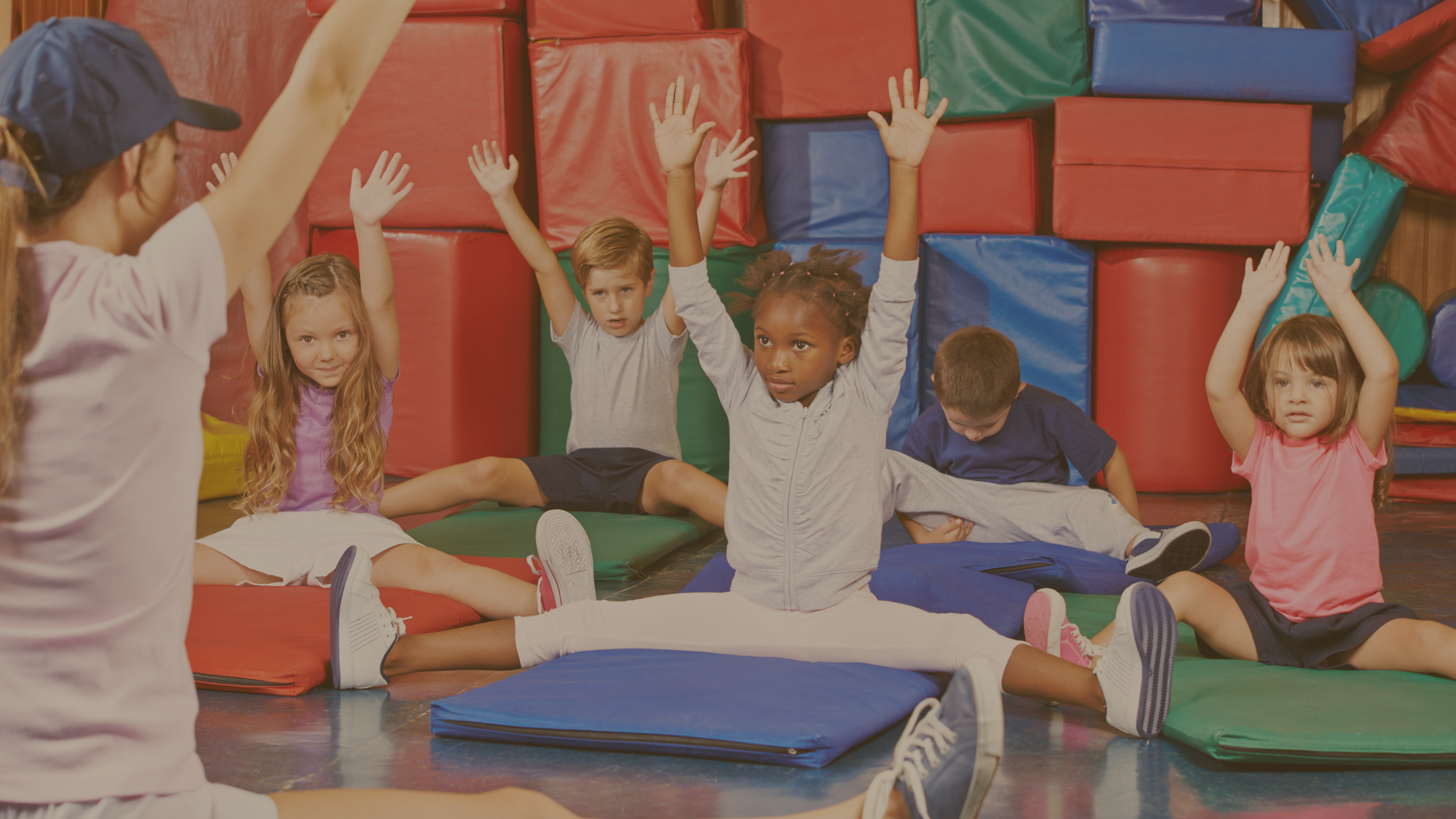
Mindful breathing strategies are a great place to begin when teaching kids mind-body skills. Why? Because when we mindfully breathe, our brain sends a message to our heart, telling it to slow down. As a result, our heart rate slows and we can begin to calm down and better regulate. Additionally, breathing strategies are some of the easiest to learn, especially for young children.

Below you will find some of my favorite breathing techniques and other resources…

Five Finger Breathing (sometimes called Mountain Breathing): this is my all-time favorite breathing technique for kids because it’s simple, easily understandable and lends itself well to a simple visual reminder on the wall.

Box Breathing: another favorite for all the same reasons as above. Definitely, my own go-to breathing technique!

Other Deep Breathing Exercises: this post has SO MANY great breathing exercises that kids will find fun to do!

Sesame Street Belly Breathe Video: best for 1st grade and younger!

Alphabreaths and Alphabreaths Too: these are great picture books with lots of breathing techniques.

Breathing Makes It Better: another great book for connecting deep breathing and the emotions we feel. Best for younger kids.

Breathe Like a Bear: another picture book best suited to younger kids.

Breathing is My Superpower: great book of breathing techniques for elementary-aged kids.

Let me know what other breathing exercises you enjoy using with kids! I’d love to hear from you!

Mind-Body Skills for Self-Regulation: An Introduction

Not too long ago, I announced my newest training – Brains on Stress Can’t Learn: Mind-Body Skills to Destress Your Students (and Yourself!).

In the next several posts here on the blog (and over on my YouTube channel), I am going to dive a little deeper into the different categories of mind-body skills and share some great resources.

First of all, what are mind-body skills? In a nutshell, they are strategies that can be used to help us de-escalate or cope with big emotions. We can explicitly teach them to kids as part of a daily mindfulness practice so that they can learn the strategies while their brains and bodies are calm. Then, when their brains and bodies AREN’T calm, they know how to use them to reach a more regulated state.

Why are these strategies important for kids to know? Well, if you are teacher, you might have noticed a shift in our students over the past several years. Many of them have parents who are external regulators, meaning THEY are regulating their child’s emotional state in negative ways. Parents are doing this by giving in to tantrums and demands, working overtime to soothe kids and doing everything they can to ensure their kids DON’T fail or encounter any sort of difficult situation. They are sheltering their children from challenges and solving their problems for them. The result is a generation of kids who are struggling to problem solve, effectively communicate with others, self-regulate and more.

Not only do we need to take a good, hard look at the social-emotional skills we are instilling in our kids, we also need to begin providing a more solid foundation for them to become their own regulators. We do that by teaching kids how to recognize, identify and label their emotions and giving them the tools to manage those emotions themselves.

That’s where mind-body skills come in.

Mind-body skills can be categorized into 7 groups:

  1. Breathing
  2. Movement
  3. Mindfulness
  4. Visualization
  5. Expressive Art
  6. Music
  7. Writing & Journaling

Over the next several posts, I am going to break each of these categories down even further and provide specific strategies and resources that can be used to explicitly teach that strategy to kids. Whether you are a teacher, a parent or just someone who cares about kids, I hope you’ll join me for this series!

school safety drills are here to stay: empowering educators with best practice tools and strategies for lockdown and active shooter drills

For the past week, I have struggled with what to say about the school shooting in Nashville. Not because I don’t have any thoughts or feelings on it, but because I’m not sure I have anything worthwhile or new to add to the conversation.

As an educator and mom, it’s frightening how numb our society is becoming to these mass shootings. But I suppose, as is the case for many scary things, we learn to compartmentalize in order to go on living and sending our kids to school each day.

For the past week (and if I’m being honest, for many more months prior to that), I have mulled over a myriad of thoughts about this school shooting, as well as all the others. Because my passion is kid’s social-emotional health and well-being, most of my thoughts center around that topic, and I have found myself returning over and over again to the same question.

Do the benefits of active shooter and lockdown drills outweigh the risks to our students and teachers?

The answer seems to be that no one knows for sure.

As a school administrator, I remember announcing these drills and walking the building, jiggling classroom door handles to ensure they were locked, peering through classroom windows to ensure the kids weren’t visible from where I was standing and admonishing teachers whose class “failed the test.”

I cringe now to think of the psychological damage being done to the students and teachers I loved like my own family, and I wonder how many hundreds or thousands of other schools in our country are doing the same.

As a mom of three kids, I feel outrage when I hear about active shooter and lockdown drills being conducted, not from the school administrators, but from my kids when they return home in the afternoon.

While I certainly don’t have all the answers (and from my research, it appears no one does), I do know that we can do better. We MUST do better.

So, rather than focusing on all that’s wrong (because that list is too long to think about), I am choosing to focus on empowering educators with tools and resources to reflect upon, share with administrators and use with students.

Here we go.

  1. National Association of School Psychologist’s “Best Practice Considerations for Armed Assailant Drills in Schools” – this is a very comprehensive manual that should be used by school or district administrators as part of their emergency preparedness plan
  2. Your Local Epidemiologist’s “Active Shooter Drills: Do Risks Outweigh Benefits?” – a quick and easy read for anyone
  3. National Association of School Psychologist’s “Mitigating Psychological Effects of Lockdowns” – a great fact sheet of tips and to-dos for before, during and after a lockdown drill
  4. National Association of School Psychologist’s “Talking to Children About Violence: Tips for Parents and Teachers” – a fantastic infographic of tips for talking with children of all ages about violence, includes specific talking points and is available in Spanish
  5. National Education Association’s “Unannounced Active Shooter Drills Scaring Students Without Making Them Safer” – a great article on what NOT to do when conducting active shooter drills at school
  6. NPR’s “2 Big Teachers Unions Call for Rethinking Student Involvement in Lockdown Drills” – the case against lockdown drills
  7. Everytown’s “The Impact of Active Shooter Drills in Schools” – a whitepaper that includes loads of data and anecdotal evidence
  8. National Association of School Psychologist’s “School Safety Drills and Exercises for Students with Autism Spectrum Disorder (ASD): Tips and Resources for Educators” – best practices and specific strategies for a population of students often forgotten about during school safety drills

What other resources have you found helpful? Please share them in the comments.

The 6 types of Self-Care…A new youTube Series

If you follow me over on YouTube, you probably know that I’ve started a new series all about the 6 different types of self-care.

The idea for this series came about after I took a self-care assessment, and much to my dismay, found that I had failed 5 of the 6 types of self-care. I was honestly shocked. As someone who does what I do, I suppose I thought I had it figured out better than the average person. Clearly, I was wrong.

So what can you expect from the videos in this series?

Each video will take you through one of the types – what it is and what it looks like if you’re doing it well.

I promise that this will not be a series of videos of me telling you to light a candle, take a bath and eat some chocolate. It will be me giving you the tools to build self-awareness and understanding of how you’re caring for yourself well and how you aren’t.

If you’re someone who cares for everyone around you and winds up with an empty fuel tank for yourself, this series is for you. Come on over here and join me!

8 Steps to Building a Trauma-Informed School: A new youtube series

I’m excited to announce my brand new YouTube series – 8 Steps to Building a Trauma-Informed School. This series of 9 videos will begin with an overview of the 8 steps, and then subsequent videos will dive deeper into each step individually.

In each video, you can expect to learn more about each step and what it takes to accomplish it. This series is great for administrators, school counselors and educators who are interested in learning more about the steps needed to create cultural change in the school environment. Even if you aren’t prepared to tackle a huge, new initiative, I encourage you to check out the videos to gauge your own schools’ strengths and areas of need.

If you are ready to tackle a trauma-informed school initiative, send me an email at akedconsult@gmail.com. I will soon be opening up registration for 1 and 2 year partnerships that will kick off in August 2023 and spots will be limited!

New Training Announcement!

Do your students struggle to control their brains and bodies? Do your teachers need tools to proactively engage disruptive or defiant students? Do you want calmer, more productive classrooms?My new training will help you address all this and more!

What will you learn during this training?

  1. What emotional regulation is and how we can help students achieve it
  2. Why some students struggle to self-regulate
  3. Why brains on stress can’t learn
  4. The importance of mind-body skills
  5. Dozens of mind-body skills that can be easily used in the classroom

What else will you get from this training?

  1. Access to a Google folder full of aligned resources
  2. An electronic workbook with dozens of mind-body activities and directions for use
  3. Ongoing support from me

Many of our students are lacking the skills to express their emotions appropriately. This results in disruptive behaviors, chaotic classrooms and stressed out teachers. If you’re looking for a way to empower your teachers, decrease behavior referrals and increase academic achievement, this training is for you. Let me help you make this a reality for your school! Contact me today through my website or at akedconsult@gmail.com.

Podcast Announcement!

I’ve been so excited to share this news for awhile, and finally, I can! Several months ago, I was honored to be asked to sit down for an interview for the “Inspiring School Counselors” podcast and the episode aired yesterday!

I’m so grateful to be able to share several practical tips on building a trauma-informed classroom or school. It doesn’t have to be complicated or a whole school effort! Even one person can make a dramatic difference to a struggling child.

I hope you’ll take a few minutes to listen to the episode (and check out some of the other awesome guests they’ve interviewed!). It really is a great podcast for any educator! Enjoy!

De-Escalation and Mindfulness Strategies for Kids

One of the most popular trainings I do is all about teaching kids strategies for calming down. Why? Because one of the most widespread effects of the pandemic on our children was stress and anxiety which has lead to them having the inability to regulate their emotions. For many kids, this was difficult prior to the pandemic, but now it is the chief concern for most teachers and administrators I talk to.

In light of what our kids have experienced over the past couple of years, it is critical that we give them the tools to understand what they are feeling, why they are feeling it and what to do about those feelings. They need to be explicitly taught strategies for calming down when they are escalated, as well as strategies for helping to keep their brain and body calm.

Fortunately, this training covers exactly how to do that, in addition to:

  1. What is happening in the brain when we become escalated
  2. How to strengthen the neural pathways in the brain to be more reflective
  3. The similarities and differences between de-escalation and mindfulness strategies
  4. How to recognize, identify and label emotions
  5. Dozens of simple strategies kids (and grown-ups!) can use to calm down

If you want to give your students a toolbox full of strategies to self-regulate, as well as better understand what is happening in their brain when they become escalated, this is the perfect training for you. Reach out to me at akedconsult@gmail.com to get more details.

4 Ways to get parent buy-in for sel programming

In the time since the COVID-19 pandemic began in 2020, we have seen a sharp increase in the number of schools putting an intentional focus on social-emotional learning. For many administrators, the goal is to give students and teachers the tools to deal with the multitude of challenges that have resulted from the pandemic.

Since 2020, we have seen more and more children struggle with time management, learning stamina, effective communication and self-regulation skills, to name just a few of these challenges. Many children have had difficulty re-acclimating to the in-person school environment. Others seem to have mysteriously forgotten how to communicate with their peers while many more struggle to express their emotions appropriately.

As these challenges have piled up over recent years, coupled with the many professional and personal difficulties teachers are facing, administrators have scrambled to find ways to help both teachers and students.

Enter social-emotional learning or SEL.

The thing is, SEL is not a new idea, born of the challenges of the pandemic. Schools have been incorporating social-emotional learning strategies for decades. According to the Social Emotional Learning Alliance for the United States (SEL4US), social-emotional learning is a practice that helps kids and adults learn and apply the skills necessary to develop healthy identities, manage emotions, set and achieve goals, feel and show empathy, establish strong relationship skills and make responsible decisions.

If you think back to your own schooling, depending on the type of school you attended, you will likely remember something along the lines of character education or virtues training. In other words…social-emotional learning.

So, if SEL has been around for so long and includes critical skills like the ones listed above, why are we just now beginning to see so many parents seemingly against it? Well, there are many answers to that question, but oftentimes, the true answer comes down to just one thing…misunderstanding.

As a whole, we have not done a great job of helping parents to understand what SEL really is, why it is important and how it is being incorporated into the classroom experience. Thus, we have a large number of parents who simply don’t understand what we mean when we say our school focuses on social-emotional learning.

So how do we fix this? There are 4 simple things we can do to help parents and caregivers better understand social-emotional learning and how it is being used in the school.

  1. Use Less Jargon

Educators are good at jargon…too good, and we often use it when communicating with parents who are likely unfamiliar with our terms. Instead, use simple language. Rather than using terms like “social-emotional learning” or “whole child development,” use words like kindness, empathy and being sensitive to other cultures.

At the end of the day, most parents want to know how their child is doing at school, aside from academics and most parents want their child to grow up to be a good human. That’s the goal of SEL, but we can use other language to communicate that.

  1. Be Clear About What SEL Is

Many parents have pre-conceived notions about what SEL actually is, and oftentimes, those notions are incorrect. Clearly communicate to your families what SEL is in YOUR school or district. Perhaps you have a list of traits or virtues that are being taught. Maybe you have adopted a specific curriculum. Share these, along with resources, with families so they clearly understand what SEL means for their child.

  1. Clearly Communicate How and When SEL is Integrated into the Classroom

Once you have communicated what SEL means in your school or district, it’s just as important that you share how and when it is being integrated into learning. If you’re using a specific curriculum, communicate how many minutes or days per week children will be engaging with it. If you are focusing on key traits, will these be introduced each week during a school-wide community meeting, taught once a month by the school counselor or integrated into a variety of classroom activities each week? Clearly communicating these parameters will often help ease parents’ ill feelings.

  1. Engage Parents

After communicating what SEL is and how and when it will be used, it’s critical to continue to engage parents in your school’s programming. Sending resources home to better educate them is a great start, but be sure to continue sharing with them as the school year progresses. Share some of the strategies or language being used at school and encourage them to use these at home as well. Help them understand how the programming is beneficial to their child AND their family, how strategies can be used at home to make life just a little bit easier. Let’s face it…we are all facing challenges in this post-pandemic world and can use all the help we can get…even parents.

I’d love to hear what you are doing (or have done!) to get buy-in from your parents for SEL programming. Comment on this post or shoot me an email at akedconsult@gmail.com.

10 Strategies for Building a More Trauma-Informed Classroom

My flagship, and most popular, training is 10 Strategies for Building a More Trauma-Informed Classroom. This training covers a LOT of material and is a great introduction for teachers and school staff who do not have a lot of experience with trauma-informed practices in the school environment. Not only will teachers get a solid foundation in what trauma-informed care looks like in a classroom and why it is critical to the success of their students, but they will also walk away with a toolbox full of strategies that they can begin using immediately. These strategies don’t cost a lot of money or take a lot of time to implement. They are simple, common sense strategies that are just best practice for ALL kids.

Additionally, this training will cover:

  1. The 3 Types of Trauma
  2. Adverse Childhood Experiences (or ACEs)
  3. Characteristics of Trauma
  4. How Trauma Impacts the Brain, Learning and Behavior
  5. Trauma-Informed Discipline
  6. Mindfulness and De-Escalation Strategies
  7. 10 Strategies for Building a More Trauma-Informed Classroom
  8. How to Get Started

If you are looking to give your teachers a toolbox full of strategies to help them have a successful year with students, particularly struggling students, this training is a great place to begin. It is typically a 6 hour training but topics can be added or subtracted, as necessary. This training is also great done in smaller 1-2 chunks during monthly staff meetings. Contact me today for more information or to schedule your next professional development.