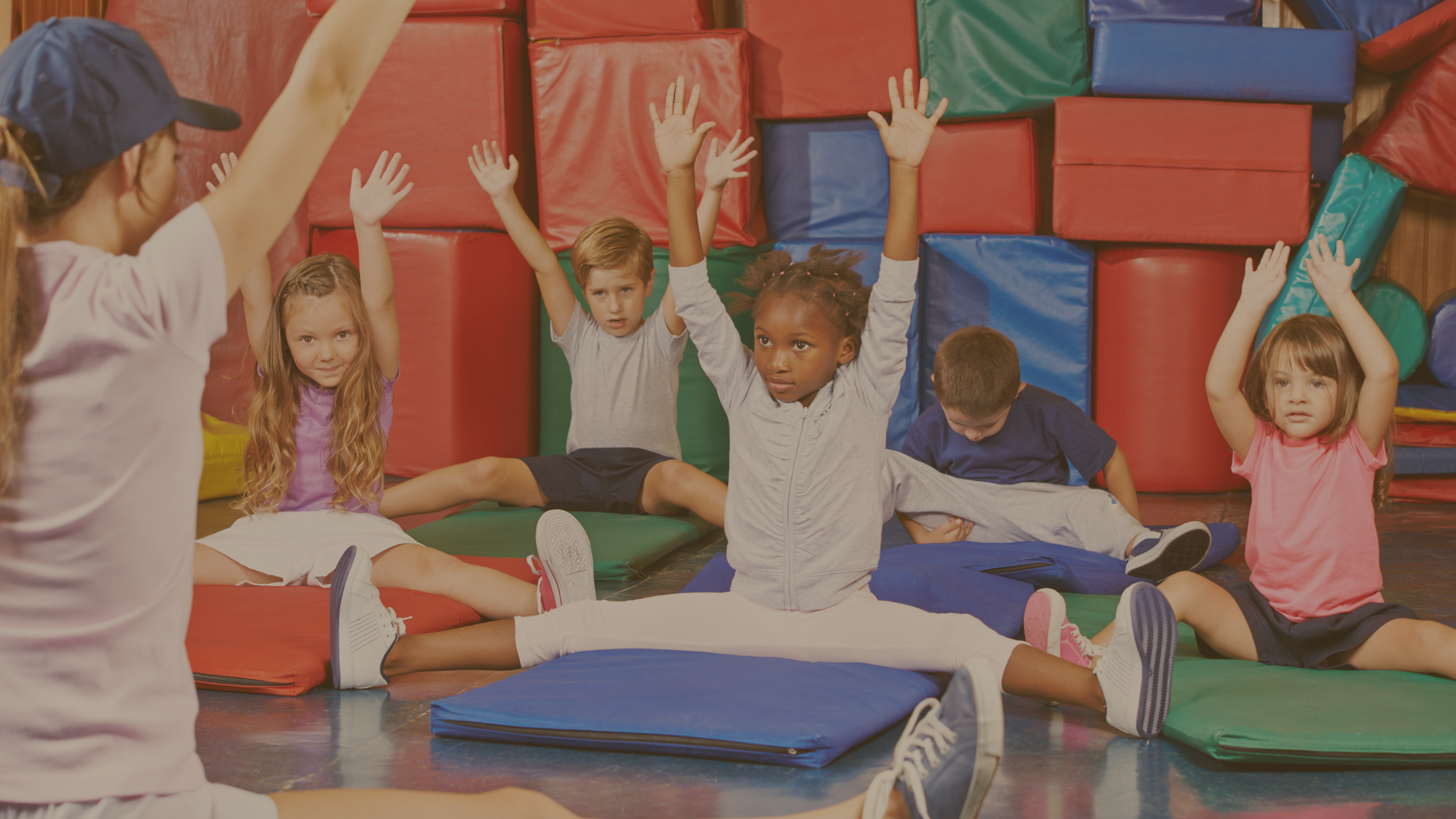
The benefits of flexible seating in the classroom

I shared this on my various social media channels this week but figured I’d jot a few thoughts here as well.

I really started thinking about this last week. After a long car ride at the end of Labor Day weekend, I was struggling to sit at my desk the following day and get work done. I couldn’t sit still. I couldn’t focus. I couldn’t get comfortable. It really hit me that some of our students struggle with these feelings on a daily basis.

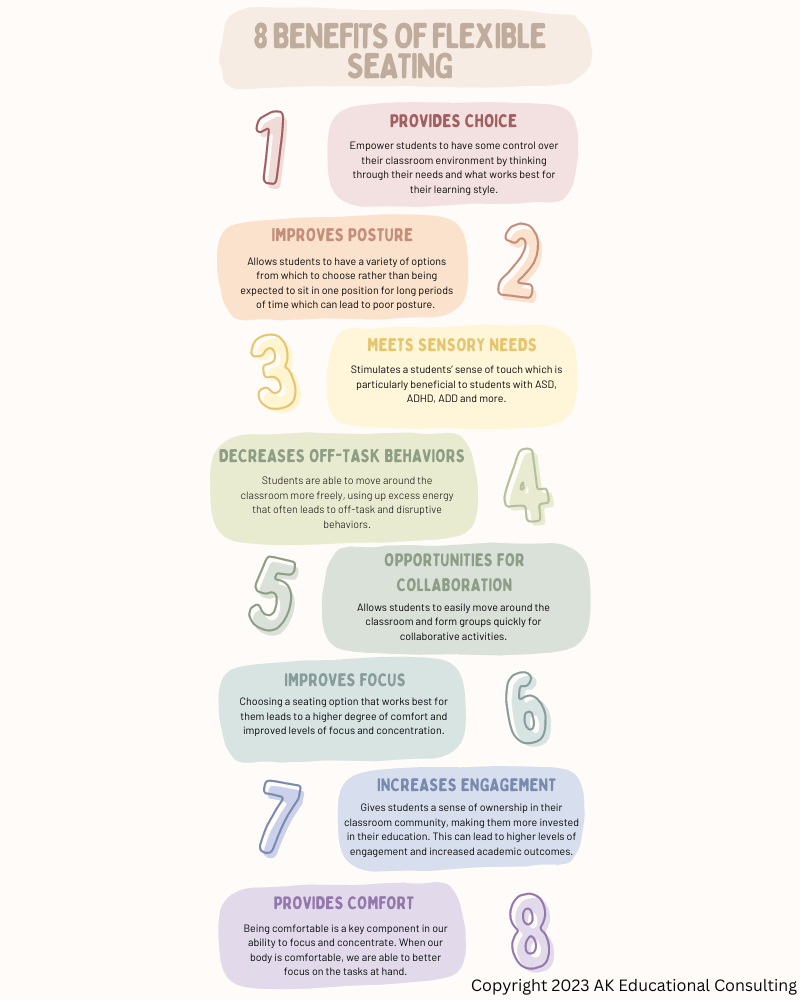
Even thought I’m well aware of the inherent benefits of flexible seating, I had never truly thought about how this can be a total game changer for some kids. I know some of this information is common sense, but we can’t ignore the fact that providing flexible seating options is a shift in mindset for many educators.

If you are one of those educators, it’s OK! Take a minute to read over the infographic above. How could you implement small changes to your classroom seating to benefit your students? What baby steps can you take?

If you’re an educator who has fully bought in, what changes have you noticed in your students? What flexible seating options do you provide in your classroom? I’d love to hear!

Mind-body skills Part 5: music

**This is Part 5 of a 7 part series on Mind-Body Skills. Check out the introductory post here or follow along on my YouTube channel.

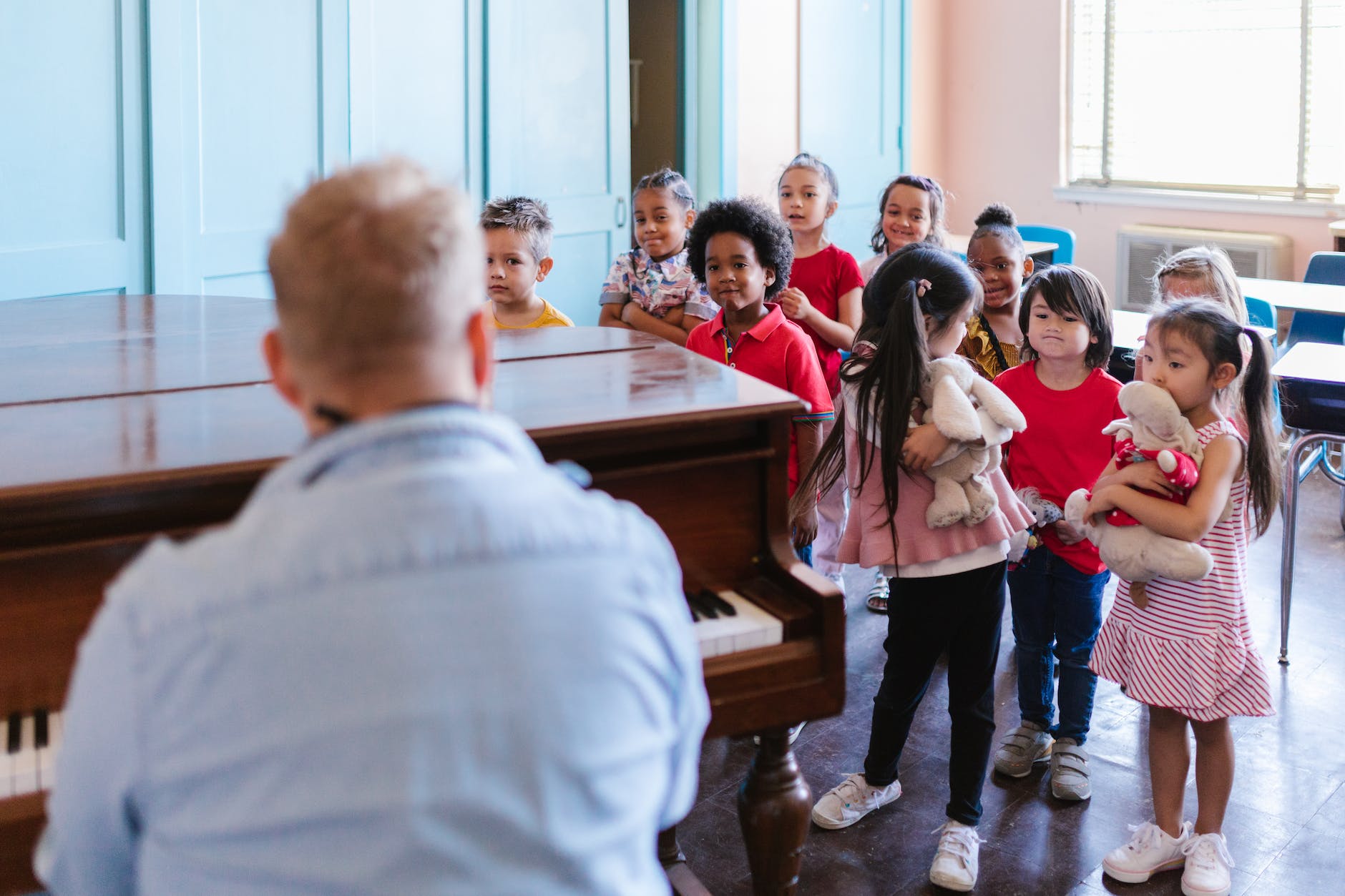
Photo by RDNE Stock project on Pexels.com

I am not at all musically inclined. I actually prefer to never have music playing in the background – at home, in the car, anywhere. I know, I know…it’s weird.

As you can imagine, this category of mind-body skills is not one that I lean into very often, and that’s ok. Music is life for many people so, once in awhile, it’s good to push ourselves outside of our comfort zone and try something new. For me, when creating my mind-body skills training, that meant finding musical activities that would speak to a wide variety of people.

We all know there are a million different YouTube and Spotify channels where we can stream music and calming sounds into our classrooms. Those are great to use during transitions, independent work time, etc. Many of us use music in a cross-disciplinary manner through phonics chants, math songs, etc. These are all fantastic ways to incorporate music into the classroom, but what other ways can we tap into the power of music?

Hands down, my favorite activity that I came across while researching for the mind-body skills training was an activity where we connect music to specific memories. Remember, anything sensory (sounds, smells, sights, textures, tastes, etc.) can evoke both positive and negative memories from even the deepest recesses of our brain. Often, recalling those positive memories can bring us peace, joy, laughter or contentment.

The example I used recently at a school I was working with can be found below.

I only intended to play a portion of this song and then connect it to a specific memory, as an example for the group of teachers. However, about 10 seconds into the song, I realized we would be listening to the entire thing because the song immediately began to evoke memories for all of THEM!

Even if they did not tie this song to a specific memory, as I do, it brought back memories for many of them of the movie, being in a certain place in life, where they first saw this movie, etc. We ended up having the best time just singing along to this song!

Give it a try! What song evokes strong, positive memories for you? Go give it a listen and just sit with it for a few minutes.

Ask your music-loving students to try out this exercise. Not only can we recall these memories when we are in a place of balance, but we can also use them when we are feeling sad, angry or overwhelmed. That’s what mind-body skills are all about!

Mind-Body Skills Part 3: Mindfulness

**This is Part 2 of a 7 part series on Mind-Body Skills. Check out the introductory post here or follow along on my YouTube channel.

Self-care is something that has gotten a lot of attention in the past several years, especially in light of the COVID-19 pandemic. It seems there is article after article encouraging us to “put ourselves first,” “care for ourselves” and not “pour from an empty cup.”

These things are all well and good, and I don’t disagree that self-care is important, especially for parents and teachers. That said, bubble baths, wine and chocolate are not a calm person going to make.

If we want to truly care for ourselves, we need to dial into the strategies that give our brains and bodies the rest it needs. Some of these strategies are commonplace and probably familiar to you while others may seem foreign and a bit out of reach.

Not too long ago, that was mindfulness for me. In my mind, mindfulness equaled meditation which, in turn, equaled stress. What do you mean I am supposed to quiet my mind for 20 minutes? How do I do that? When do I do that? I CAN’T do that.

While meditation is a form of mindfulness, it’s not the only one by a long shot. By definition, mindfulness is “a mental state achieved by focusing one’s awareness on the present moment, while calmly acknowledging and accepting one’s feelings, thoughts and bodily sensations.”

Maybe even the definition of the word seems stressful to you. Put more simply, it’s a state of awareness, and meditation is not the only way to achieve awareness. In fact, you might be surprised by the activities that fall under this umbrella term. Here are just a few:

  1. Grounding your feet on the earth
  2. Being still
  3. Praying
  4. Practicing gratitude
  5. Mindfully breathing
  6. Going for a walk
  7. Listening to music

You may be wondering why some of the categories I’ve previously written about are showing up on this list. Well, the short answer is that there is a lot of overlap between various mind-body skills and many of the strategies can help you attain a wide variety of goals, including being more present, easing anxiety, de-escalating from a stressful situation and better understanding your feelings and emotions.

If you’re a parent, teacher or other professional working with children, you would probably agree that these are all skills that kids need to develop and practice as well.

So, how do we introduce mindfulness to kids? The good news is that, because self-care and mindfulness have become such hot topics of late, there are a myriad of ways for kids to practice these skills. Here are a few of my favorites:

Mindful Listening: Take 1-2 minutes to sit in stillness and simply listen to the noises around you. Make a mental note of what you hear. If your mind begins to wander, simply recognize it and bring your focus back to listening.

Mindful Noticing: This strategy is the same as Mindful Listening but with your eyes instead of ears. Assign kids a color, shape, number or letter to “notice” around the classroom or other environment. Allow 1-2 minutes for them to scan the environment, looking for that thing.

One last note…put away the technology! It’s difficult to be mindful and present when we have a ringing, dinging computer in our pocket. So, unless you are using a mindfulness app, take a break from the device!

Mind-Body Skills Part 2: Movement

**This is Part 2 of a 7 part series on Mind-Body Skills. Check out the introductory post here or follow along on my YouTube channel.

Many of us regularly use movement strategies as one of our go-to tools for calming down or relieving stress. Think about it. When you are stressed, anxious or overwhelmed, do you go for a walk…hit the gym…take the dog for a run? Maybe not, but if you’re anything like me, you can identify with this strategy.

Not only does movement keep our body healthy and in tip-top shape, it does the same for our brain. Two good reasons to encourage movement as a regulation strategy for kids, right?

Here are a few of my favorites:

Sensory Path: If you work in a school and don’t have a sensory path, I’d encourage you to check out this website and consider it. Not only are they so cute and kid-friendly, they are a fantastic way to get kids moving in a different way. They can be used by individual kids or the entire class!

Brain Gym: I was introduced to Brain Gym by a teacher at a school I was consulting with. While I had not heard of Brain Gym specifically, I was familiar with the power of exercises that encourage kids to cross the midline. If you’re a newbie, learning more about Brain Gym and the corresponding exercises is a great place to start.

5 Senses Nature Walk: Get outside and work those 5 senses, along with your body! What do you see…hear…smell…feel…taste (well, maybe not this one!)? There are so many benefits to walking in nature. Think you don’t have nature around you? Remember, it certainly doesn’t have to be a forest to count as nature so get creative!

What Time is it, Mr. Fox?: This is a fun (and multi-disciplinary!) game for younger elementary students.

Color Search: Go on a color search. Whether it’s around the house, the school or outdoors, get kids moving and identifying objects of various colors.

Tape Jumping Game: This one is so simple and has a million different versions. While it is more geared toward younger kids, you can certainly amend the rules (and distance between tape pieces) for older kids.

Mind-Body Skills Part 1: Breathing

**This is Part 1 of a 7 part series on Mind-Body Skills. Check out the introductory post here or follow along on my YouTube channel.
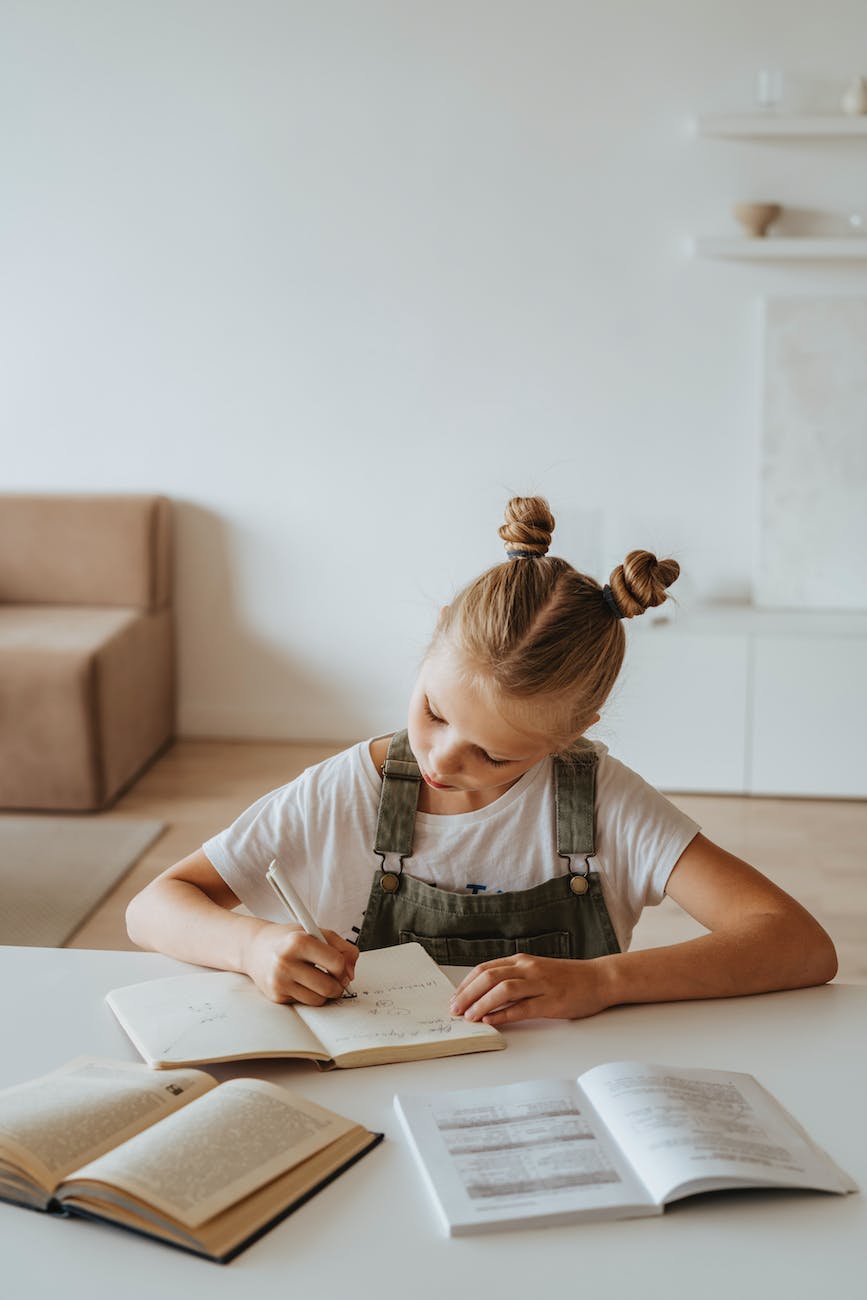
Mindful breathing strategies are a great place to begin when teaching kids mind-body skills. Why? Because when we mindfully breathe, our brain sends a message to our heart, telling it to slow down. As a result, our heart rate slows and we can begin to calm down and better regulate. Additionally, breathing strategies are some of the easiest to learn, especially for young children.

Below you will find some of my favorite breathing techniques and other resources…

Five Finger Breathing (sometimes called Mountain Breathing): this is my all-time favorite breathing technique for kids because it’s simple, easily understandable and lends itself well to a simple visual reminder on the wall.

Box Breathing: another favorite for all the same reasons as above. Definitely, my own go-to breathing technique!

Other Deep Breathing Exercises: this post has SO MANY great breathing exercises that kids will find fun to do!

Sesame Street Belly Breathe Video: best for 1st grade and younger!

Alphabreaths and Alphabreaths Too: these are great picture books with lots of breathing techniques.

Breathing Makes It Better: another great book for connecting deep breathing and the emotions we feel. Best for younger kids.

Breathe Like a Bear: another picture book best suited to younger kids.

Breathing is My Superpower: great book of breathing techniques for elementary-aged kids.

Let me know what other breathing exercises you enjoy using with kids! I’d love to hear from you!

Mind-Body Skills for Self-Regulation: An Introduction

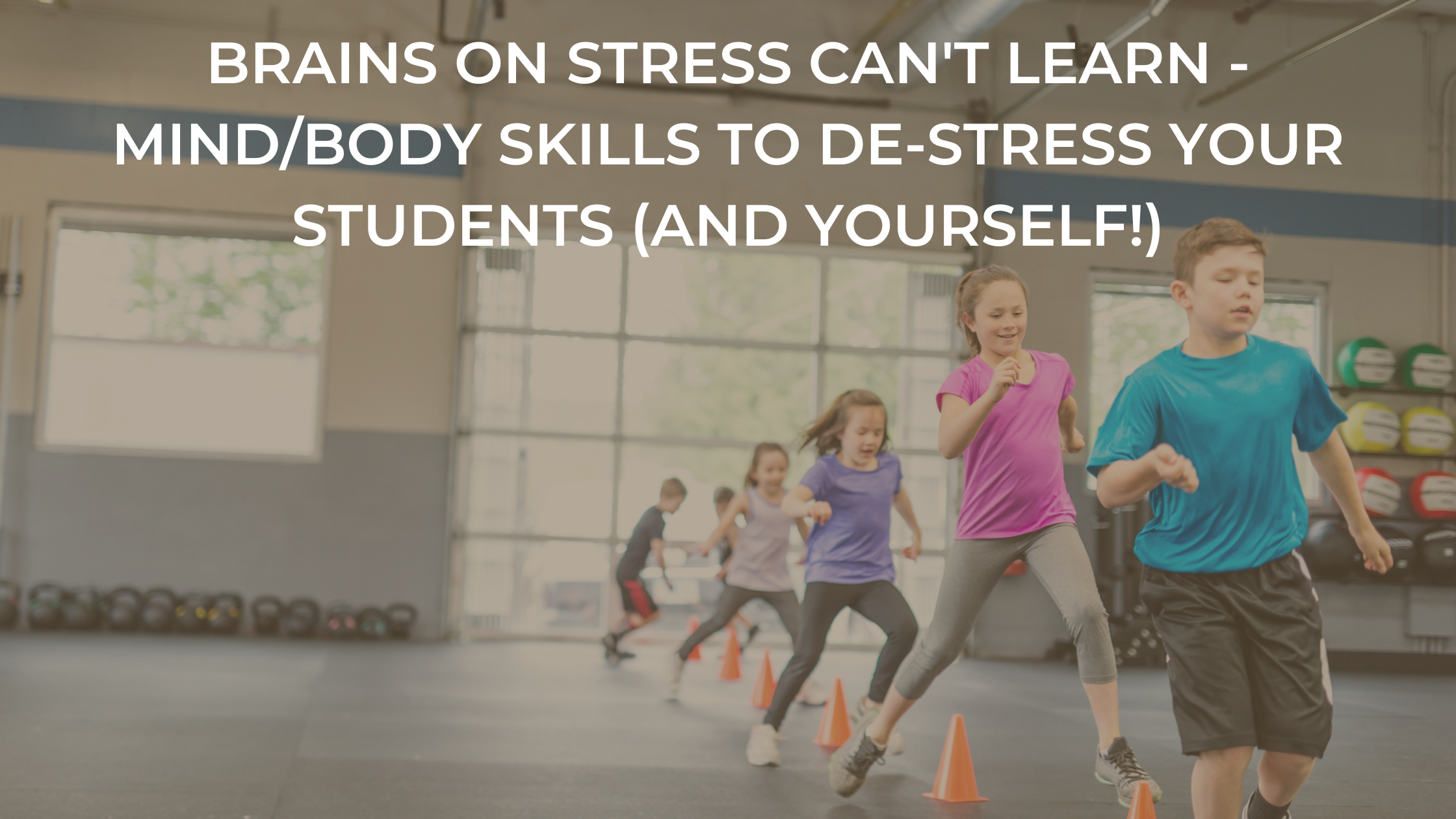
Not too long ago, I announced my newest training – Brains on Stress Can’t Learn: Mind-Body Skills to Destress Your Students (and Yourself!).

In the next several posts here on the blog (and over on my YouTube channel), I am going to dive a little deeper into the different categories of mind-body skills and share some great resources.

First of all, what are mind-body skills? In a nutshell, they are strategies that can be used to help us de-escalate or cope with big emotions. We can explicitly teach them to kids as part of a daily mindfulness practice so that they can learn the strategies while their brains and bodies are calm. Then, when their brains and bodies AREN’T calm, they know how to use them to reach a more regulated state.

Why are these strategies important for kids to know? Well, if you are teacher, you might have noticed a shift in our students over the past several years. Many of them have parents who are external regulators, meaning THEY are regulating their child’s emotional state in negative ways. Parents are doing this by giving in to tantrums and demands, working overtime to soothe kids and doing everything they can to ensure their kids DON’T fail or encounter any sort of difficult situation. They are sheltering their children from challenges and solving their problems for them. The result is a generation of kids who are struggling to problem solve, effectively communicate with others, self-regulate and more.

Not only do we need to take a good, hard look at the social-emotional skills we are instilling in our kids, we also need to begin providing a more solid foundation for them to become their own regulators. We do that by teaching kids how to recognize, identify and label their emotions and giving them the tools to manage those emotions themselves.

That’s where mind-body skills come in.

Mind-body skills can be categorized into 7 groups:

  1. Breathing
  2. Movement
  3. Mindfulness
  4. Visualization
  5. Expressive Art
  6. Music
  7. Writing & Journaling

Over the next several posts, I am going to break each of these categories down even further and provide specific strategies and resources that can be used to explicitly teach that strategy to kids. Whether you are a teacher, a parent or just someone who cares about kids, I hope you’ll join me for this series!

school safety drills are here to stay: empowering educators with best practice tools and strategies for lockdown and active shooter drills

For the past week, I have struggled with what to say about the school shooting in Nashville. Not because I don’t have any thoughts or feelings on it, but because I’m not sure I have anything worthwhile or new to add to the conversation.

As an educator and mom, it’s frightening how numb our society is becoming to these mass shootings. But I suppose, as is the case for many scary things, we learn to compartmentalize in order to go on living and sending our kids to school each day.

For the past week (and if I’m being honest, for many more months prior to that), I have mulled over a myriad of thoughts about this school shooting, as well as all the others. Because my passion is kid’s social-emotional health and well-being, most of my thoughts center around that topic, and I have found myself returning over and over again to the same question.

Do the benefits of active shooter and lockdown drills outweigh the risks to our students and teachers?

The answer seems to be that no one knows for sure.

As a school administrator, I remember announcing these drills and walking the building, jiggling classroom door handles to ensure they were locked, peering through classroom windows to ensure the kids weren’t visible from where I was standing and admonishing teachers whose class “failed the test.”

I cringe now to think of the psychological damage being done to the students and teachers I loved like my own family, and I wonder how many hundreds or thousands of other schools in our country are doing the same.

As a mom of three kids, I feel outrage when I hear about active shooter and lockdown drills being conducted, not from the school administrators, but from my kids when they return home in the afternoon.

While I certainly don’t have all the answers (and from my research, it appears no one does), I do know that we can do better. We MUST do better.

So, rather than focusing on all that’s wrong (because that list is too long to think about), I am choosing to focus on empowering educators with tools and resources to reflect upon, share with administrators and use with students.

Here we go.

  1. National Association of School Psychologist’s “Best Practice Considerations for Armed Assailant Drills in Schools” – this is a very comprehensive manual that should be used by school or district administrators as part of their emergency preparedness plan
  2. Your Local Epidemiologist’s “Active Shooter Drills: Do Risks Outweigh Benefits?” – a quick and easy read for anyone
  3. National Association of School Psychologist’s “Mitigating Psychological Effects of Lockdowns” – a great fact sheet of tips and to-dos for before, during and after a lockdown drill
  4. National Association of School Psychologist’s “Talking to Children About Violence: Tips for Parents and Teachers” – a fantastic infographic of tips for talking with children of all ages about violence, includes specific talking points and is available in Spanish
  5. National Education Association’s “Unannounced Active Shooter Drills Scaring Students Without Making Them Safer” – a great article on what NOT to do when conducting active shooter drills at school
  6. NPR’s “2 Big Teachers Unions Call for Rethinking Student Involvement in Lockdown Drills” – the case against lockdown drills
  7. Everytown’s “The Impact of Active Shooter Drills in Schools” – a whitepaper that includes loads of data and anecdotal evidence
  8. National Association of School Psychologist’s “School Safety Drills and Exercises for Students with Autism Spectrum Disorder (ASD): Tips and Resources for Educators” – best practices and specific strategies for a population of students often forgotten about during school safety drills

What other resources have you found helpful? Please share them in the comments.

8 Steps to Building a Trauma-Informed School: A new youtube series

I’m excited to announce my brand new YouTube series – 8 Steps to Building a Trauma-Informed School. This series of 9 videos will begin with an overview of the 8 steps, and then subsequent videos will dive deeper into each step individually.

In each video, you can expect to learn more about each step and what it takes to accomplish it. This series is great for administrators, school counselors and educators who are interested in learning more about the steps needed to create cultural change in the school environment. Even if you aren’t prepared to tackle a huge, new initiative, I encourage you to check out the videos to gauge your own schools’ strengths and areas of need.

If you are ready to tackle a trauma-informed school initiative, send me an email at akedconsult@gmail.com. I will soon be opening up registration for 1 and 2 year partnerships that will kick off in August 2023 and spots will be limited!

New Training Announcement!

Do your students struggle to control their brains and bodies? Do your teachers need tools to proactively engage disruptive or defiant students? Do you want calmer, more productive classrooms?My new training will help you address all this and more!

What will you learn during this training?

  1. What emotional regulation is and how we can help students achieve it
  2. Why some students struggle to self-regulate
  3. Why brains on stress can’t learn
  4. The importance of mind-body skills
  5. Dozens of mind-body skills that can be easily used in the classroom

What else will you get from this training?

  1. Access to a Google folder full of aligned resources
  2. An electronic workbook with dozens of mind-body activities and directions for use
  3. Ongoing support from me

Many of our students are lacking the skills to express their emotions appropriately. This results in disruptive behaviors, chaotic classrooms and stressed out teachers. If you’re looking for a way to empower your teachers, decrease behavior referrals and increase academic achievement, this training is for you. Let me help you make this a reality for your school! Contact me today through my website or at akedconsult@gmail.com.

Podcast Announcement!

I’ve been so excited to share this news for awhile, and finally, I can! Several months ago, I was honored to be asked to sit down for an interview for the “Inspiring School Counselors” podcast and the episode aired yesterday!

I’m so grateful to be able to share several practical tips on building a trauma-informed classroom or school. It doesn’t have to be complicated or a whole school effort! Even one person can make a dramatic difference to a struggling child.

I hope you’ll take a few minutes to listen to the episode (and check out some of the other awesome guests they’ve interviewed!). It really is a great podcast for any educator! Enjoy!